
Last updated September 23, 2026
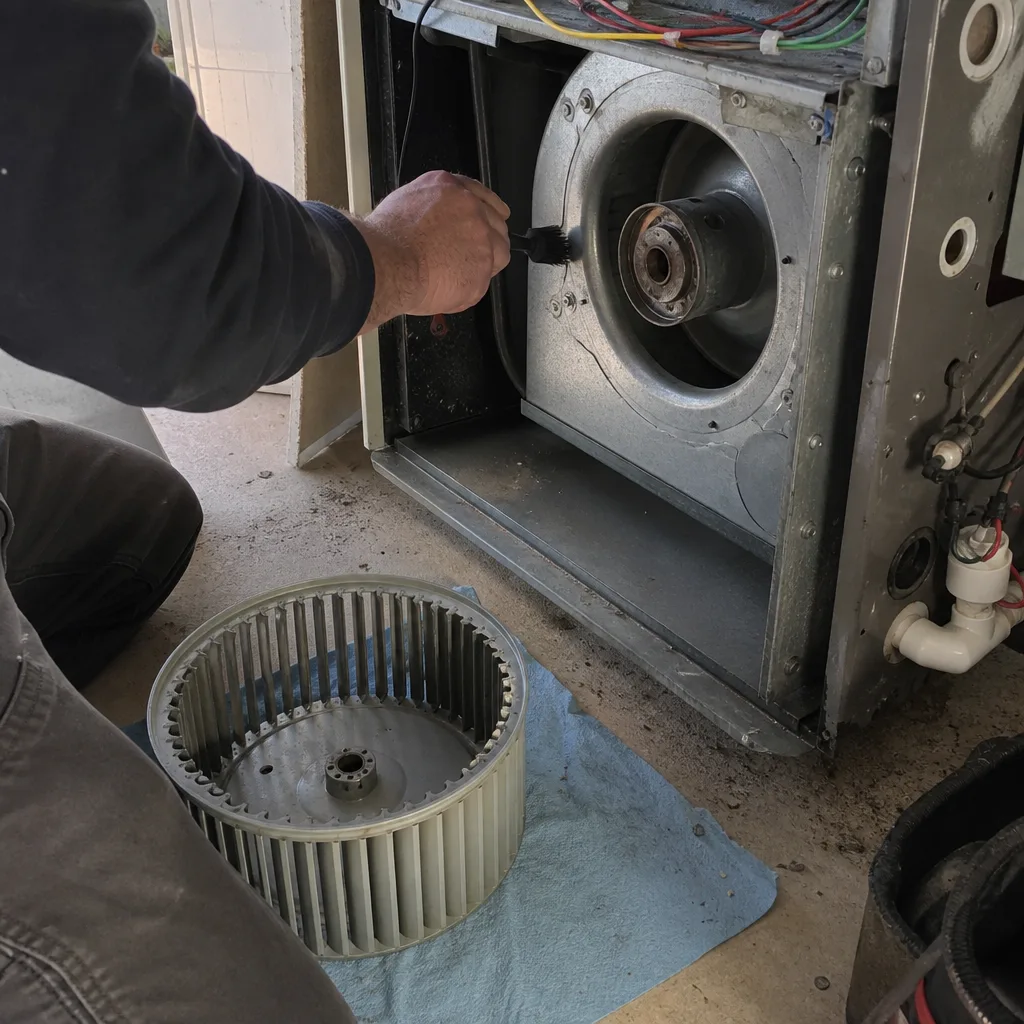
Whole-system duct and dryer vent check with before-and-after photos - you see exactly what came out of your vents
That "$99 whole-house special" is a bait ad - the real number appears once they are in your hallway, or the "clean" is a shop-vac at the register. We photograph the inside of your ducts before and after instead.
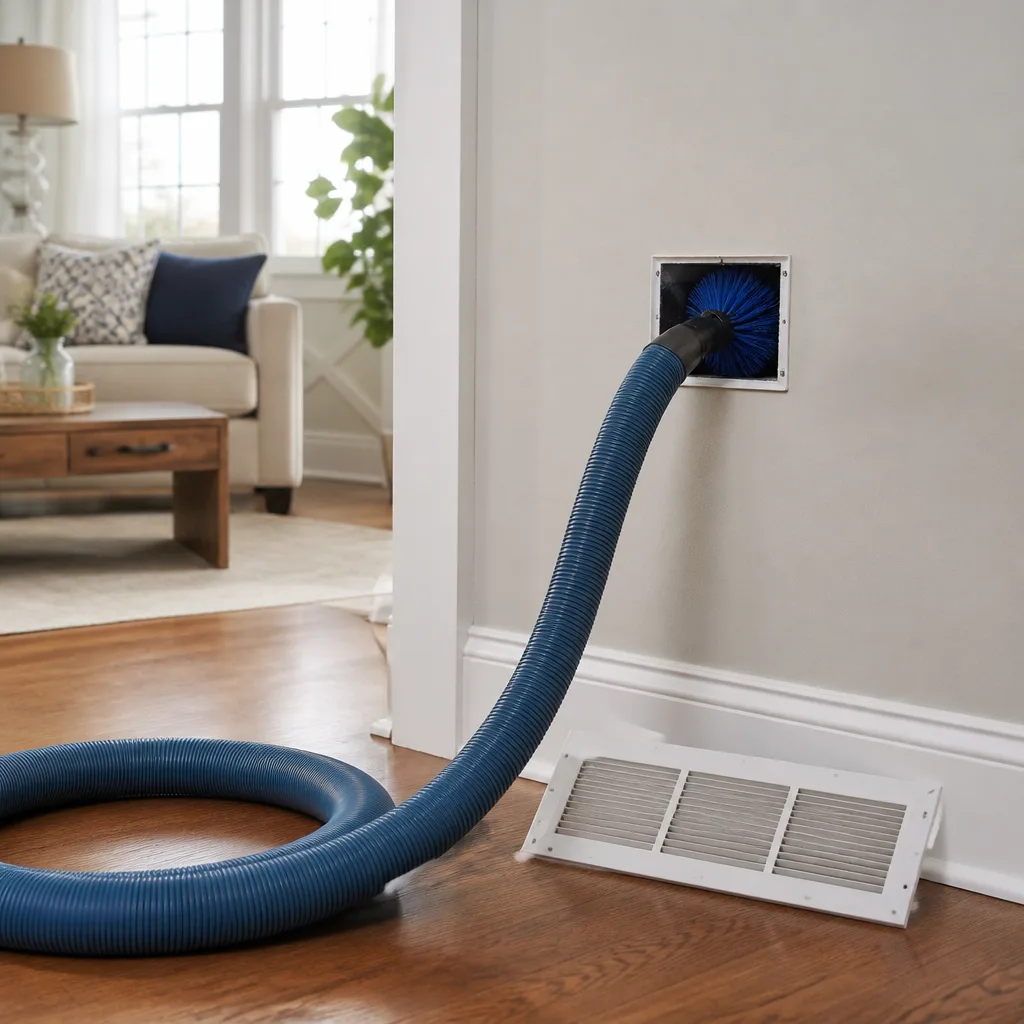
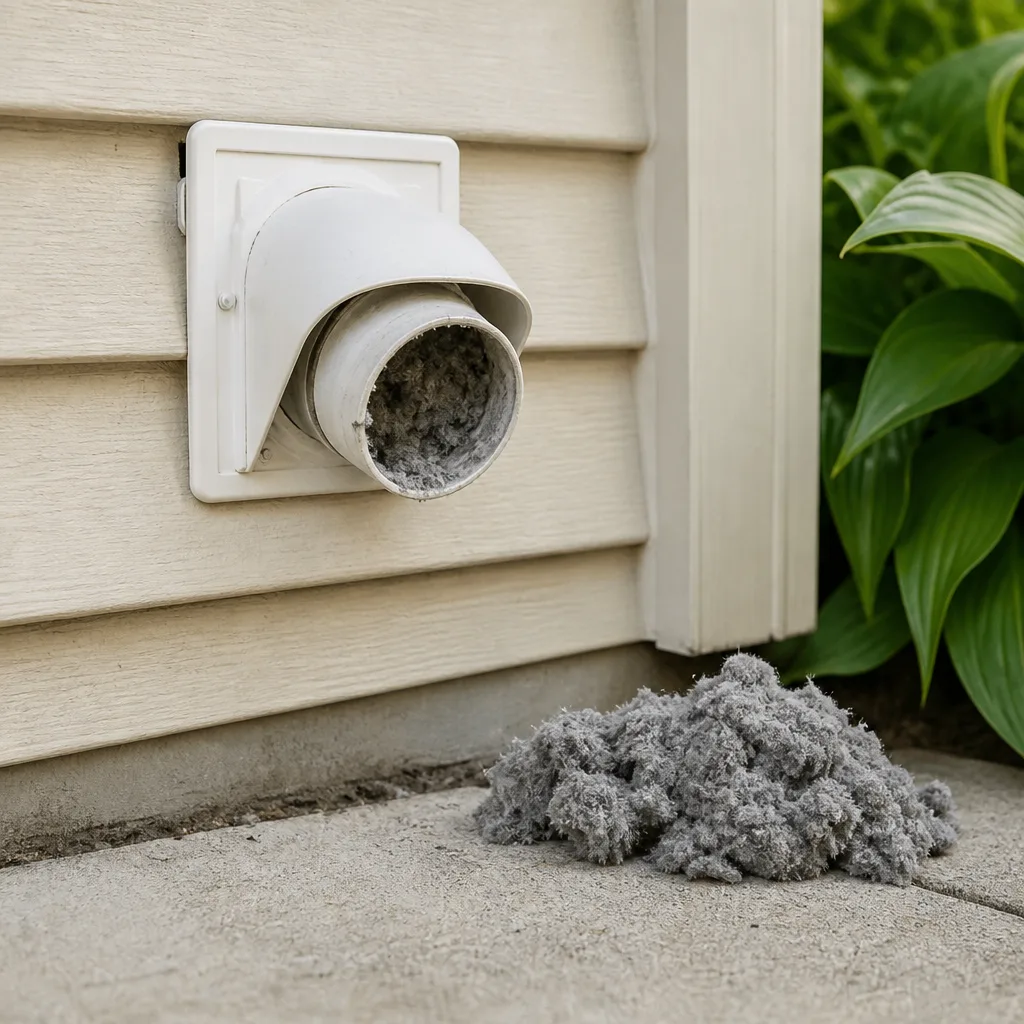
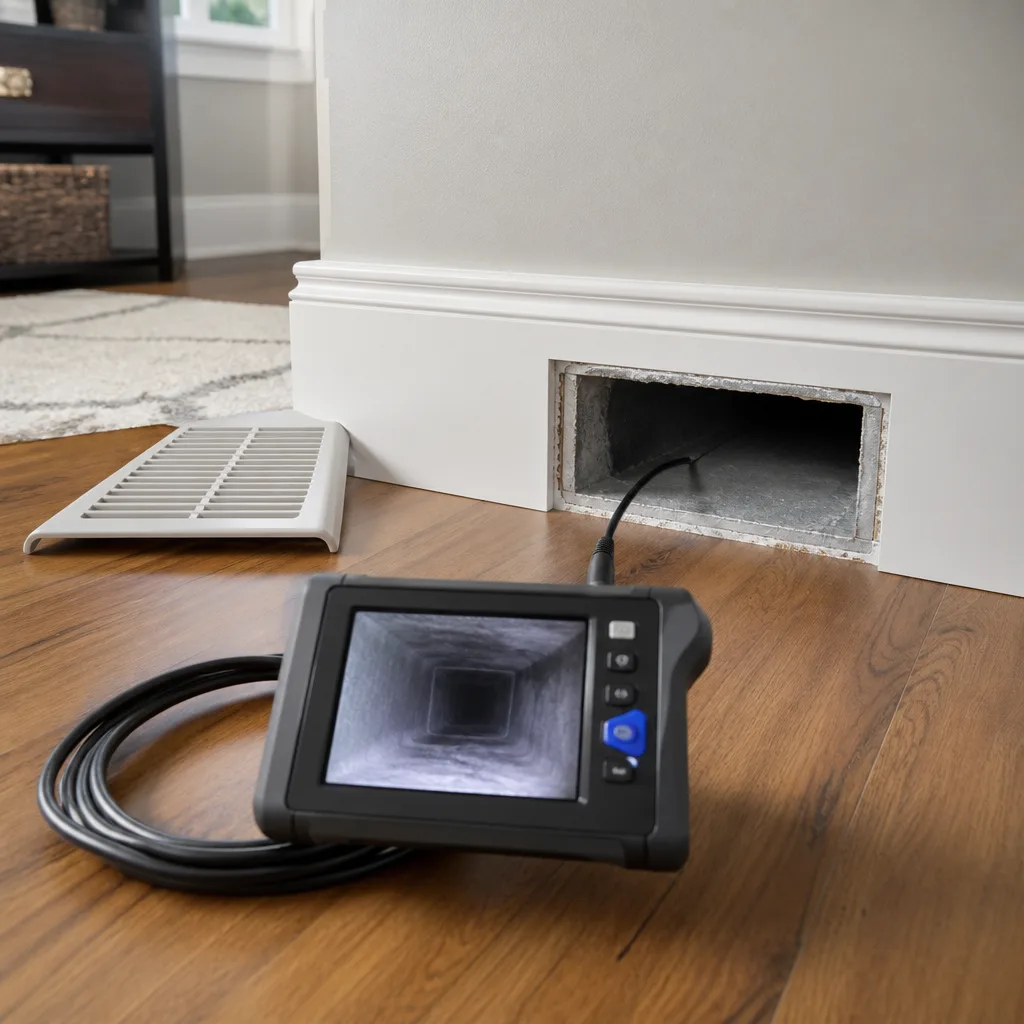
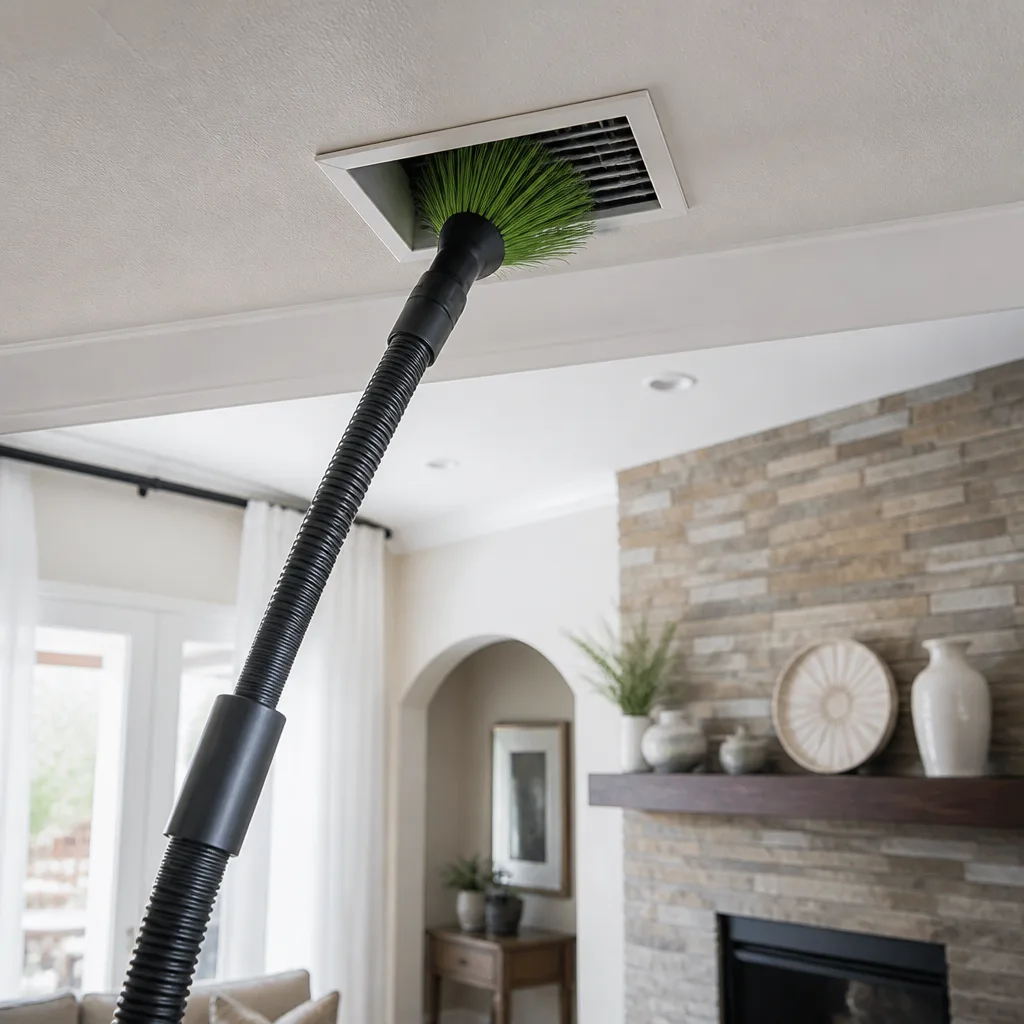
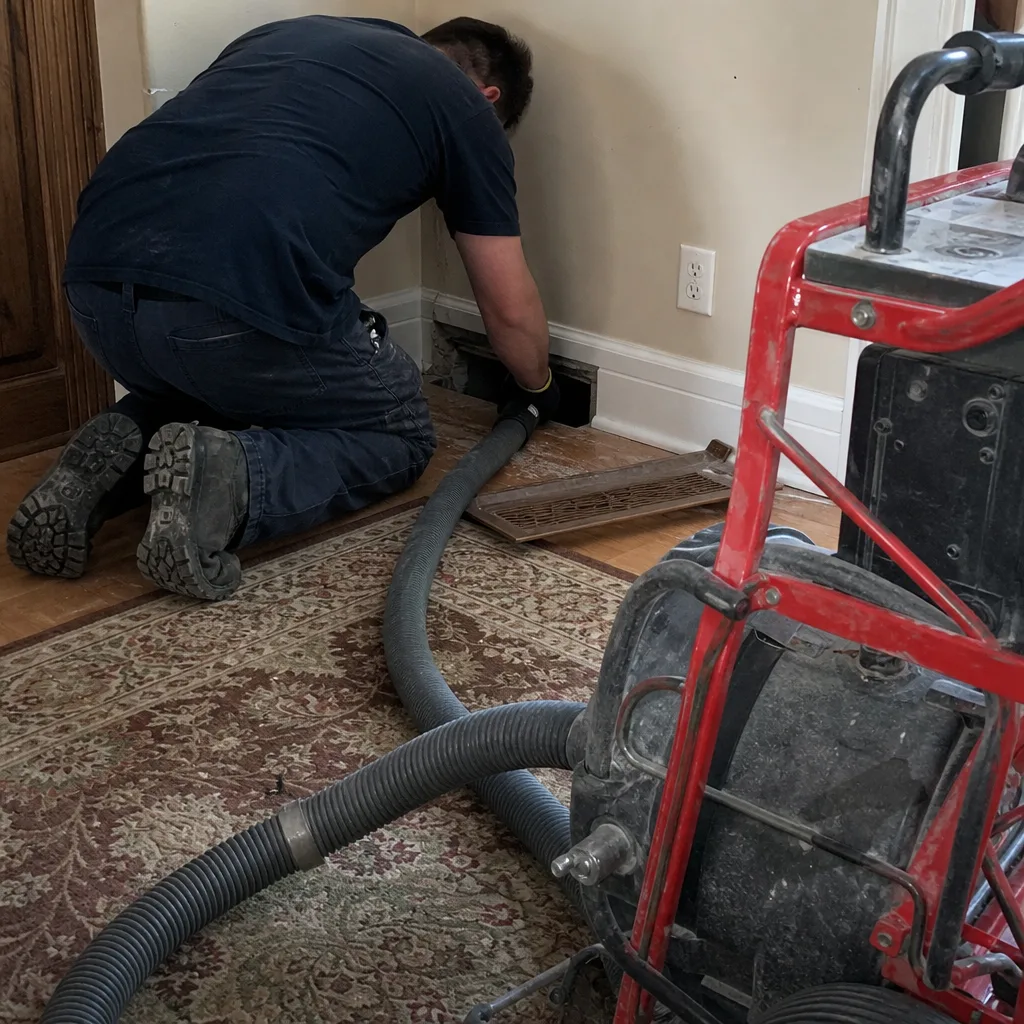 Before
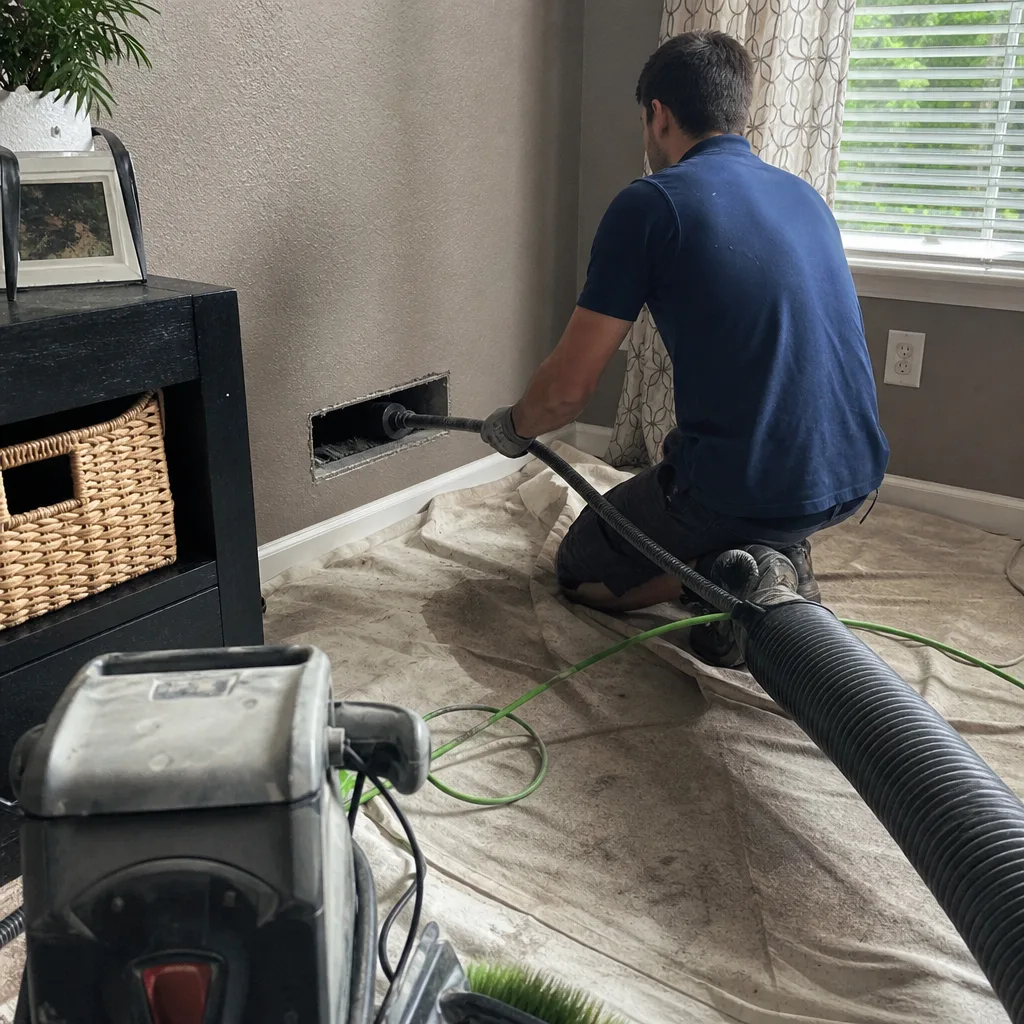 After
After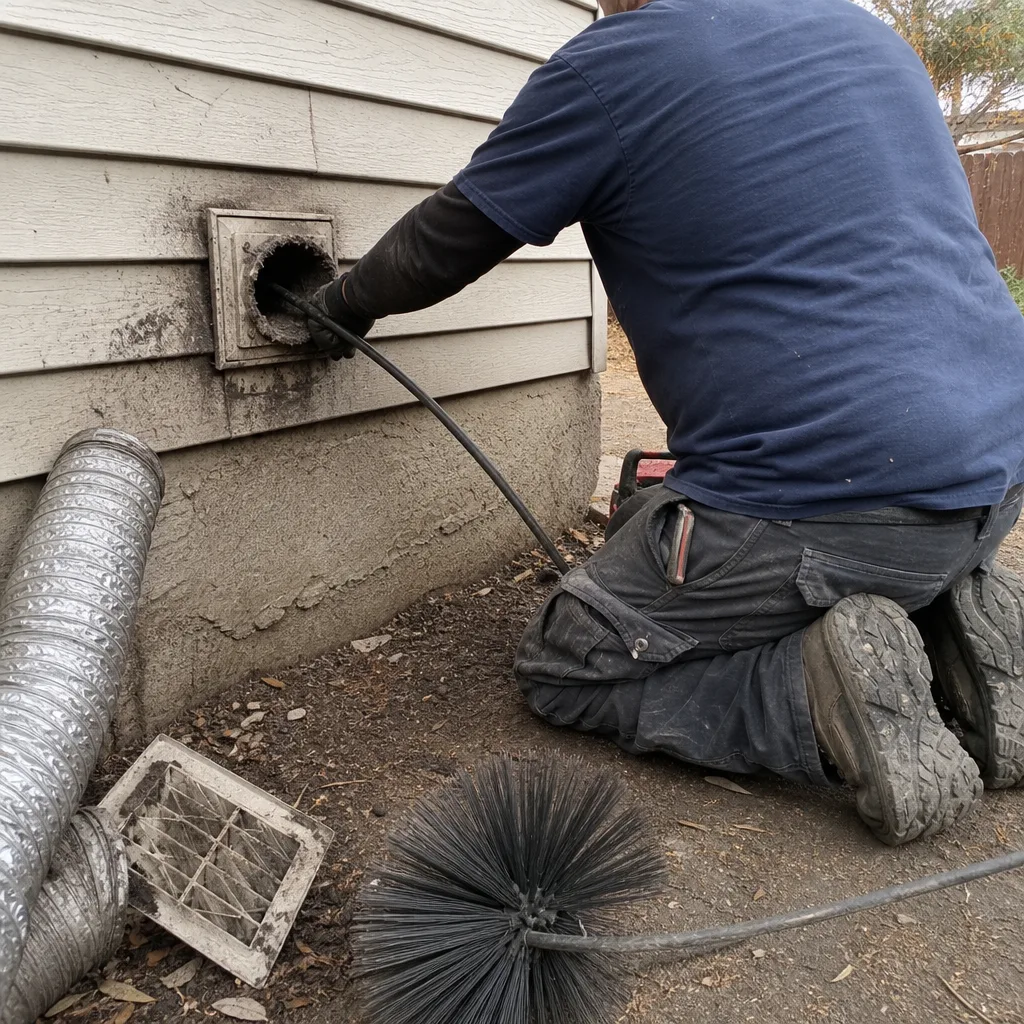 Before
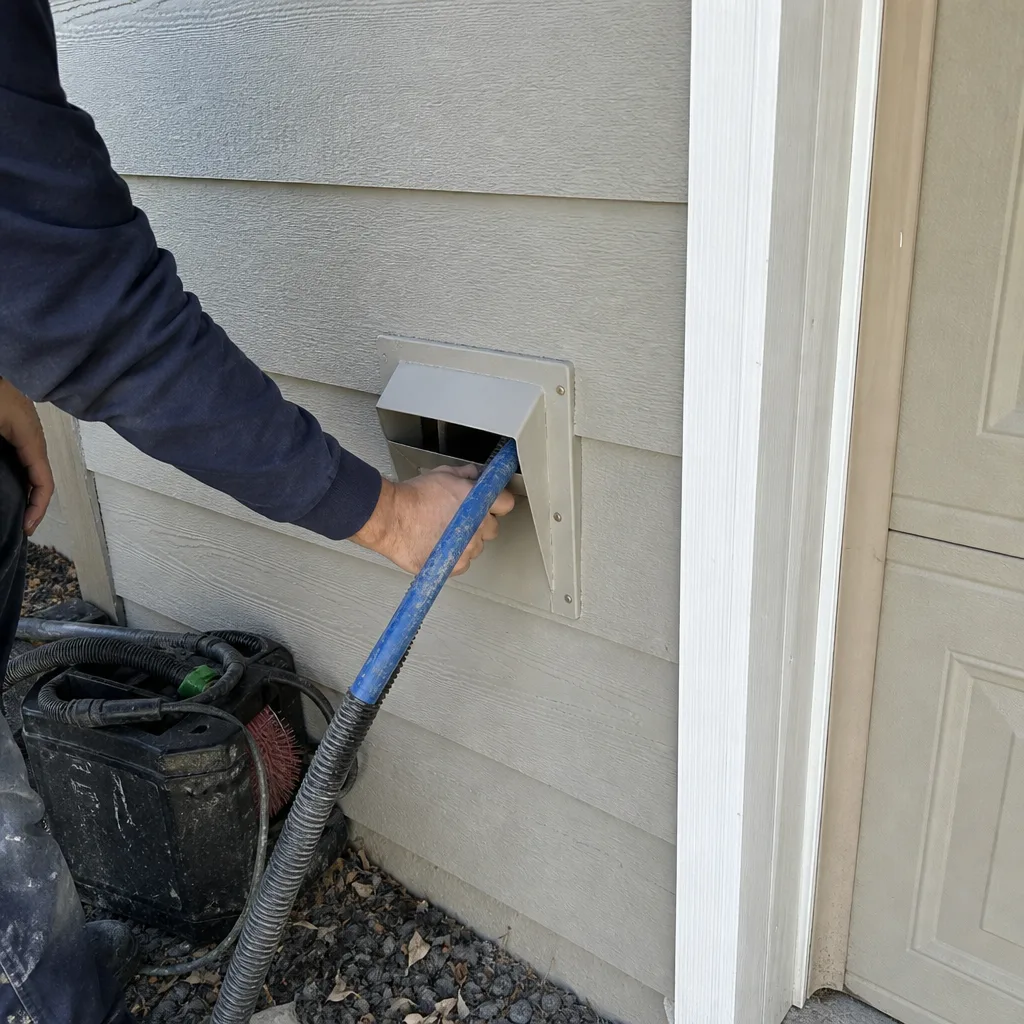 After
After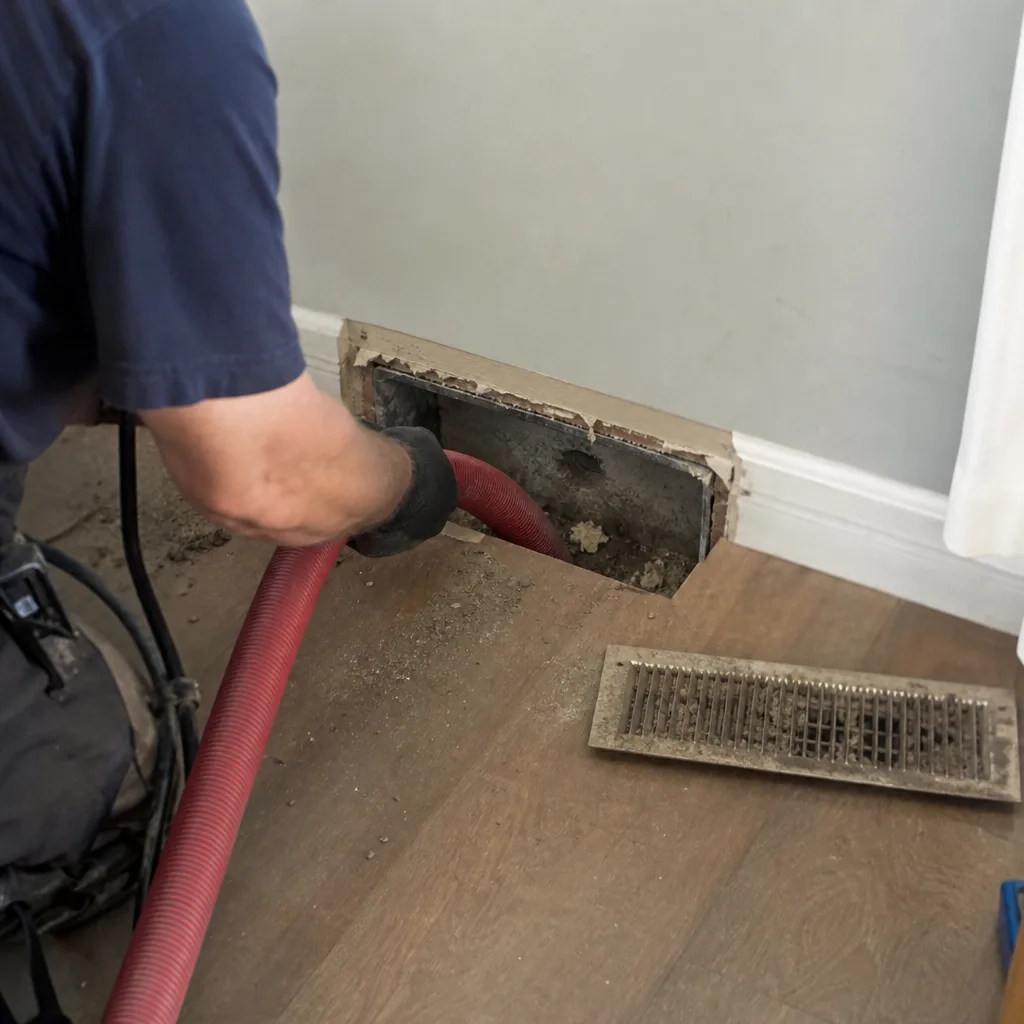 Before
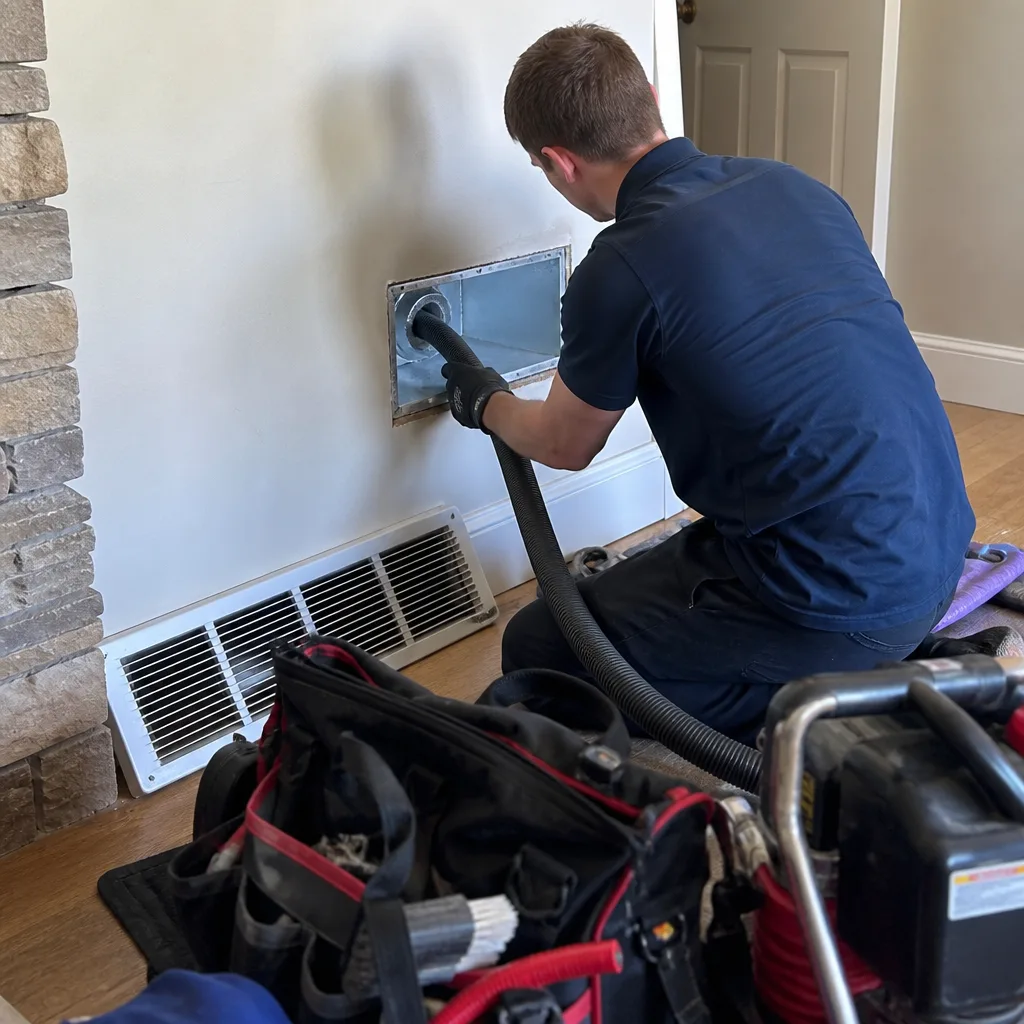 After
AfterAir Duct Cleaning Permits, Codes & Inspections in CO: What You Need to Know
Most homeowners in Littleton assume that if a contractor shows up with a vacuum and brushes, the work falls outside permit territory. That assumption holds true for cleaning alone, but it collapses the moment someone cuts into a trunk line, replaces a collapsed flex duct run, or installs a new register in a finished basement ceiling. We’ve arrived at jobs in Littleton’s Kipling Hills and Columbine West neighborhoods where the previous contractor’s “cleaning” included rerouting ductwork around a remodeled kitchen - work that should have triggered a mechanical permit, passed inspection, and been documented for the county. The homeowner only discovered the gap when their buyer’s inspector flagged unpermitted modifications during a 2023 sale. This guide draws the exact line between permit-exempt cleaning and permit-required mechanical work in Colorado, and serves as a companion to our The Complete Guide to Air Duct Cleaning in Littleton, which explains what Jefferson County and the city of Littleton actually enforce, and shows you what documentation to keep either way.
Quick Answer
Air duct cleaning in Colorado does not require a building or mechanical permit. However, any repair, replacement, or modification that alters the designed airflow path - including new register installation, duct board replacement, or trunk line rerouting - triggers permit requirements under local mechanical codes. In Littleton, Jefferson County and the city of Littleton share jurisdiction depending on your address, and both require permits for mechanical alterations even when the work is discovered during a routine cleaning.
Table of Contents
- Colorado’s Mechanical Code Framework: State, County, and City Layers
- Cleaning vs. Mechanical Work: The Exact Line
- What Stays Permit-Exempt During a Duct Cleaning Visit
- Specific Actions That Trigger a Mechanical Permit in Littleton
- What an Inspector Actually Checks on Ductwork Permits
- The Documentation Trail Homeowners Should Keep
- How Unpermitted Ductwork Surfaces During Insurance Claims and Home Sales
- A Checklist for Hiring a Duct Contractor in Jefferson County
BeforeAfterColorado’s Mechanical Code Framework: State, County, and City Layers
Colorado does not operate a single statewide building department that issues permits directly to homeowners. Instead, the state adopts model codes - currently the 2021 International Mechanical Code (IMC) with Colorado amendments - and delegates enforcement to local jurisdictions. For Littleton residents, this means your permit authority depends on your exact address.
Most of Littleton falls under Jefferson County Building Safety for unincorporated areas and the City of Littleton Community Development Department for addresses within municipal boundaries. The city maintains its own amendments to the IMC, while Jefferson County follows the regional variant adopted by the Jefferson County Regional Building Department, which also serves several adjacent municipalities. If you live near the border of Littleton and Columbine, or in the Ken Caryl Ranch area, your jurisdiction may differ from your neighbor’s across the street.
Both jurisdictions classify ductwork as part of the mechanical system. The IMC defines mechanical work broadly: “installation, alteration, repair, replacement, or modification of any mechanical system.” Cleaning - the removal of accumulated debris without altering system components - falls outside this definition. But the moment a technician detaches a duct run to replace it, cuts a new opening for a register, or modifies support structure, the activity crosses into regulated territory.
Colorado’s climate adds practical weight to these distinctions. The high-elevation sun load in Littleton, combined with rapid temperature swings between Front Range winter nights and intense summer afternoons, places unusual thermal stress on flex duct adhesive and mastic bonds. We’ve found separated trunk connections in 12-year-old Littleton homes that failed not from age alone but from repeated expansion-contraction cycles. When we document these findings during Air Duct Cleaning service visits, we separate cleaning recommendations from repair recommendations precisely because the repair work carries permit implications the cleaning does not.
The regional building departments maintain online permit lookup systems. Jefferson County’s database and Littleton’s permit portal both allow property owners to search historical permits by address. Before hiring any contractor who proposes duct modifications, verify whether previous mechanical permits exist for your home. A clean permit history that suddenly requires “repair work” during a cleaning visit should prompt specific questions about what exactly triggered the change.
Cleaning vs. Mechanical Work: The Exact Line
The distinction matters because it determines whether your project needs a permit, inspection, and contractor licensing verification. Here’s how the two categories break down in practice.
Cleaning activities remove contaminants from existing, intact ductwork without changing its configuration:
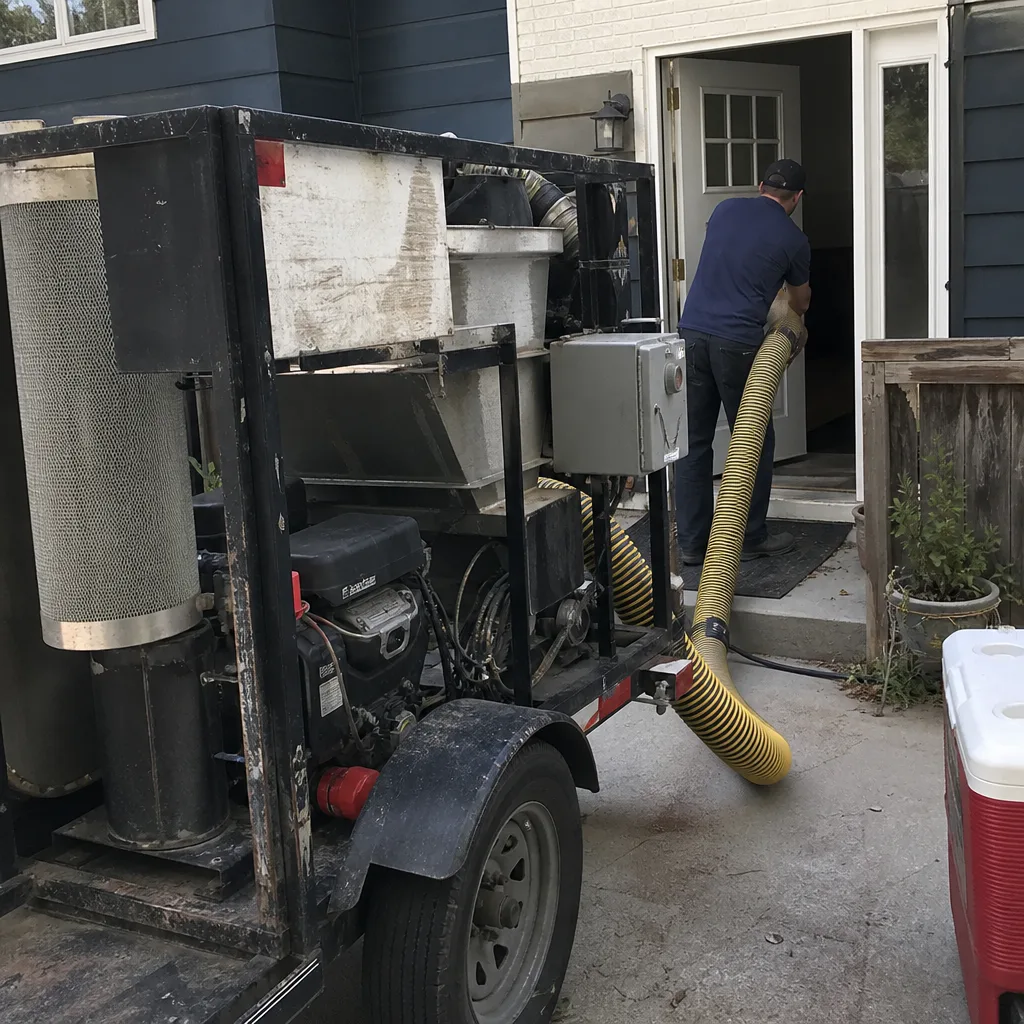
- Negative-pressure extraction using a vacuum collection device attached to the plenum (the main distribution box connected to your furnace) or individual duct runs
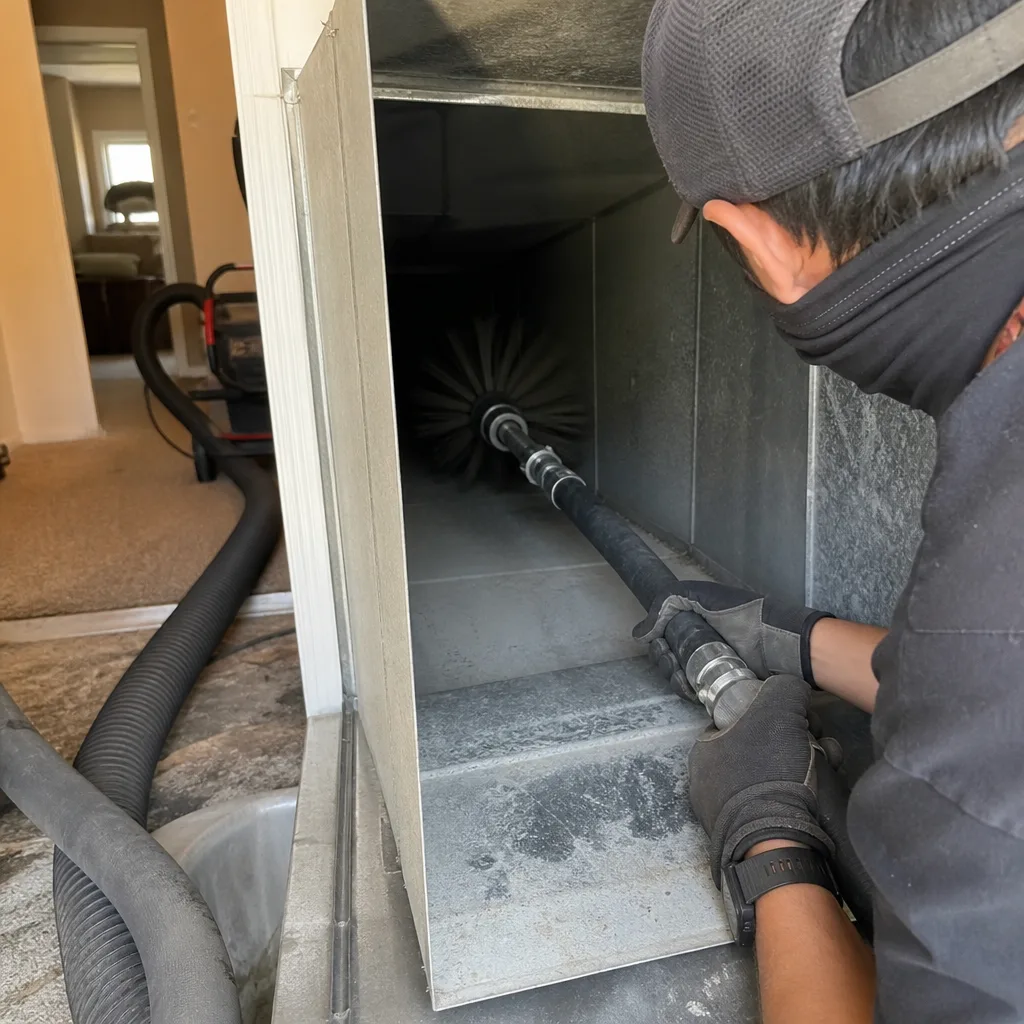
- Agitation with powered brushes or compressed air whips to dislodge debris from interior surfaces
- Application of EPA-registered sanitizers to existing duct interiors, provided no material is removed or added
- Camera inspection of existing duct runs to document condition
Mechanical activities alter the system as designed and permitted at original construction:
- Replacement of any duct section, whether flex, sheet metal, or duct board
- Installation of new registers, diffusers, or return air grilles where none existed
- Sealing of disconnected trunk lines with new sheet metal and mastic when the original connection has failed completely
- Modification of duct support spacing or hanger type
- Installation of access panels in locations where the system was not originally designed for service entry
The gray zone confuses homeowners. A technician who applies mastic tape to a minor leak at an existing joint is performing maintenance, not modification. The same technician who discovers a fully separated flex duct run, cuts away the damaged section, and installs new material with a start collar has performed mechanical work. At CleanRun Air Duct Cleaning Littleton home, we document which category each finding falls into on the written scope we deliver before any work begins. Haven Standard Clause 1 requires this separation: the written price lists cleaning line items and mechanical line items distinctly, so a homeowner can see where permit territory begins.
We’ve encountered competitors in the Littleton market who blur this line intentionally. A low-priced “cleaning” quote becomes a mechanical upsell once the truck arrives, with the contractor performing permit-required work without pulling the permit. The homeowner saves nothing; they simply defer the cost to a future sale or insurance dispute.
What Stays Permit-Exempt During a Duct Cleaning Visit
Understanding what does not require a permit helps you evaluate whether a contractor’s scope is properly classified. The following actions, performed during a standard Air Duct Cleaning in Littleton, fall outside Jefferson County and city of Littleton permit requirements:
- Negative-pressure extraction with HEPA-filtered collection. This is the core of professional duct cleaning. A vacuum device, such as equipment from Nikro or Abatement Technologies, attaches to your system’s plenum or a sealed register. The technician pressurizes each duct run sequentially, drawing loosened debris into the collection chamber. No system component is altered; only contaminants are removed.
- Mechanical agitation with powered brushes or air tools. Rotobrush systems and compressed air whips disturb adhered debris so the vacuum can capture it. The duct itself remains unchanged.
- Register and grille removal for access. Removing a supply register to insert cleaning tools, then reinstalling it, does not constitute modification. The register returns to its original location and function.
- Application of sanitizing agents to existing surfaces. EPA-registered products applied to intact duct interiors for microbial control do not alter the system’s mechanical properties. Note that sanitizing is distinct from coating; applying a sealant or liner that changes surface properties or airflow characteristics may trigger different regulatory considerations.
- Camera documentation of existing conditions. Our Documented Photo Record on Every Visit - a practice held since 2013 - captures the interior of each duct run before and after cleaning. This is inspection and documentation, not mechanical work.
- Filter replacement with equivalent specifications. Installing a new pleated or media filter in an existing rack, matching the original MERV rating and dimensions, remains routine maintenance.
The key test for permit exemption: could the work be performed without any tool that cuts, fastens, or adheres new material to the system? If yes, it likely falls outside mechanical permit territory. If no, proceed to the next section.
Specific Actions That Trigger a Mechanical Permit in Littleton
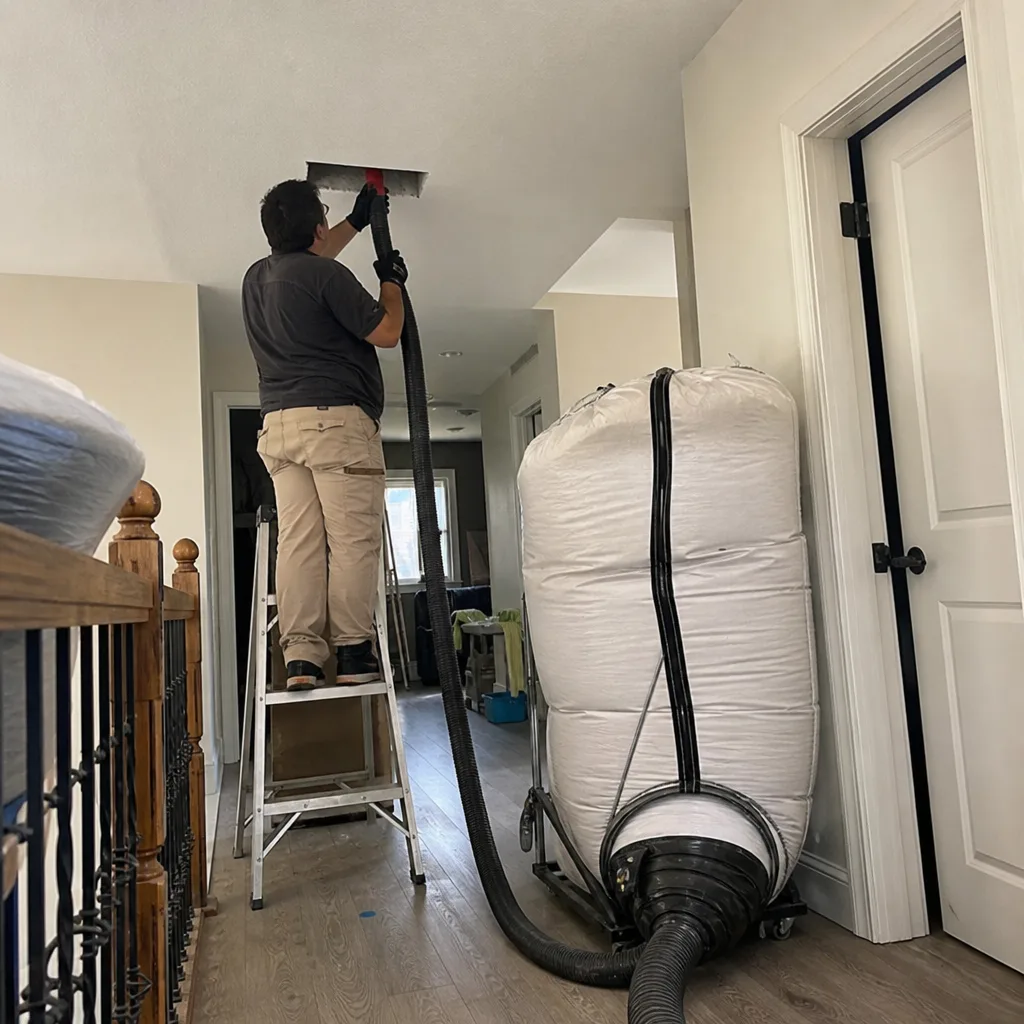
When a duct cleaning visit reveals conditions that require correction, certain actions cross into permit-required territory. Both Jefferson County and the city of Littleton enforce these requirements, though specific submittal processes differ.
Duct replacement of any material type. Whether the damaged section is flex duct with torn insulation, corroded galvanized sheet metal, or water-damaged duct board, replacement constitutes mechanical work. The permit application must include a scope description, and the finished work requires inspection before the system returns to service.
New register or diffuser installation. Cutting a new opening in a trunk line or extending a duct run to serve a finished basement room that previously lacked HVAC service changes the designed airflow. This requires mechanical permit, load calculation verification, and inspection.
Trunk line rerouting. In Littleton’s older neighborhoods like Old Littleton and the historic district near Main Street, we’ve found galvanized steel trunk lines from the 1970s and 1980s that contractors have “temporarily” disconnected and never properly reconnected. Rerouting around a remodeled space, even with identical material, alters the system path and requires permitting.
Duct board replacement. Unlike sealing with mastic or metal tape, which repairs existing joints, replacing a section of duct board involves fabricating a new component with specific R-value and flame-spread ratings. The inspector verifies these material properties.
Access panel installation in new locations. If your original system lacked service access and a technician cuts in a new panel for future maintenance, this modification requires documentation. Existing access points, cleaned and resealed, do not trigger this requirement.
Support system modification. Changing hanger spacing, support type, or penetration sealing method affects structural and fire-rated assembly integrity. Inspectors verify that supports match the mechanical plan and that penetrations maintain the original fire-resistance rating.
Here’s how Jefferson County and Littleton differ in practice:
| Jurisdiction | Permit Application | Typical Inspection Timeline | Online Lookup |
|---|---|---|---|
| Jefferson County (unincorporated Littleton addresses) | Submitted through Regional Building Department; contractor license verified at application | Rough inspection optional; final inspection required before system operation | Yes, by address |
| City of Littleton (municipal addresses) | Submitted through Community Development; plan review for modifications affecting load calculations | Rough inspection for concealed work; final inspection required | Yes, by address |
Contractors who perform this work without permits expose homeowners to significant downstream risk. We’ve reviewed competitor proposals in Littleton that included $800 in “duct repair” with no mention of permit costs or inspection scheduling. The low price is possible only because the contractor has absorbed the permit fee into hidden markup, or more commonly, intends to skip the process entirely.
What an Inspector Actually Checks on Ductwork Permits
Understanding inspector priorities helps you evaluate whether a contractor’s completed work will pass. We’ve accompanied inspectors on final inspections for duct modification permits in Jefferson County and observed consistent verification patterns.
Access and serviceability. The inspector confirms that access panels are located where specified on the approved plan, sized for technician entry, and properly sealed when closed. In tight Littleton crawl spaces common to 1980s ranch homes, we’ve seen contractors install panels too small for effective future service, failing inspection.
Support spacing and method. Flex duct must be supported at intervals specified by code, typically every 4 feet maximum with additional support within 1 foot of connections. Sagging flex duct creates debris accumulation points and airflow restriction. The inspector measures; eyeballing is not sufficient.
Material ratings and labeling. Duct board must carry visible UL 181 markings for flame spread and smoke development. Flex duct insulation must display R-value and vapor barrier rating. We’ve encountered unlabeled flex duct in Littleton jobs where the contractor substituted residential-grade material not rated for plenum or concealed space use.
Leakage test capability. For significant modifications, inspectors verify that the system can be sealed for duct leakage testing. This means temporary caps at registers, access to the air handler for pressure connection, and no permanent obstructions that would prevent future testing. The 2021 IMC references duct leakage standards that Colorado jurisdictions increasingly enforce.
Penetration firestopping. Where ducts pass through rated assemblies - garage-to-house walls, multifamily demising walls - the inspector verifies that firestop material matches the approved plan and maintains the assembly’s hourly rating. This is a common failure point in Littleton townhome inspections.
Return air path integrity. Modifications must not create return air pathways through unintended spaces. We’ve found contractor-installed jumper ducts in Littleton’s newer construction that violated this requirement by drawing return air through wall cavities not designed for that purpose.
A properly permitted and inspected modification generates documentation that transfers with the property. An unpermitted modification generates liability that also transfers, but without disclosure protection.
The Documentation Trail Homeowners Should Keep
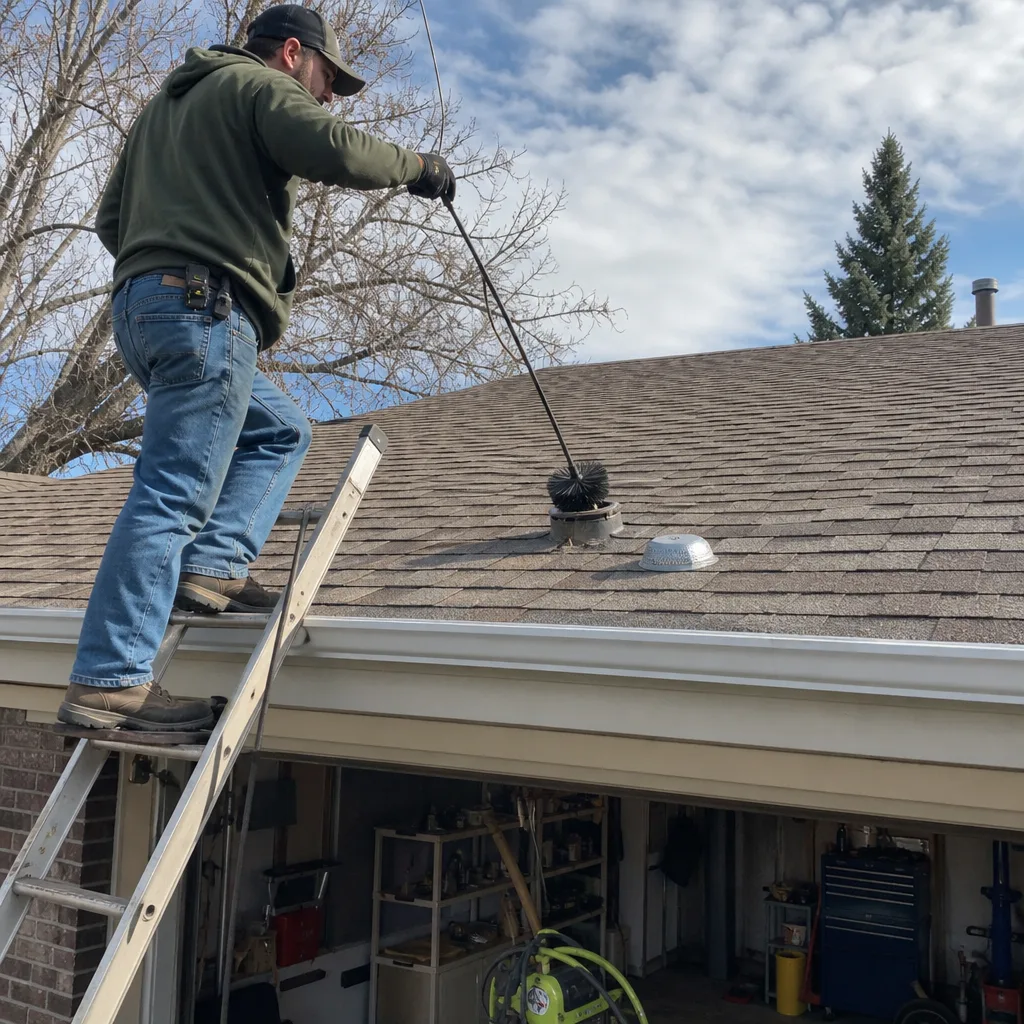
Even permit-exempt cleaning work deserves proper documentation. In Littleton’s active resale market, where homes purchased between 2015 and 2025 frequently turn over as owners relocate or upsize, service records answer buyer questions that otherwise trigger inspection contingencies.
We deliver the following on every HVAC Cleaning in Littleton job, regardless of permit status:
- Written scope and price agreement. Haven Standard Clause 1 requires this before work begins. The document specifies which activities are cleaning and which, if any, are mechanical modifications with permit requirements noted.
- Documented Photo Record. Every duct run, before and after, with timestamp and location label. Since 2013, we’ve delivered these as standard, not as an upsell. The photo record shows that work occurred, shows its extent, and provides a baseline for comparison at future service.
- Equipment and product specification. When sanitizers or sealants are applied, we note the EPA registration number and application concentration. When equipment from Honeywell or Aprilaire is referenced, we include model numbers so homeowners can verify specifications independently.
- Technician identification. Haven Standard Clause 3: Verified Crews. The technician’s name, background check verification, and arrival timestamp are recorded. This is not a marketing claim; it’s a documented fact in the job record.
- 365-Day Done Right Promise documentation. The written guarantee, not a policy subject to manager approval, specifies remedy procedures if work does not meet the agreed scope.
For permit-required work, homeowners should additionally retain:
- The permit application copy, showing scope description and approved plans
- Inspection approval documentation, including any correction notices and reinspection records
- Contractor license verification printout from the jurisdiction’s online system
- Final invoice clearly separating permit fees, inspection fees, and labor/material charges
We recommend creating a digital folder for your home’s mechanical systems, with subfolders for HVAC, plumbing, and electrical. Upload all documentation at the time of service. When you list your Littleton home for sale, this preparation converts inspection contingencies from negotiation leverage to non-events.
How Unpermitted Ductwork Surfaces During Insurance Claims and Home Sales
The consequences of unpermitted mechanical work rarely appear immediately. They surface at moments of maximum homeowner vulnerability.
Insurance claim denials. A fire originating in or near ductwork triggers insurer investigation of the mechanical system’s modification history. If unpermitted ductwork is discovered, particularly if material ratings are unverified or firestopping is absent, insurers may deny coverage based on policy conditions requiring code-compliant systems. We’ve consulted with Littleton homeowners whose claims were complicated by undocumented basement finishing that included HVAC extensions.
Buyer inspection findings. In Colorado’s seller disclosure regime, known unpermitted work must be disclosed. Undisclosed work discovered during inspection becomes a renegotiation point, often requiring either retroactive permitting (expensive, with potential code-upgrade triggers) or price concessions. In Littleton’s competitive market, either outcome disadvantages the seller.
Retroactive permitting costs. Jefferson County and Littleton both allow retroactive permits, but the process requires opening finished surfaces for inspector access, potential code compliance upgrades to current standards, and penalty fees. A $400 original permit avoided becomes a $2,000 retroactive exercise.
Title and escrow complications. Some title insurers flag unpermitted work discovered in public records, complicating closing. While less common for mechanical work than structural additions, the risk increases as jurisdictions digitize permit histories and make them searchable by property address.
The defense is straightforward: require permit verification for any mechanical work, maintain documentation for all work regardless of permit status, and verify contractor licensing before work begins. CleanRun’s Free Second Opinion on Any Written Estimate includes permit requirement review - bring a competitor’s proposal, and we’ll identify which line items, if any, trigger permit obligations.
A Checklist for Hiring a Duct Contractor in Jefferson County
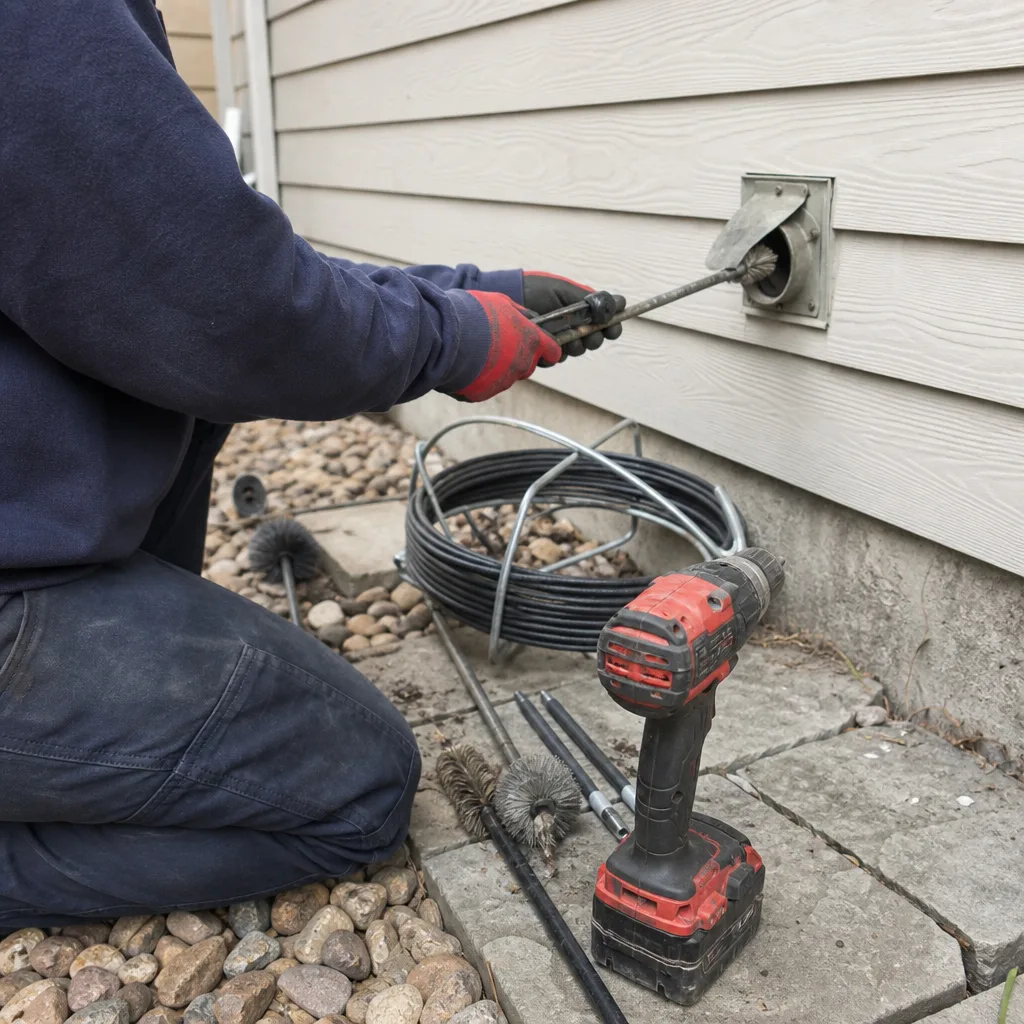
Use this checklist to evaluate any contractor proposing duct work in Littleton or surrounding Jefferson County areas. No single item guarantees quality, but missing items guarantee risk.
- License verification. Confirm the contractor holds a current mechanical contractor license in the jurisdiction where your property sits. Jefferson County and Littleton both maintain online license lookup. Ask for the license number and verify it yourself; don’t accept a business card at face value.
- Written scope separation. The proposal must distinguish cleaning activities from mechanical activities, with permit requirements noted for the latter. A single lump-sum “duct service” quote without line-item breakdown prevents informed consent.
- Written price before work starts. Haven Standard Clause 1. No exceptions. If a contractor cannot specify costs before disassembling your system, they cannot specify what they’re actually proposing to do.
- Permit inclusion or explicit waiver. For mechanical work, the proposal must state whether permit fees are included, itemized separately, or not required with justification. “We’ll take care of it” without documentation is not an answer.
- Equipment specification. Professional-grade equipment from recognized manufacturers - Rotobrush, Nikro, Abatement Technologies, Honeywell, Aprilaire, Guardsman - should be named specifically, not described generically as “commercial vacuum” or “professional tools.”
- Documentation commitment. Before-and-after photography of every duct run should be standard, not optional. Ask to see sample deliverables from previous jobs.
- Written guarantee with remedy procedure. The 365-Day Done Right Promise specifies what happens if work fails, not merely that the company “stands behind” its work. Standing behind is posture; written remedy is accountability.
- Background-check verification. Haven Standard Clause 3 requires verified crews. The technician arriving at your door should be identifiable by name, with verification available on request.
We’ve applied this checklist to competitor proposals brought in for Free Second Opinion consultations, as discussed in more guides & resources on our blog. The most common gaps: no permit mention for clearly mechanical work, no equipment specification, and “satisfaction guaranteed” language without specific remedy terms.
Common Mistakes to Avoid
- Assuming all duct service is permit-exempt. Cleaning is; repair and modification are not. Ask specifically which category each proposed action falls into.
- Accepting verbal permit assurances. A contractor who says “I’ll pull the permit” but delivers no permit number within 48 hours of work commencement has likely not done so. Verify through the jurisdiction’s online system.
- Ignoring jurisdiction boundaries. Your Littleton mailing address does not determine your permit authority; your property tax records do. Verify whether you’re municipal Littleton or unincorporated Jefferson County before work begins.
- Discarding cleaning documentation because “it was just maintenance.” Future buyers and insurers value service history. The Documented Photo Record from a 2019 cleaning establishes baseline condition that protects you if a 2026 claim alleges long-term neglect.
- Hiring based on lowest cleaning quote without scope comparison. A $79 coupon that discovers $2,400 in “necessary repairs” has converted cleaning into unpermitted mechanical work. Compare written scopes, not headline prices.
- Failing to verify material ratings on replacement ductwork. Unlabeled flex duct costs less but may fail inspection or create insurance exposure. Request UL 181 marking verification.
- Neglecting to ask about firestopping on garage or multifamily penetrations. These are common inspection failure points in Littleton townhomes and homes with attached garages. A contractor who doesn’t mention firestopping likely hasn’t addressed it.
When to Call a Professional
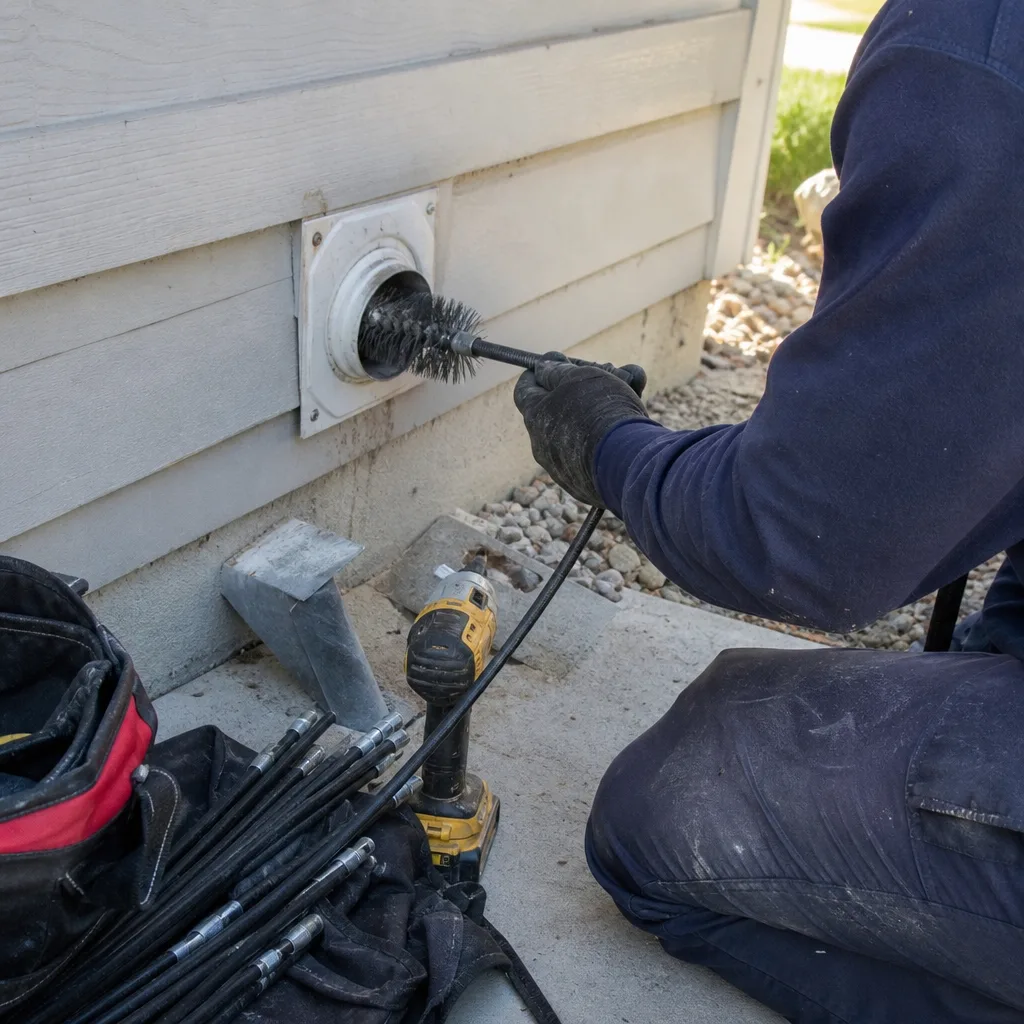
Call a licensed mechanical contractor when your duct system requires anything beyond contaminant removal from intact ductwork. If a cleaning visit reveals separated connections, collapsed flex duct, water damage, or airflow deficiencies that require material replacement or path modification, the work has entered permit territory. CleanRun Air Duct Cleaning Littleton offers free estimates in Littleton - call (720) 315-7291 - and every estimate includes explicit classification of cleaning versus mechanical activities, with permit requirements identified in writing before any commitment. For Dryer Vent Cleaning in Littleton, the same documentation standards apply: written price, photo record, and written scope delivered before work begins.
Frequently Asked Questions
No. Air duct cleaning - the removal of dust, debris, and contaminants from existing, intact ductwork - does not require a building or mechanical permit in Littleton, Jefferson County, or anywhere in Colorado. The work does not alter the system’s design, materials, or airflow path. If a contractor proposes activities that seem to require cutting, fastening, or material replacement, those activities have crossed into mechanical work that may require permitting, and should be identified as such in your written scope.
Whole-system air duct cleaning in the Littleton market typically ranges from $450 to $850 for a single-family home, depending on system size, accessibility, and contamination level. This range reflects professional-grade equipment, documented photo records, and written scope delivery - not shop-vac noise. CleanRun provides a written price before any work starts, with no per-vent add-ons or post-arrival upsells. Call (720) 315-7291 for an exact quote; estimates are free.
Low quotes typically exclude equipment, documentation, or legitimate scope. A $79 coupon covers minimal register vacuuming without plenum access or negative-pressure extraction. The business model depends on discovering “problems” after arrival and converting the visit to high-pressure mechanical upsells, often performed without permits. Ask what equipment will be used, whether every duct run will be photographed, and whether the price is binding before work begins.
Require three deliverables: a written scope specifying materials and methods, timestamped before-and-after photography of each modified section, and inspection approval from the issuing jurisdiction for permit-required work. CleanRun’s Documented Photo Record on Every Visit, held since 2013, shows the interior of every duct run. For mechanical modifications, we provide permit numbers for homeowner verification through Jefferson County or Littleton’s online systems.
Every 3 to 5 years for typical Littleton homes, with shorter intervals for households with pets, recent renovation, or respiratory sensitivities. The Front Range’s dry climate and seasonal wind patterns introduce more particulate than humid climates, and wildfire smoke events in recent years have accelerated accumulation in some systems. A camera inspection provides objective evidence of whether your specific system needs service, replacing calendar guesses with documented condition.
You face three options, all costly: negotiate a price concession, obtain retroactive permits with potential code-upgrade requirements, or risk transaction delay or cancellation. Colorado’s seller disclosure requirements obligate disclosure of known unpermitted work. The defense is prevention: verify permits for all mechanical work, maintain documentation for all service, and address any gaps before listing. A clean permit and service history converts from liability to marketing asset.
The Bottom Line
Air duct cleaning in Colorado requires no permit. The repair, replacement, and modification work frequently discovered during cleaning absolutely can, and in Littleton’s jurisdiction, specific actions trigger Jefferson County or city of Littleton mechanical permit requirements. The homeowner’s protection lies in demanding written scope separation, verifying contractor licensing, and maintaining documentation that transfers with the property. CleanRun’s practice since 2013 - written price before work, photo record after, and the 365-Day Done Right Promise in writing - applies regardless of permit status, because accountability does not depend on regulatory requirements. For any duct service in Littleton, require the same standard.
Written by Tomas Reyes, Owner at CleanRun Air Duct Cleaning Littleton, serving Littleton since 2013.