
Last updated September 23, 2026
Whole-system duct and dryer vent check with before-and-after photos - you see exactly what came out of your vents
That "$99 whole-house special" is a bait ad - the real number appears once they are in your hallway, or the "clean" is a shop-vac at the register. We photograph the inside of your ducts before and after instead.
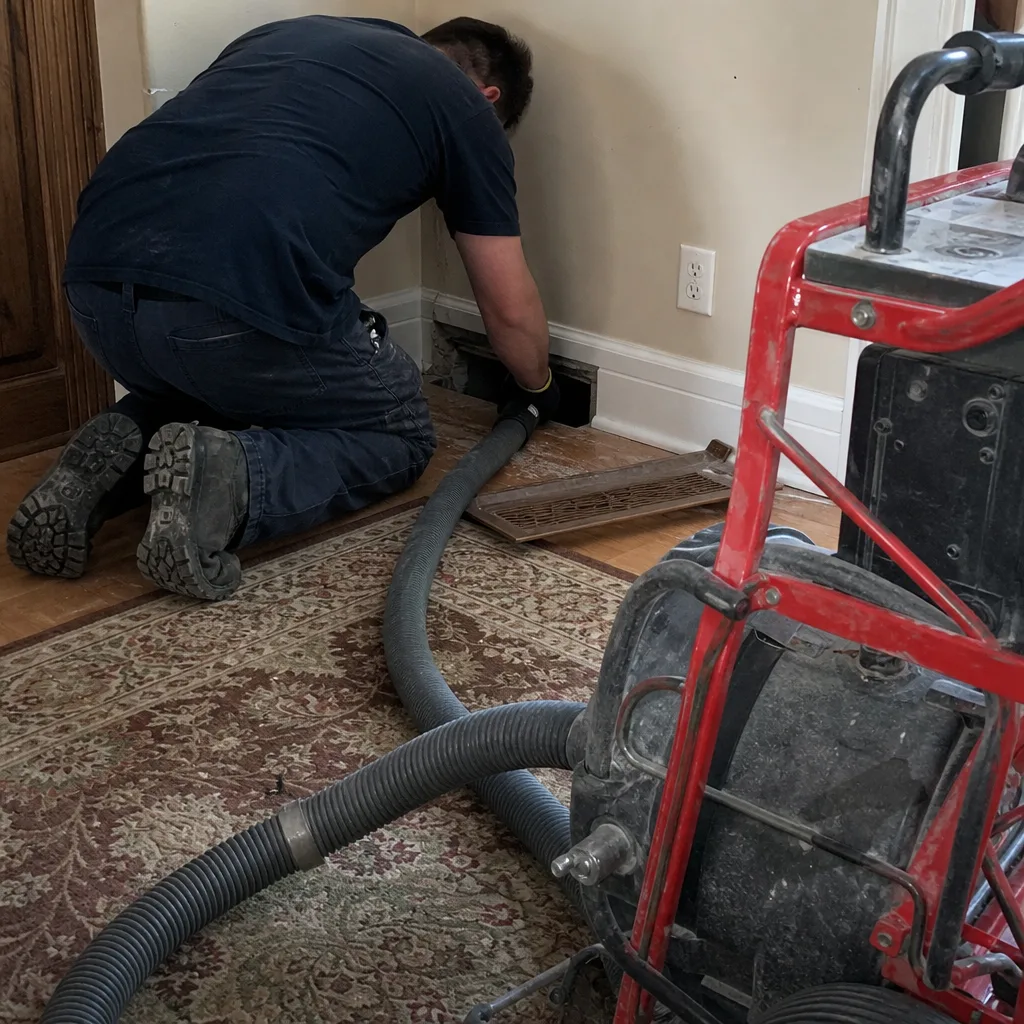 Before
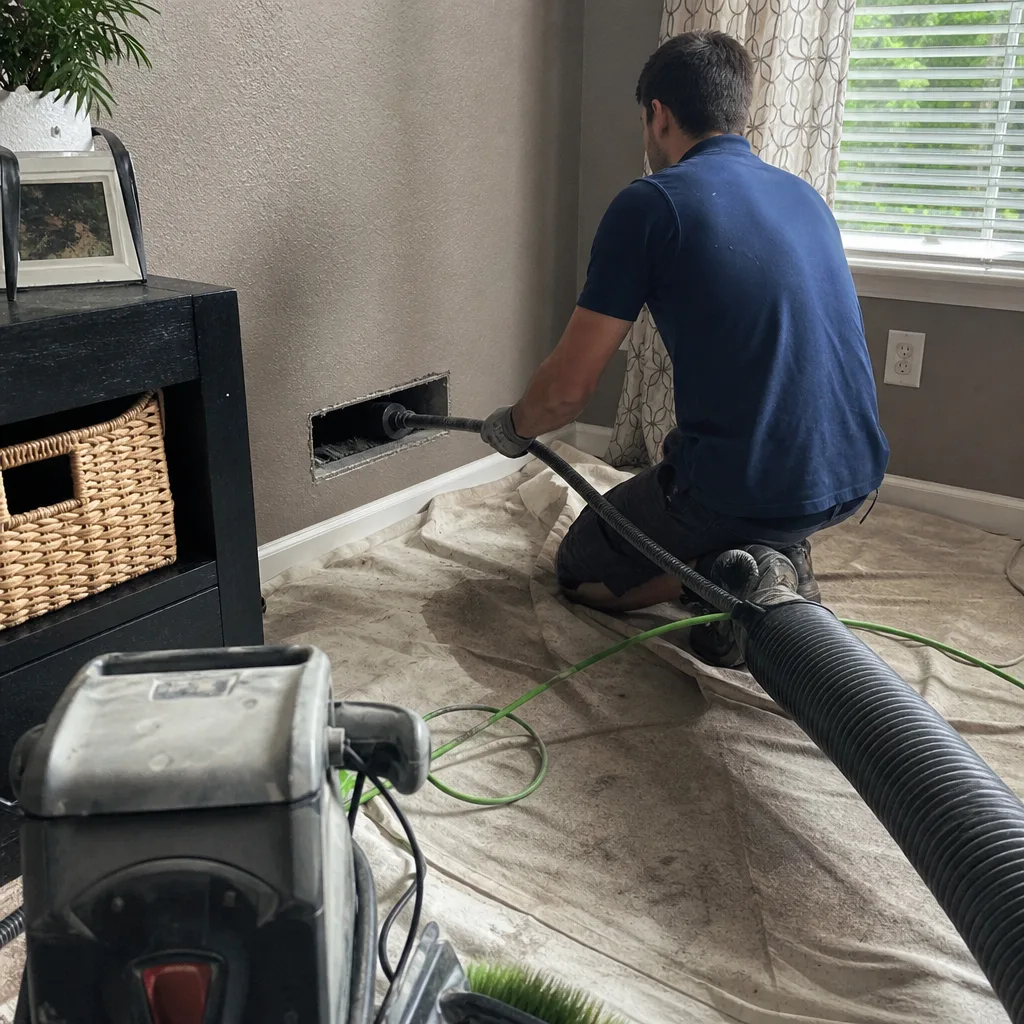 After
After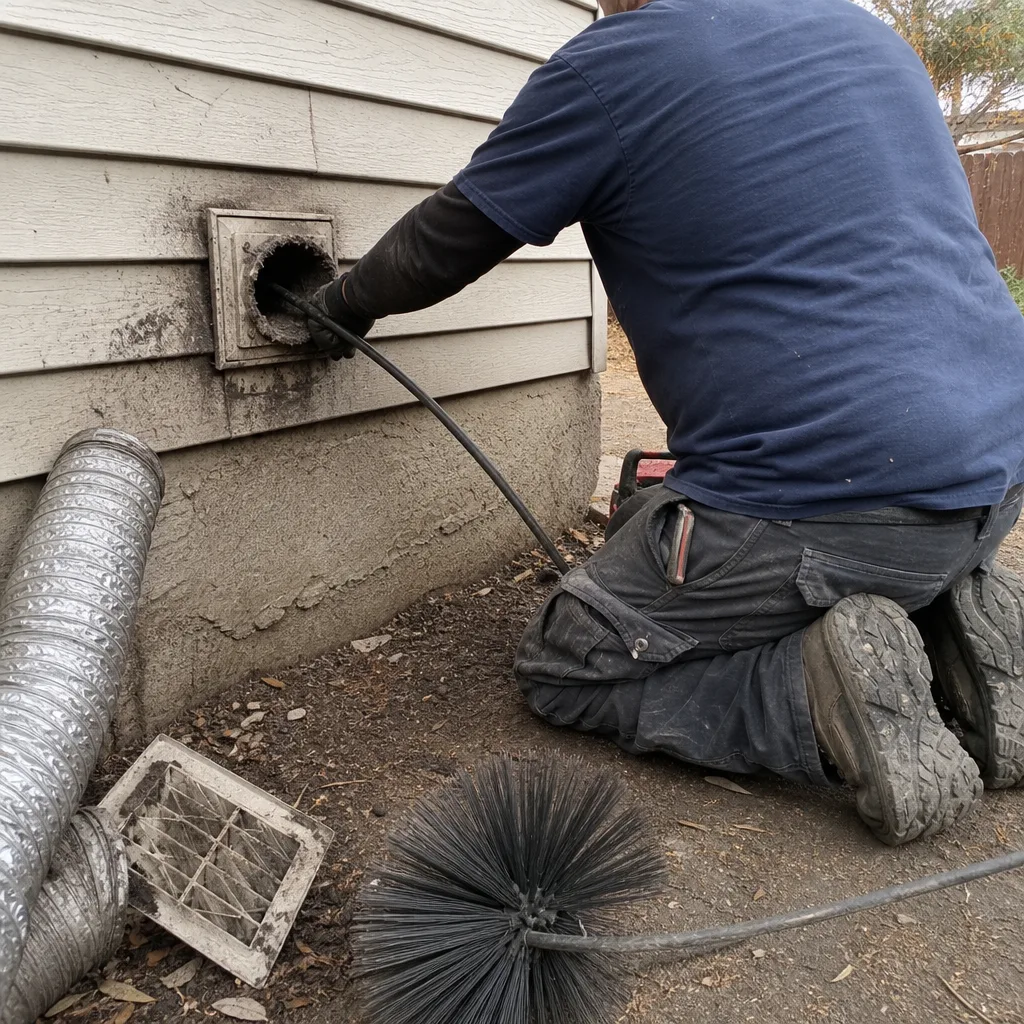 Before
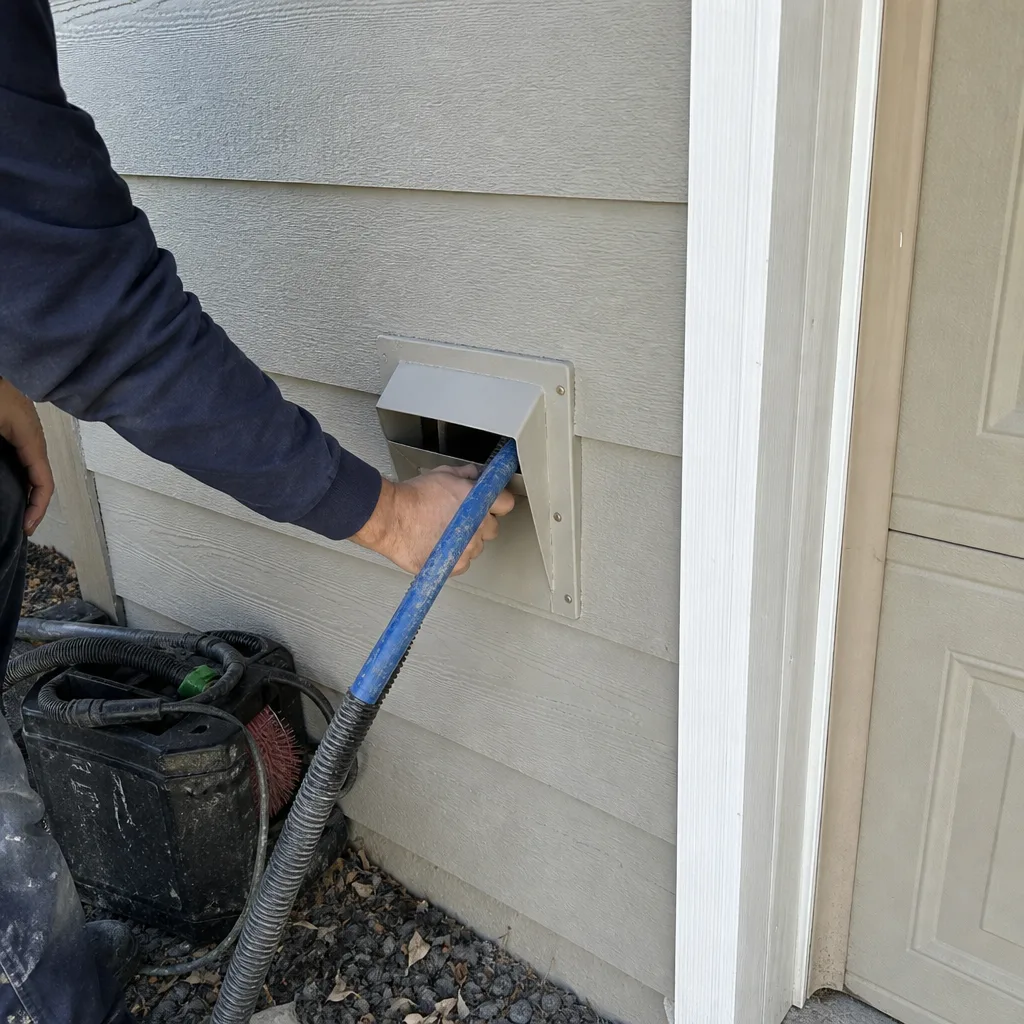 After
After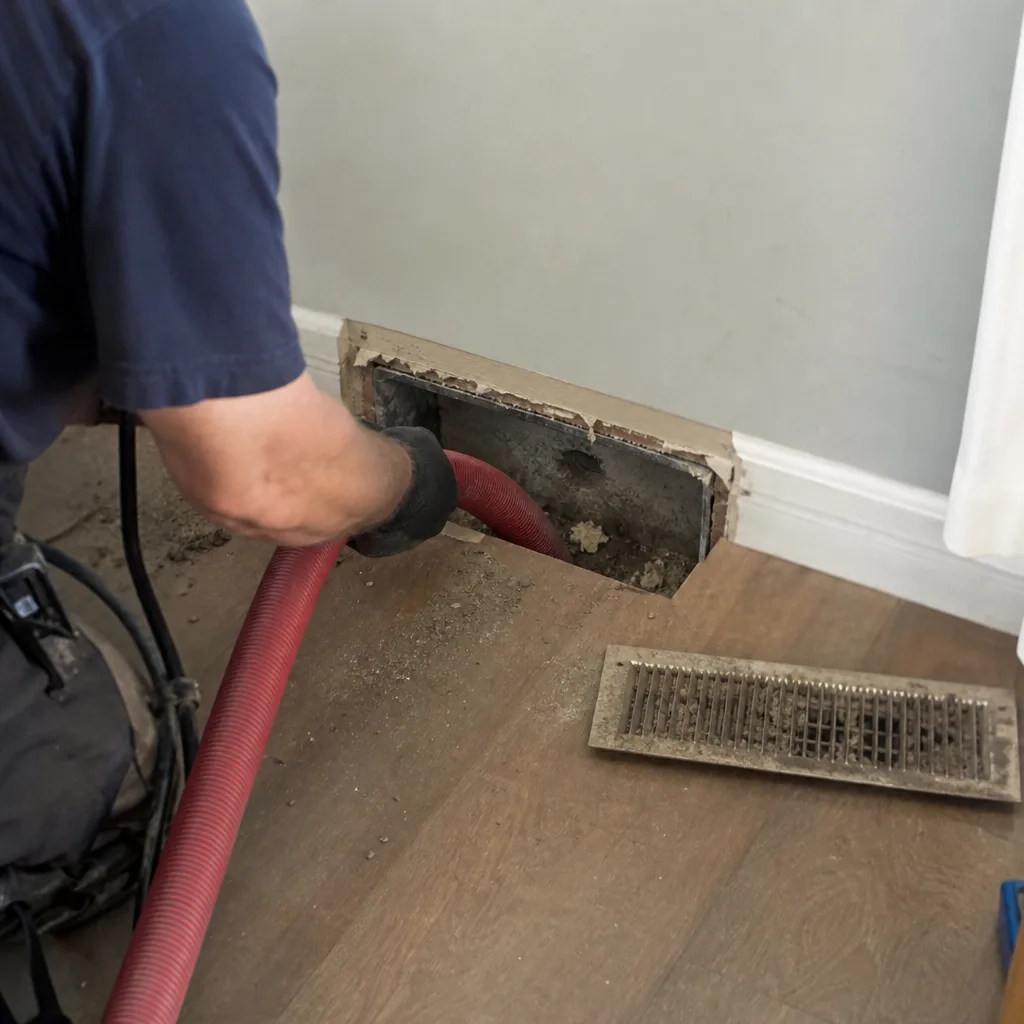 Before
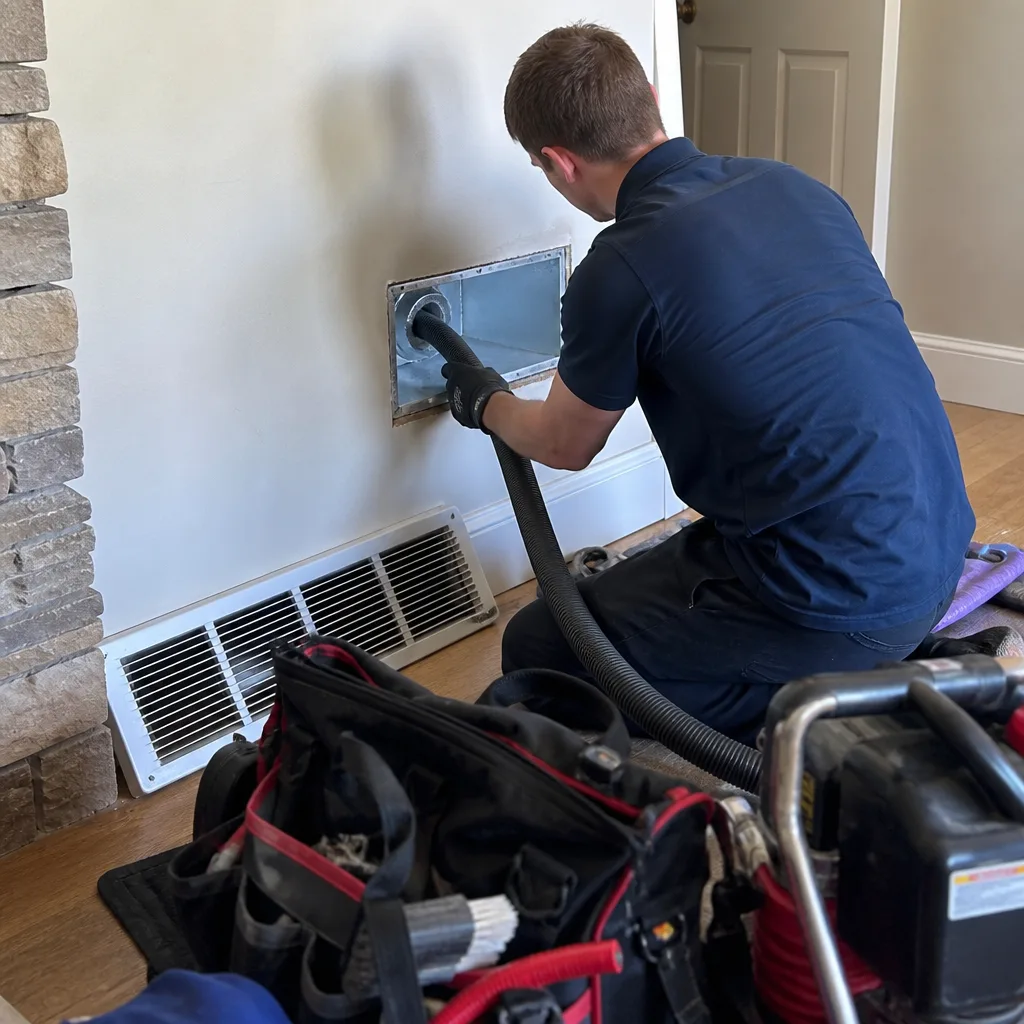 After
AfterDIY vs Professional Air Duct Cleaning: The Littleton Homeowner’s Decision Guide
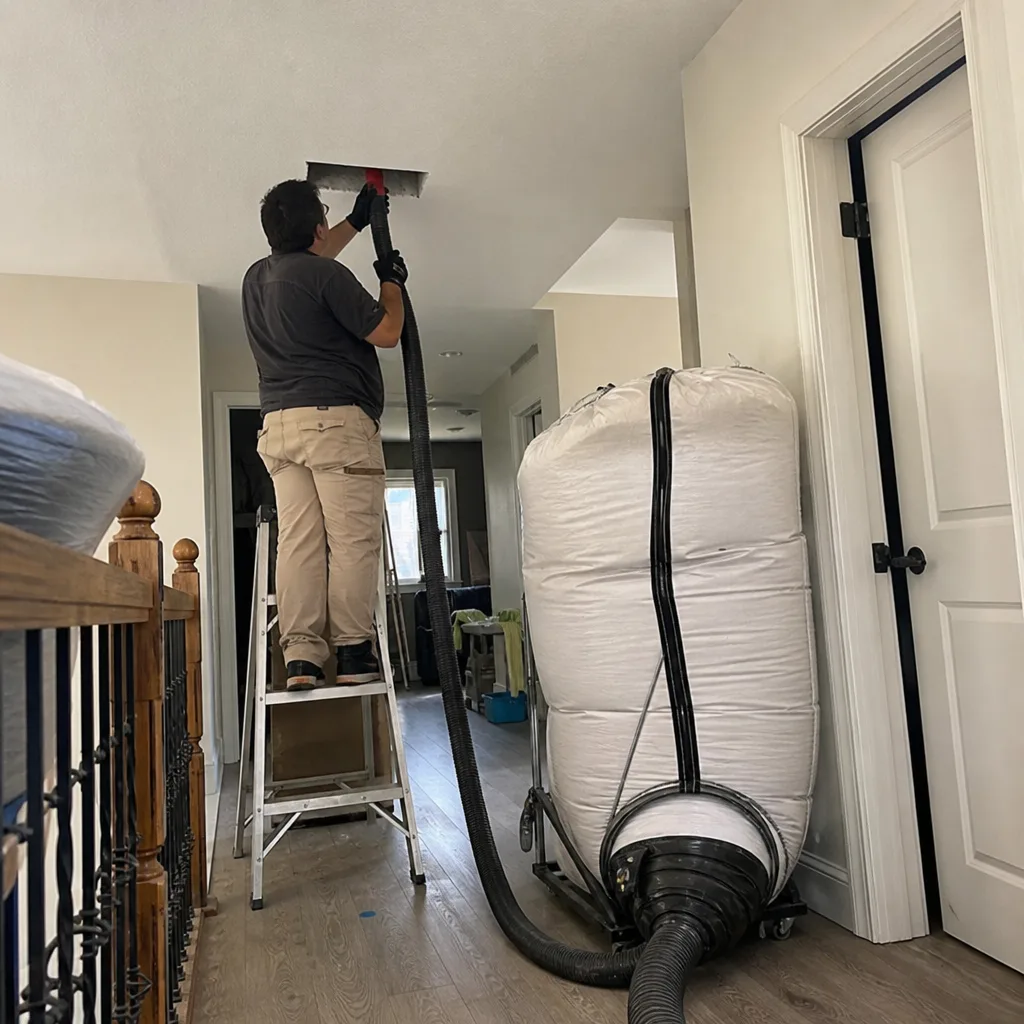
A standard shop-vac generates roughly 60-80 CFM of suction. A truck-mounted negative-air vacuum system used by professional duct cleaners generates 8,000-16,000 CFM. That’s not a quality gap - it’s a different category of tool solving a different part of the problem. Most Littleton homeowners who ask us whether they should clean their own ducts are really asking two questions: what can I safely accomplish myself, and what requires equipment I cannot access? This guide answers both with specific numbers, specific boundaries, and the physics that determines where DIY ends and professional work begins.
Quick Answer
DIY air duct cleaning in Littleton can effectively remove surface debris from register faces, the first 12-18 inches of branch ducts, and grille assemblies, plus replace filters. It cannot create the negative-pressure extraction required to pull debris from trunk lines or the plenum, which means anything beyond the immediate register area stays in the system or gets redistributed into living spaces. For whole-system cleaning, documented results, or any biological contamination, professional equipment and containment protocols are required.
Table of Contents
- What DIY Air Duct Cleaning Can Actually Accomplish
- The Physics That Limits Every DIY Attempt
- When DIY Is the Right Call in Littleton
- When Professional Cleaning Is Required
- Consumer vs. Professional Equipment: A Real Comparison
- Cost Breakdown: DIY vs. Professional in Littleton
- What to Ask a Professional to Document
- Common Mistakes to Avoid
BeforeAfterWhat DIY Air Duct Cleaning Can Actually Accomplish
DIY duct maintenance has a legitimate role. The problem is that most guides either overstate it (“clean your entire system with a shop-vac”) or dismiss it entirely (“don’t touch anything, call a pro”). Neither is accurate. Here’s what a homeowner can actually achieve with consumer tools:
Register Face and Grille Cleaning
Remove the register grille, vacuum the face and back with a brush attachment, and wash with mild detergent if needed. This removes the visible dust accumulation that recirculates every time the blower cycles. In Littleton’s dry climate, where winter heating runs hard and summer afternoon storms keep windows closed, register faces collect fine particulate faster than in more humid regions. A quarterly cleaning here has measurable value.
First 12-18 Inches of Branch Duct
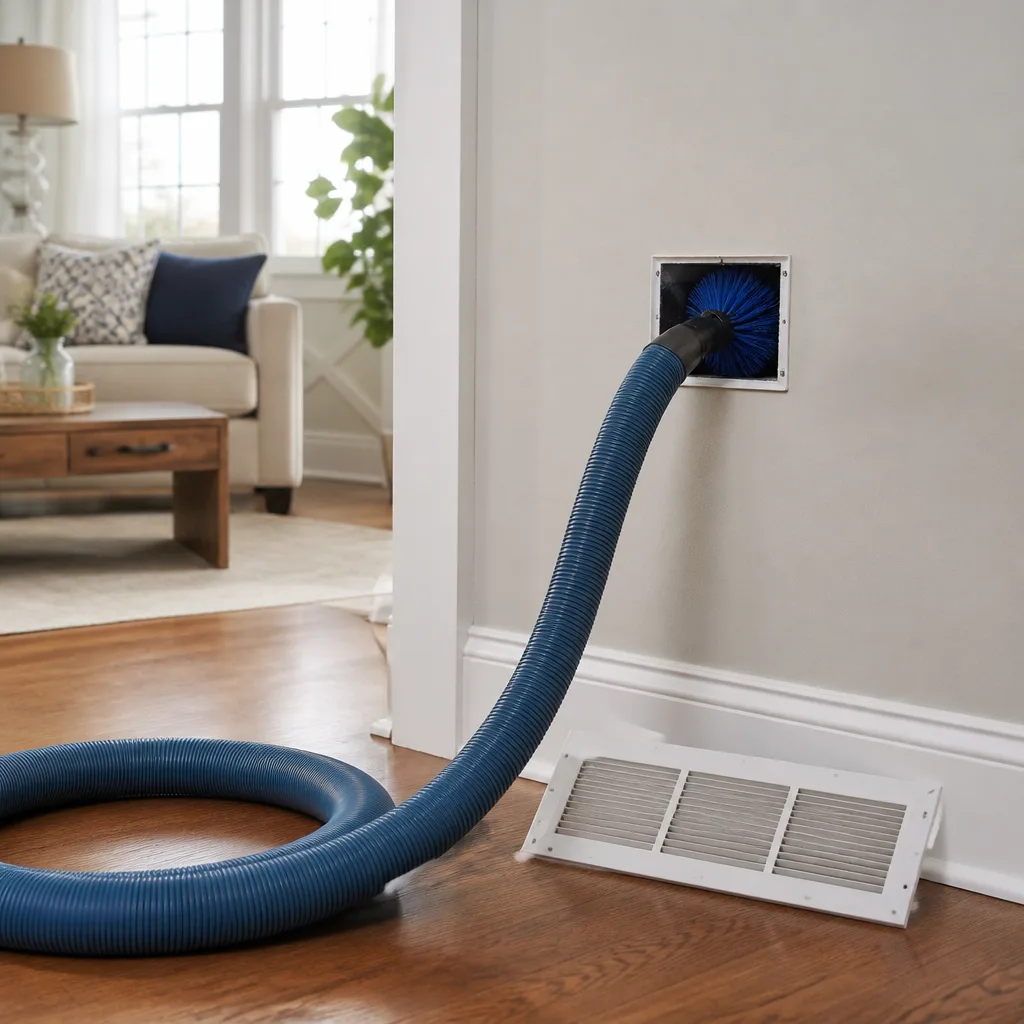
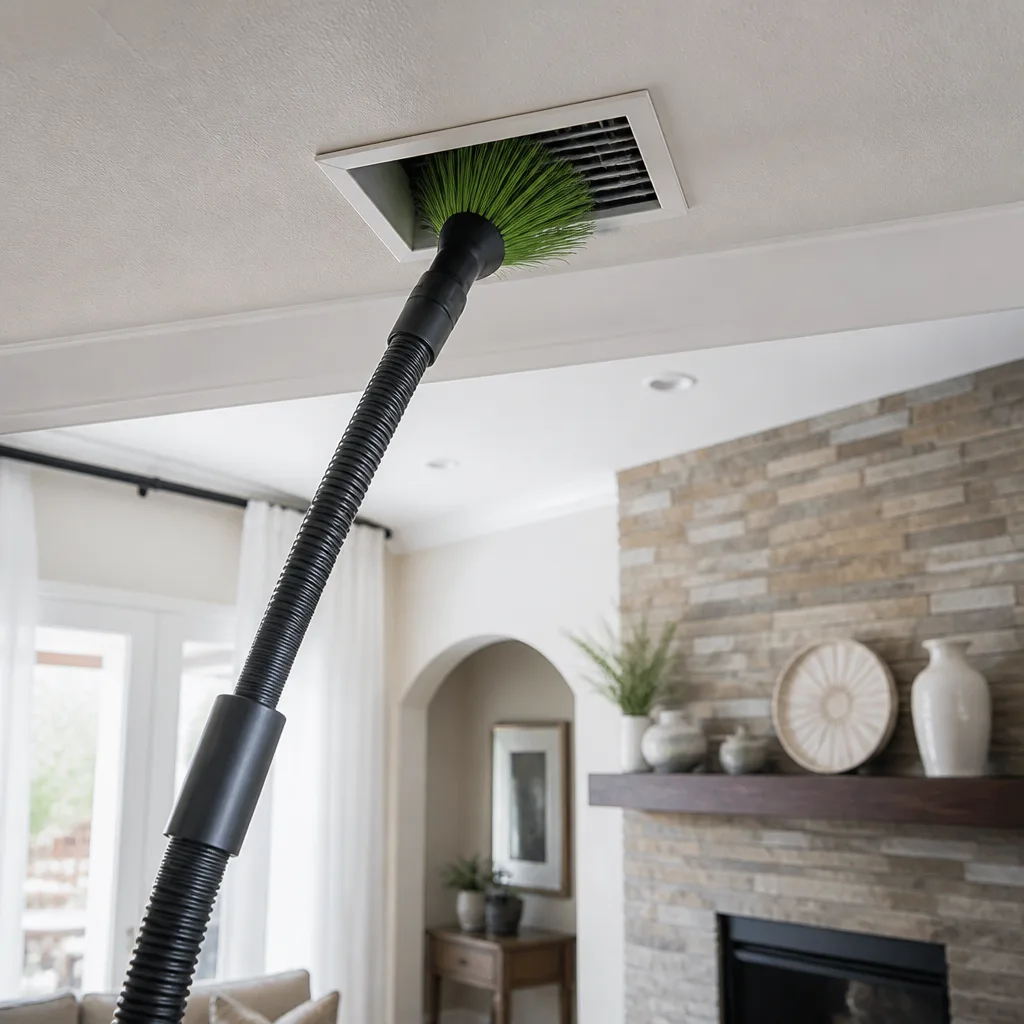
With a shop-vac hose and a long brush extension, you can reach slightly past the boot where the branch duct meets the register. You’ll pull out lint, pet hair, and construction dust that settled near the opening. This is where the majority of visible debris accumulates, so the improvement is noticeable. What you won’t reach: the elbow where the branch turns toward the trunk, or any point where the duct narrows or changes direction.
Filter Replacement
The most impactful DIY task. A clogged 1-inch pleated filter in a Littleton home with forced-air heating can increase static pressure by 0.3-0.5 inches WC, straining the blower motor and reducing airflow to distant rooms. Replace every 60-90 days during heavy-use seasons. Use the MERV rating specified by your equipment manufacturer; higher is not always better if the blower cannot overcome the resistance.
Documentation Baseline
Here’s something few guides mention: DIY cleaning is valuable for documentation. Photograph the inside of each register opening before you vacuum. Note the date, the room, and what you found. When you later hire a professional, you’ll have a baseline. If a contractor shows you a photo of “your ducts” that looks nothing like what you documented, you’ll know to ask which run that image came from.
CleanRun’s Air Duct Cleaning in Littleton includes this documentation as standard, but there’s no reason a homeowner cannot start the record themselves.
The Physics That Limits Every DIY Attempt
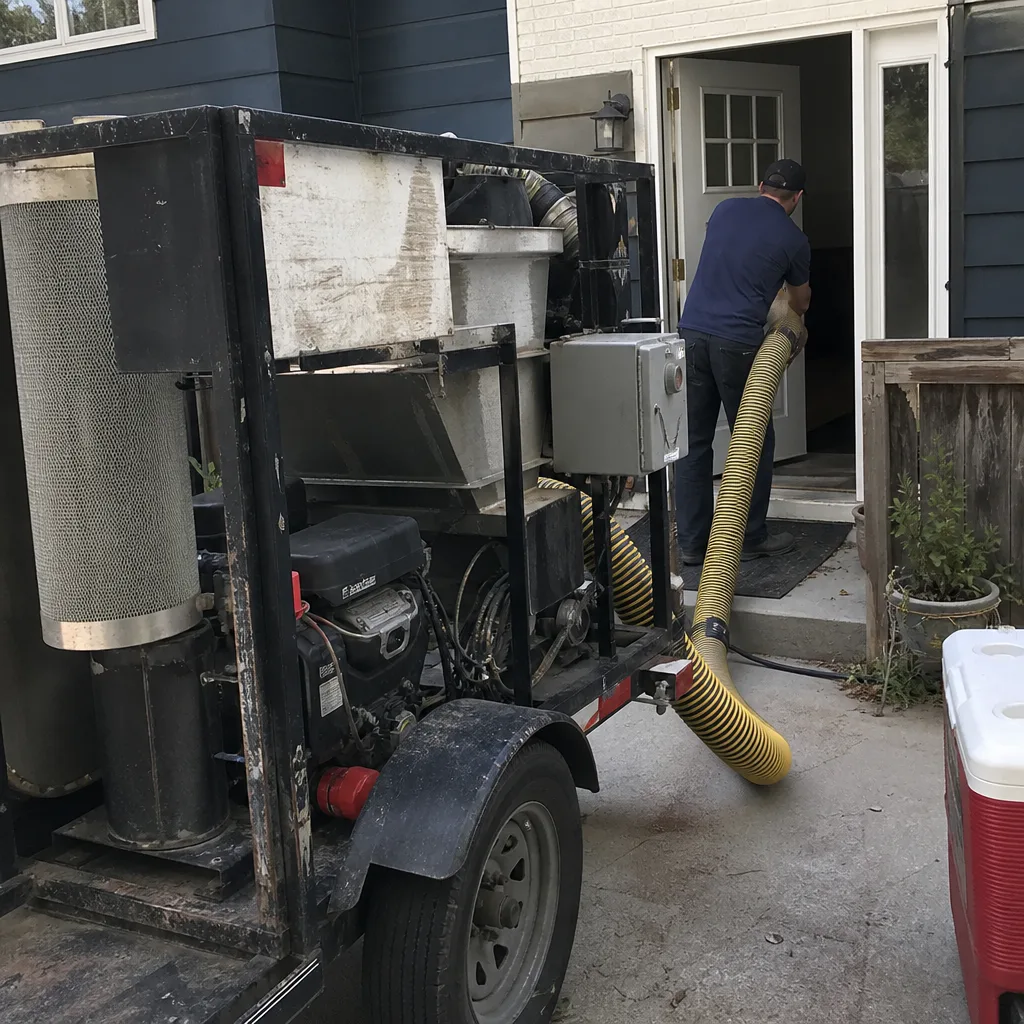
The fundamental problem with DIY duct cleaning is not skill or effort. It’s pressure differential.
Negative-Pressure Extraction: What It Means
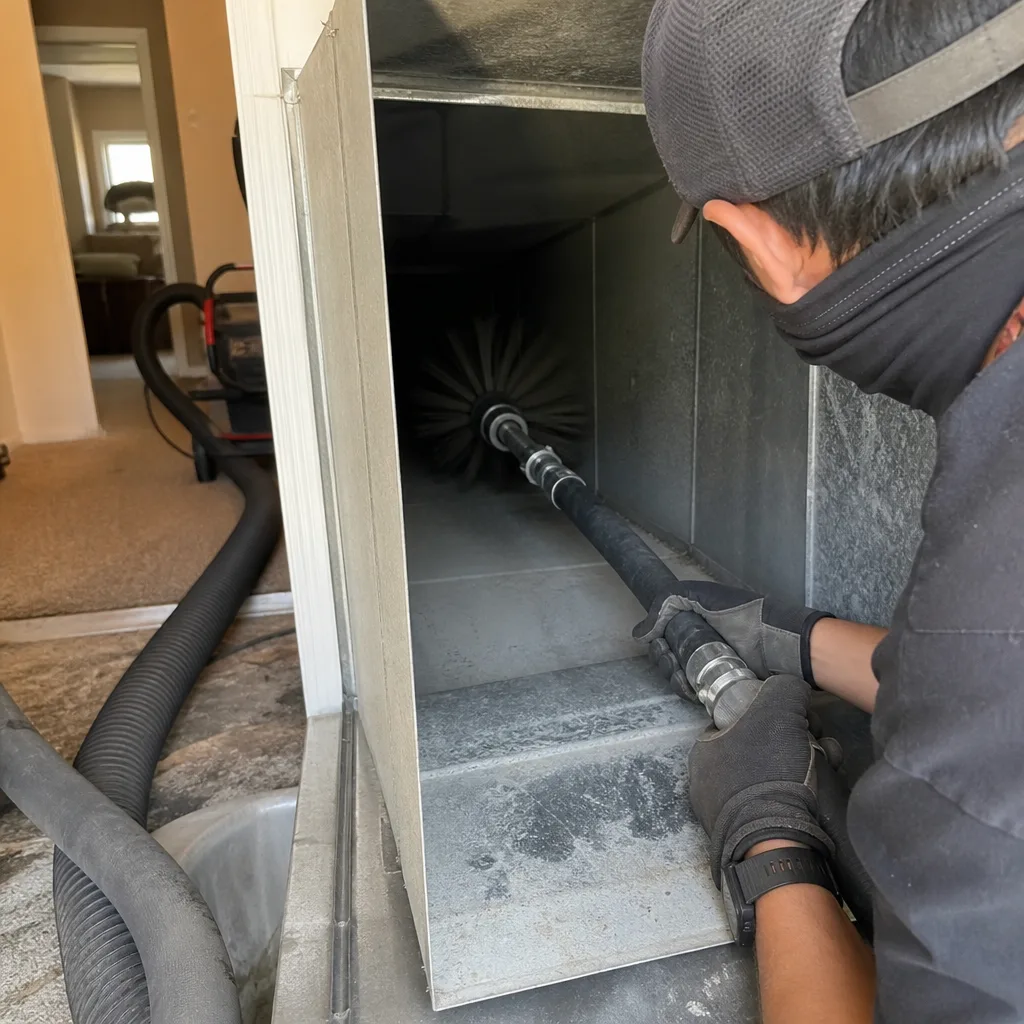
Professional duct cleaning operates on negative-pressure extraction: a large vacuum (typically 8,000-16,000 CFM) is connected to the trunk line, creating suction throughout the entire system. Agitation tools - brushes, whips, compressed-air nozzles - loosen debris inside each duct run, and the pressure differential pulls that debris toward the vacuum collection point. The debris moves in one direction: out of the house.
Without this pressure differential, agitation does the opposite of what you intend. A brush pushed into a duct run with no extraction source disturbs debris and lets the blower or natural air currents redistribute it. Some falls back out the register. Some pushes deeper into the system, past elbows and junctions where it previously couldn’t reach. The register looks cleaner. The system may be dirtier.
Why Shop-Vacs Cannot Close the Gap
A standard shop-vac, even a high-end model, generates 60-80 CFM at the hose end. Seal that hose to a 6-inch round duct, and you’re pulling from a cross-sectional area of roughly 28 square inches. The velocity drops. The vacuum cannot overcome the static pressure of a duct run that extends 20, 30, or 40 feet from the register. Even if you could push the hose that far - and in most residential flex duct, you cannot navigate past the second elbow - there’s no mechanism to pull debris back toward you.
Truck-mounted systems solve this by connecting to the trunk line, upstream of all branches. The entire system becomes the suction path. A register in a second-floor bedroom in Littleton’s Ken Caryl neighborhood is now part of a continuous pressure gradient back to the vacuum source. No consumer tool replicates this.
The Containment Problem
Professional equipment also includes HEPA filtration on the vacuum exhaust. Disturbed mold spores, rodent droppings, or fine particulate are captured at 99.97% efficiency at 0.3 microns. A shop-vac exhausts through its own filter, which is not HEPA-rated, and often discharges fine particles back into the room through gaps in the housing. In a Littleton basement with a utility room setup, this means the air handler can immediately recirculate what you just expelled.
When DIY Is the Right Call in Littleton
Specific scenarios where homeowner maintenance is appropriate, even preferable:
- Post-renovation dust on register faces only. If you had hardwood floors refinished in your Littleton Ranch home and dust settled on grilles but contractors protected duct openings, register cleaning is sufficient. Don’t pay for whole-system work when the system wasn’t contaminated.
- Routine filter and grille maintenance between professional cleanings. If you had professional cleaning 4-5 years ago, no pets, no renovations, and no symptoms, quarterly register vacuuming and faithful filter replacement may extend the interval appropriately.
- Building your own documentation record. As noted above, photographing register openings seasonally creates a timeline. If accumulation suddenly accelerates, you have evidence of a change - duct leak, filter bypass, equipment issue - that justifies professional inspection.
- New construction with no occupancy history. If you built in Sterling Ranch or Solterra in 2022-2024 and the builder’s initial rough-clean was done, register cleaning before move-in addresses surface debris without requiring full service. Schedule professional cleaning at year three unless you observe issues.
In these cases, DIY is not a compromise. It’s the correct scope for the actual condition.
When Professional Cleaning Is Required
Certain conditions make DIY inappropriate, ineffective, or hazardous. These are not marketing distinctions. They’re boundary conditions set by physics, biology, or building codes.
Visible Mold or Biological Contamination
If you see discoloration that tests positive for mold, or smell mustiness that persists after filter replacement, stop. Disturbing mold colonies without containment and negative-pressure extraction aerosolizes spores. In Littleton’s semi-arid climate, mold in ducts usually indicates a moisture problem - condensate leak, humidifier malfunction, or duct sweating in an unconditioned space - that must be resolved before cleaning. Professional protocols include antimicrobial treatment, moisture source identification, and post-cleaning verification.
Rodent Evidence
Droppings, nesting material, or odor anywhere in the system. Rodents carry hantavirus, which is present in Colorado deer mouse populations. Vacuuming droppings with a consumer tool aerosolizes the virus. Professional cleaning includes PPE, HEPA containment, and often duct repair to seal entry points. CleanRun’s duct repair and sealing services address the access problem after decontamination.
Construction Debris in Trunk Lines
Major remodels, especially those involving drywall sanding or flooring removal, generate fine particulate that migrates past register openings. If you removed a wall and the return trunk was open during work, or if your Littleton home’s original builder left significant debris in the plenum, surface cleaning is irrelevant. The mass is past the point any consumer tool can reach.
Unknown System History
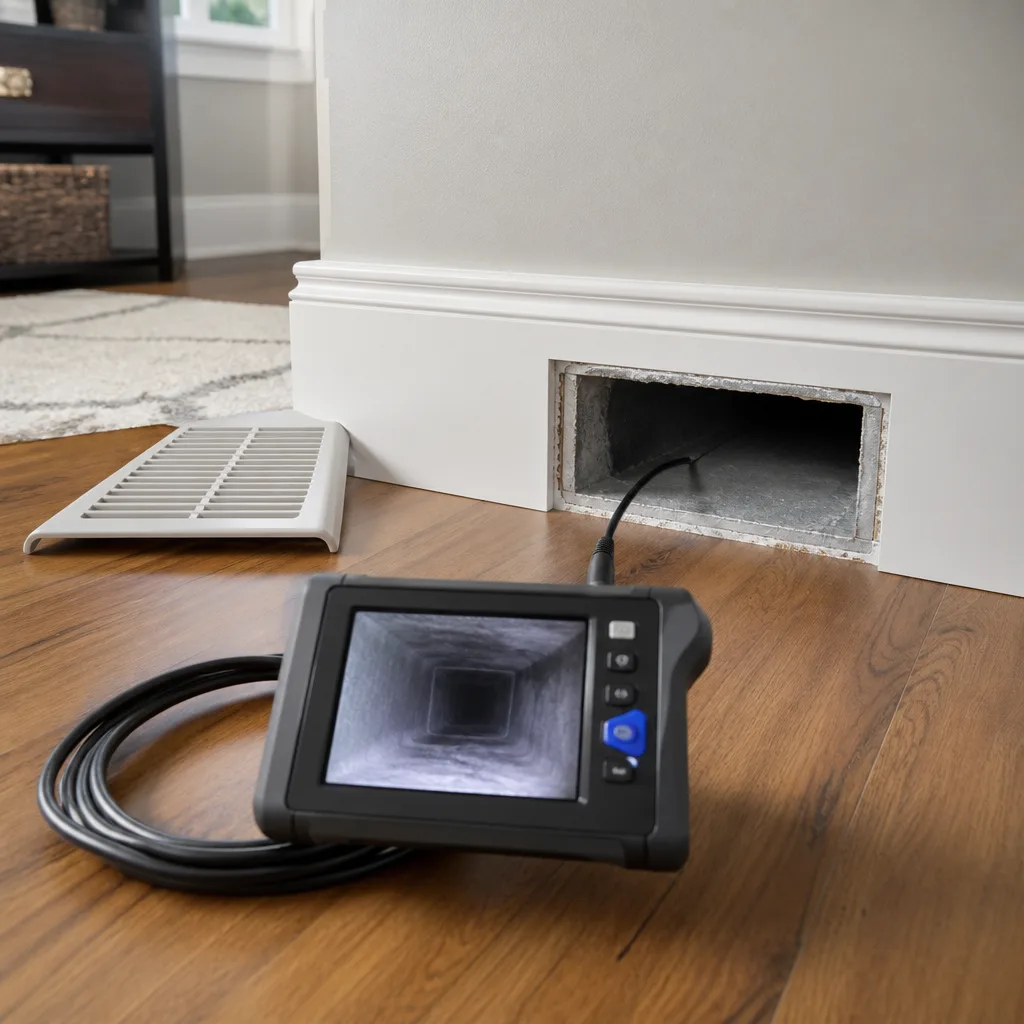
Home purchase, inherited property, or rental turnover where no maintenance records exist. You cannot make an informed DIY vs. professional decision without knowing the baseline. Professional inspection with camera documentation establishes what you’re working with. CleanRun provides this as part of every Air Duct Cleaning in Littleton estimate - no charge for the inspection if you proceed, and a written report either way.
Respiratory Symptoms Correlated with HVAC Cycles
If symptoms worsen when the blower engages, the distribution system is suspect. This requires diagnostic work - pressure testing, camera inspection, possibly air sampling - that cannot be performed with consumer tools. DIY cleaning in this scenario delays appropriate response and may worsen exposure.
Consumer vs. Professional Equipment: A Real Comparison
Here’s how actual tools compare across the tasks that matter:
| Task | Consumer Tool (Shop-Vac + Brush) | Professional System (Truck-Mounted or Portable) |
|---|---|---|
| Register face debris | Effective | Effective, but overkill |
| First 12-18″ of branch duct | Partially effective | Fully effective with agitation |
| Full branch duct run | Cannot reach or extract | Standard capability |
| Trunk line (supply or return) | Not applicable | Requires 8,000+ CFM negative air |
| Plenum and air handler cabinet | Not accessible | Accessible, requires containment |
| HEPA containment of disturbed debris | No | Yes, standard on professional equipment |
| Post-cleaning verification photography | DIY with phone | Standard deliverable, every run |
CleanRun’s equipment roster includes Rotobrush for residential branch-line agitation, Nikro and Abatement Technologies negative-air systems for whole-house extraction, and Honeywell and Aprilaire media for filtration upgrades. These are trade-recognized brands; customers can verify specifications independently. We do not use equipment that cannot be named and documented.
Cost Breakdown: DIY vs. Professional in Littleton
Honest numbers for decision-making. These are actual market ranges observed in the Littleton metro, not teaser rates.
DIY Costs
- Shop-vac with HEPA filter upgrade: $150-$400
- Brush extensions and register tools: $30-$80
- Replacement filters (annual): $60-$180 depending on MERV rating and system count
- Your time: 2-4 hours for register and grille cleaning across a typical 2,000 sq ft home
Total first-year DIY investment: $240-$660. Ongoing annual cost: filters only, plus time.
Professional Costs in Littleton
Whole-system air duct cleaning for a single-family home in Littleton typically ranges from $450-$850 depending on system size, accessibility, and condition. Factors that move the price:
- Number of duct runs (typically 12-20 in homes built 2015-2025)
- Presence of flex duct vs. rigid metal (flex requires more careful agitation)
- Need for access panel installation in hard-plumbed systems
- Sanitizing treatment following mold or rodent remediation
CleanRun’s pricing follows Haven Standard Clause 1: written price delivered before any work starts. The price is per system, not per vent. No $79 coupon that becomes $847 once the truck arrives. The written scope specifies what will be cleaned, what equipment will be used, and what documentation you will receive.
For comparison context, Dryer Vent Cleaning in Littleton typically runs $120-$200 as a standalone service, or bundled with duct cleaning at reduced rate. This is a different task with different equipment and should not be confused with whole-system duct work.
The Hidden Cost of Incomplete DIY
If DIY redistributes debris deeper into the system, the subsequent professional cleaning may require more agitation cycles, longer vacuum run time, or access panel installation where debris compacted. The “savings” evaporate. We’ve documented this in Littleton’s older neighborhoods like Old Littleton and Kipling Hills, where layered dust from repeated surface cleaning required additional trunk-line work that would not have been necessary with proper initial service.
What to Ask a Professional to Document
Whether you choose CleanRun or another provider, the documentation you receive determines whether your next cleaning decision - DIY or professional - starts from knowledge or guesswork. Request these deliverables in writing:
- Pre-cleaning photo of every duct run. Not a representative sample. Every run. The photo should include a timestamp and location identifier.
- Post-cleaning photo of the same runs, same angles. Comparison is the point. A photo record without pairs is incomplete.
- Written scope of work performed. Which runs were cleaned, which were inaccessible, what equipment was used, what agitation method applied. If a run could not be cleaned, the reason why.
- Static pressure readings before and after. This objective measurement verifies that cleaning restored design airflow, not just moved debris around.
- Contamination assessment. If mold, rodent evidence, or construction debris was found, written description with photo documentation and recommended remediation.
- Warranty terms in writing. CleanRun’s 365-Day Done Right Promise is backed in writing on every job. If work is not right, we make it right. Not a policy subject to manager approval - a written guarantee with specific response protocol.
These six items transform duct cleaning from an opaque service into a documented maintenance event. You now know what was in your system, what was done, and what condition it was left in. Your next decision - whether that’s register cleaning yourself in two years or scheduling professional service in five - is informed.
Common Mistakes to Avoid
- Using a standard vacuum without HEPA filtration. The exhaust port on most consumer vacuums discharges fine particulate through housing gaps. You’re cleaning the duct and dirtying the room simultaneously. In Littleton’s tight, energy-efficient newer homes, this recirculates immediately.
- Agitating past the point of extraction capability. The brush-on-a-pole tools sold online encourage pushing deep into duct runs. Without negative air, this compacts debris at elbows and junctions where it becomes harder to remove professionally later.
- Ignoring the return side. Supply ducts push conditioned air to rooms. Return ducts pull air back to the air handler, and they’re typically larger, dirtier, and more directly connected to the trunk. DIY access is limited; professional cleaning of returns is where the greatest load reduction usually occurs.
- Assuming “clean” registers mean clean ducts. The visible portion is the smallest surface area in the system. In Littleton’s Chatfield Reservoir area homes with finished basements, we’ve found significant trunk-line accumulation while register faces appeared routine. Camera inspection reveals the actual condition.
- Delaying professional service after failed DIY. If you’ve attempted cleaning and now notice reduced airflow, unusual odors, or visible debris at registers, the disturbance may have compacted material or dislodged a duct connection. Don’t continue DIY attempts; schedule inspection.
- Accepting per-vent pricing. This model incentivizes minimal time per opening and obscures total cost. A written price per system, with specified scope, is the only structure that aligns provider incentive with thorough work. Haven Standard Clause 1 exists for this reason.
- Neglecting the air handler cabinet. The blower wheel, evaporator coil, and plenum are part of the air path. Cleaning ducts without addressing the air handler leaves the dirtiest components untouched. HVAC Cleaning in Littleton addresses this as integrated service.
When to Call a Professional
Call when the condition exceeds your tools, when the risk exceeds your protection, or when you need documentation that changes future decisions. Specifically: any biological contamination, rodent evidence, post-construction debris past register openings, unknown system history, or symptoms correlated with HVAC operation.
CleanRun Air Duct Cleaning Littleton offers free estimates in Littleton - call (720) 315-7291. Every estimate includes inspection, camera documentation if indicated, and a written price before any work starts. No per-vent pricing. No call-for-quote. The H.A.V.E.N. Standard applies to every interaction, from the live person who answers to the uniformed, background-checked technician who arrives identified by name.
Frequently Asked Questions
Whole-system cleaning for a typical single-family home in Littleton ranges from $450-$850, depending on system size, duct type, and condition. CleanRun provides a written price before any work starts, per system, not per vent. Call (720) 315-7291 for a specific estimate - inspections are free.
The $79-$149 coupon model typically covers register vacuuming only, or uses bait pricing where the quoted rate applies to a minimal scope and additional “required” services inflate the final invoice. Ask what equipment will be used, what CFM the vacuum generates, and whether trunk lines are included. A truck-mounted negative-air system cannot be deployed at a loss; the math doesn’t work.
Require before-and-after photography of every duct run with timestamps, and written scope confirmation. CleanRun includes this as standard on every job - not as an upgrade. If a provider cannot or will not produce this documentation, the work is unverifiable.
For typical Littleton homes with no pets, no smoking, and regular filter replacement, every 4-6 years is reasonable. Homes with multiple pets, recent construction, or occupants with respiratory conditions may need shorter intervals. The correct frequency is determined by inspection and documentation, not calendar alone.
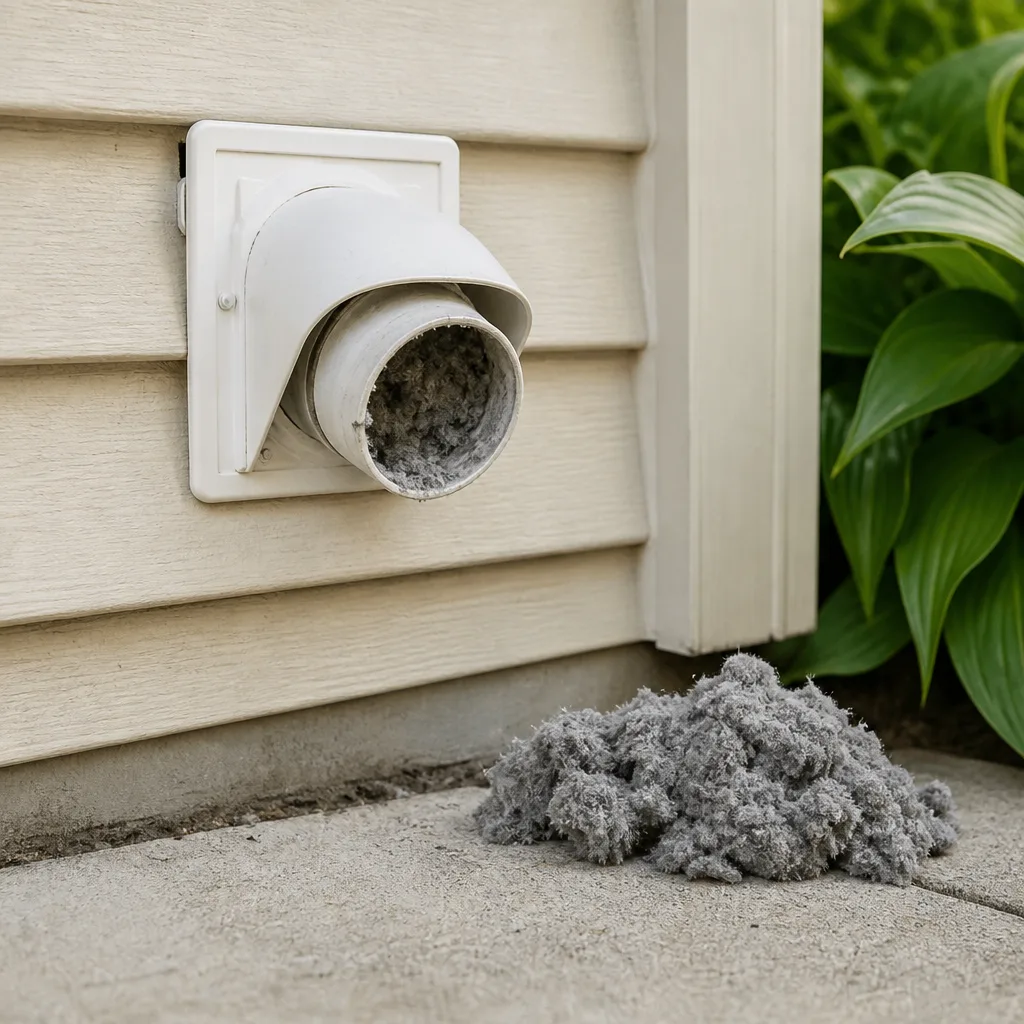
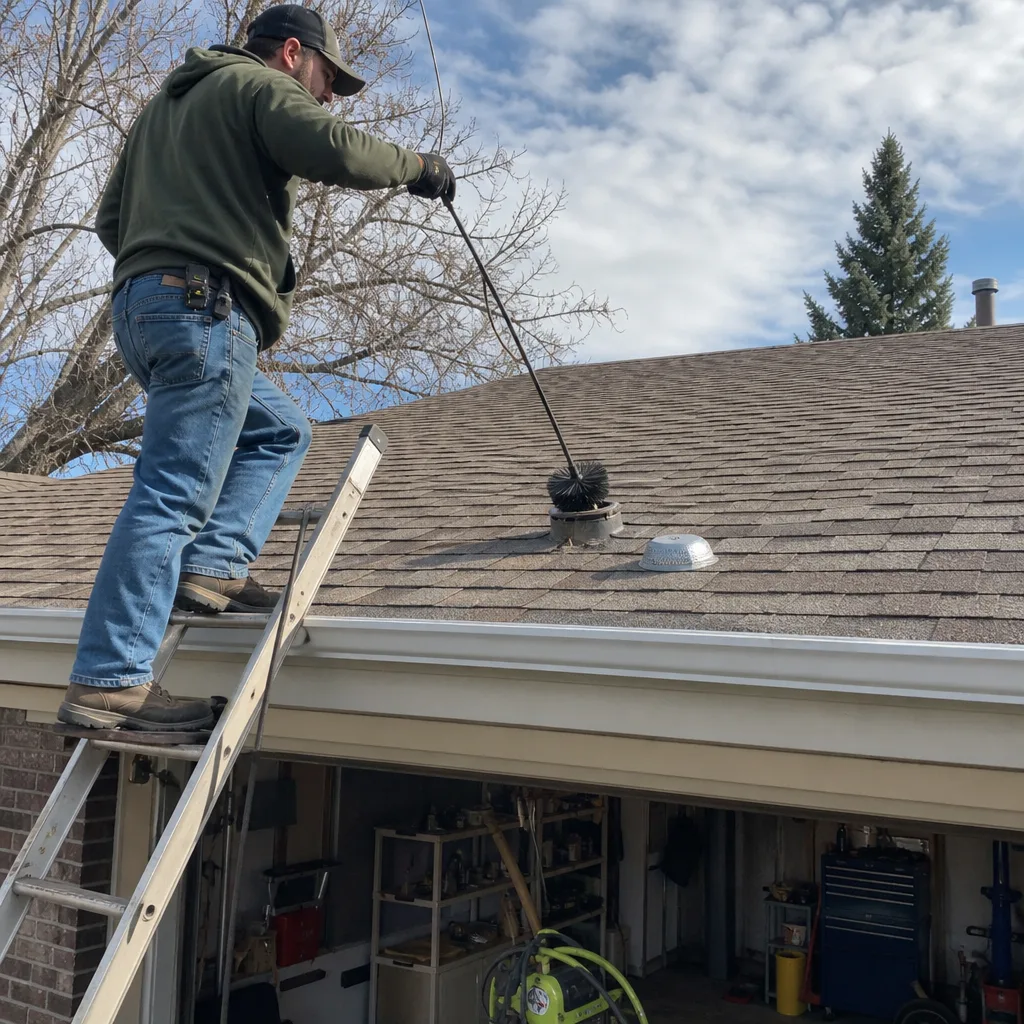
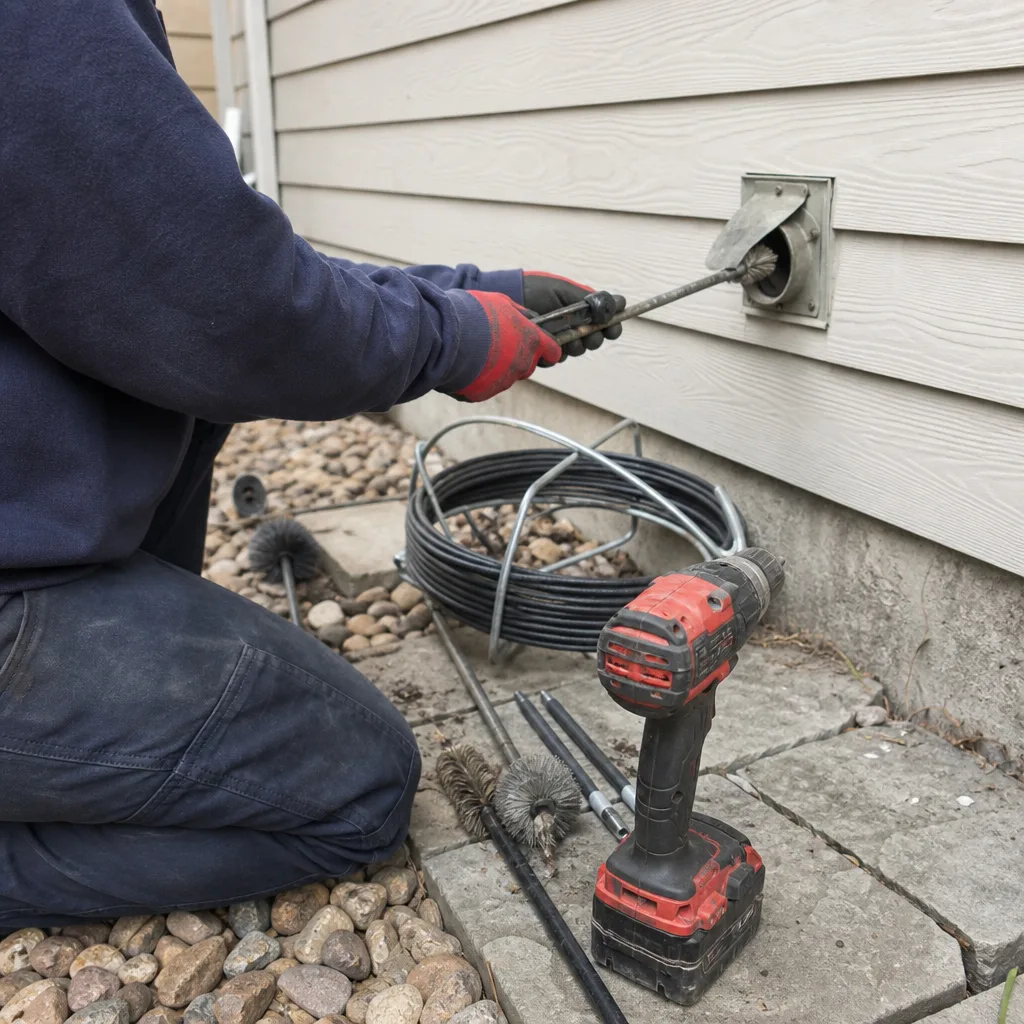
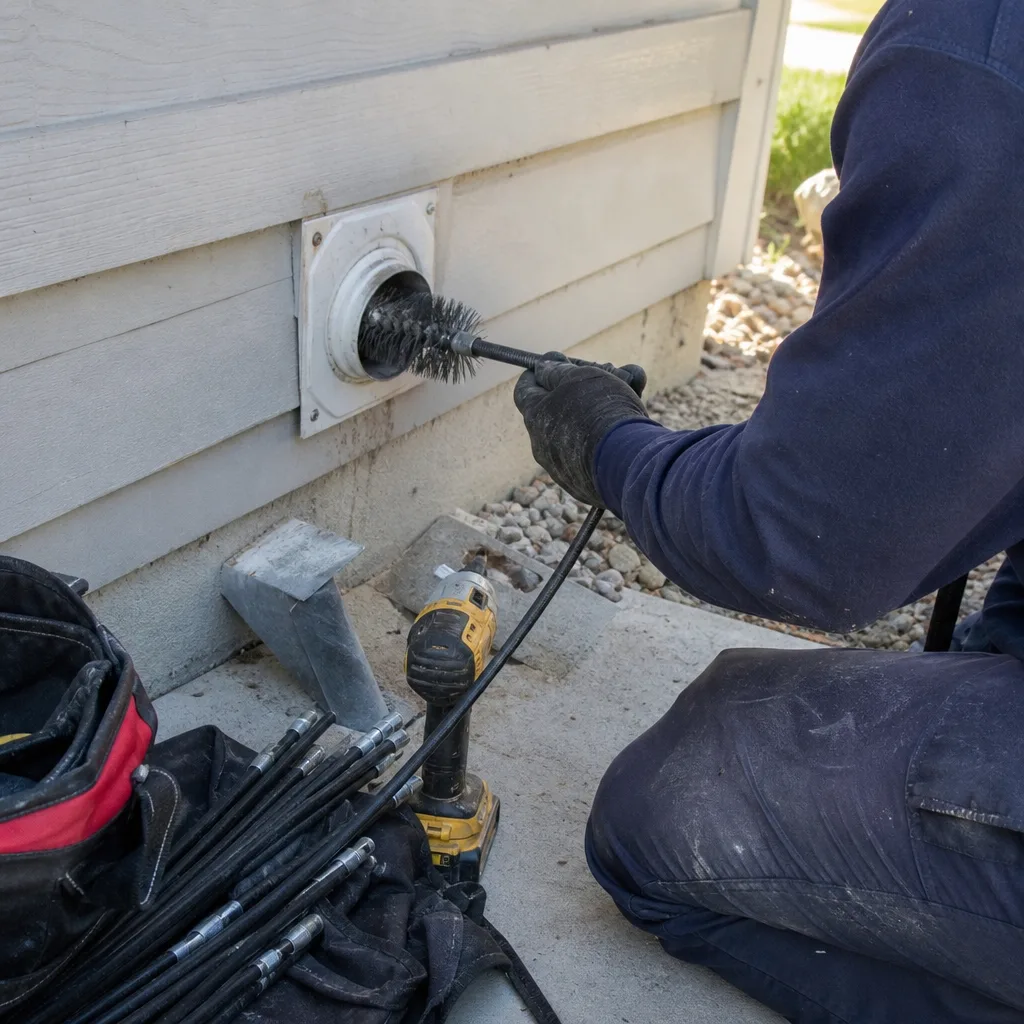
Partially. You can clean the lint trap and the first few feet of accessible duct from the dryer end. The full run to exterior termination, especially through a Littleton roof or second-story wall, requires specialized brushes and often disassembly that risks damage. Dryer vent fires peak in winter when lint compaction meets high heat; professional cleaning with rotary brushes and vacuum extraction is the safer complete solution. See Dryer Vent Cleaning in Littleton for scope details.
Yes. The combination of dry winters with heavy heating use, spring wind events that load outdoor air with particulate, and summer wildfire smoke intrusion means Littleton systems accumulate fine dust and ash that more humid climates don’t experience. Filter loading happens faster here; inspection intervals should account for it.
The Bottom Line
DIY air duct cleaning has a defined, useful boundary: register faces, short branch duct reaches, filters, and documentation. Beyond that boundary, physics prevents consumer tools from achieving the negative-pressure extraction that defines professional work. The decision is not about effort or cost preference. It’s about whether the condition you’re addressing falls within the capability of tools you can buy at a hardware store.
For Littleton homeowners, the practical path is often combined: maintain registers and filters yourself, document what you find, and schedule professional service with written scope and photo verification when the system condition or your symptoms exceed DIY limits. The goal is not to avoid professional service. It’s to know when it’s actually necessary, and to hold every provider - yourself included - accountable for documented results.
Written by Tomas Reyes, Owner at CleanRun Air Duct Cleaning Littleton, serving Littleton since 2013.