
Last updated September 23, 2026
Whole-system duct and dryer vent check with before-and-after photos - you see exactly what came out of your vents
That "$99 whole-house special" is a bait ad - the real number appears once they are in your hallway, or the "clean" is a shop-vac at the register. We photograph the inside of your ducts before and after instead.
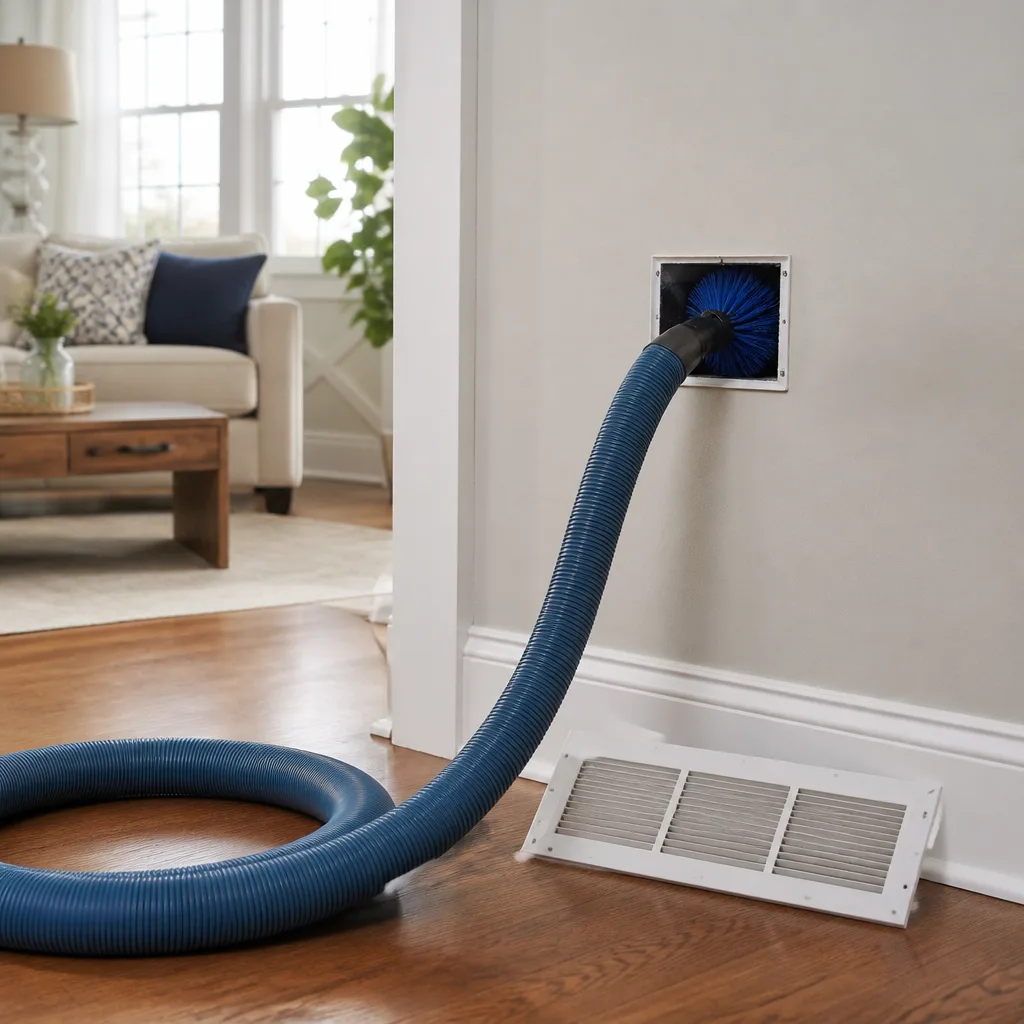
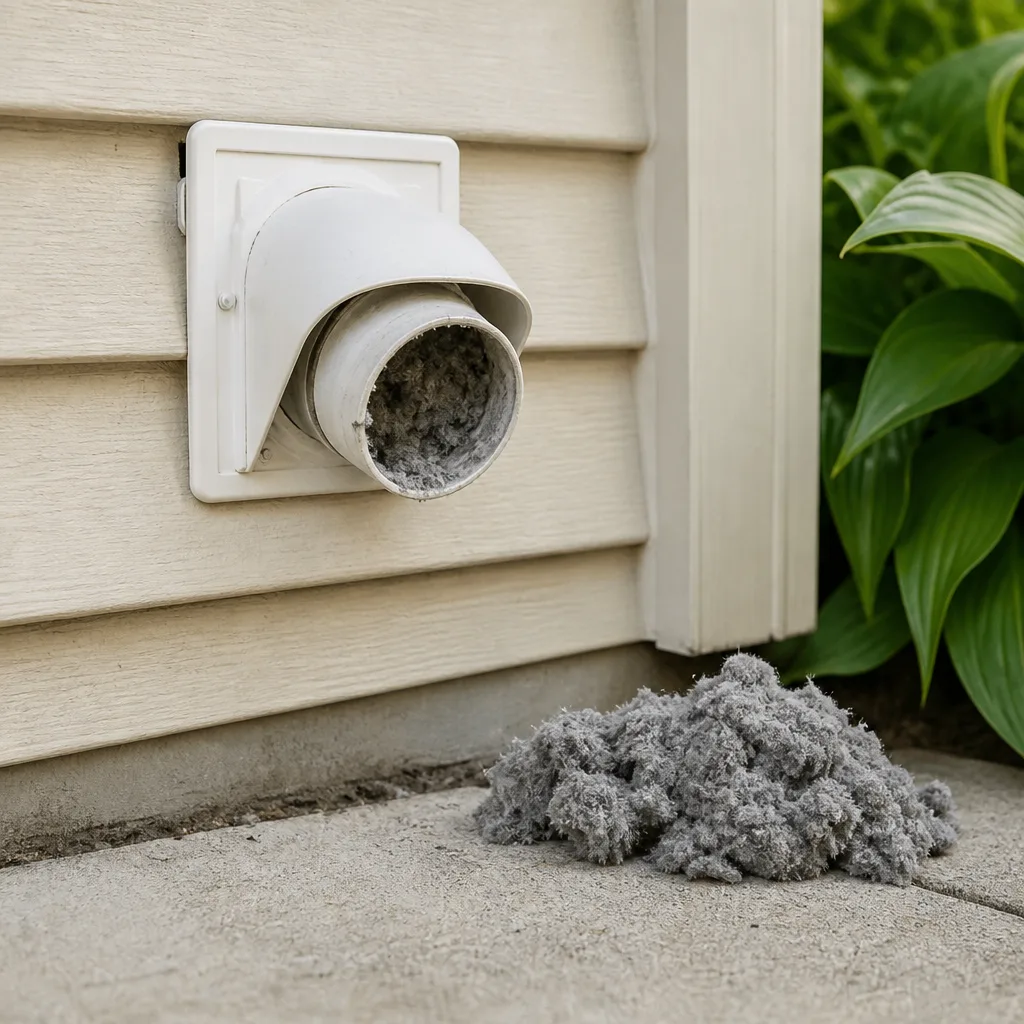
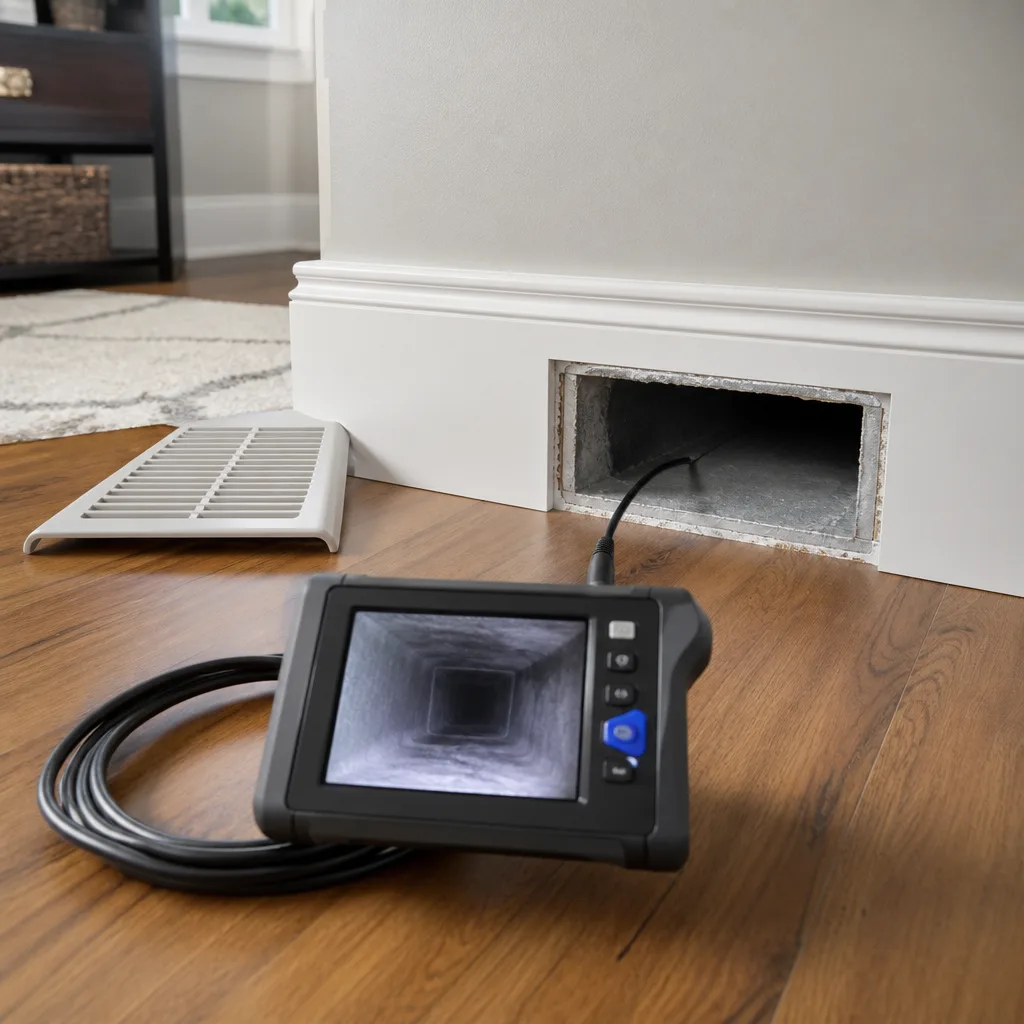
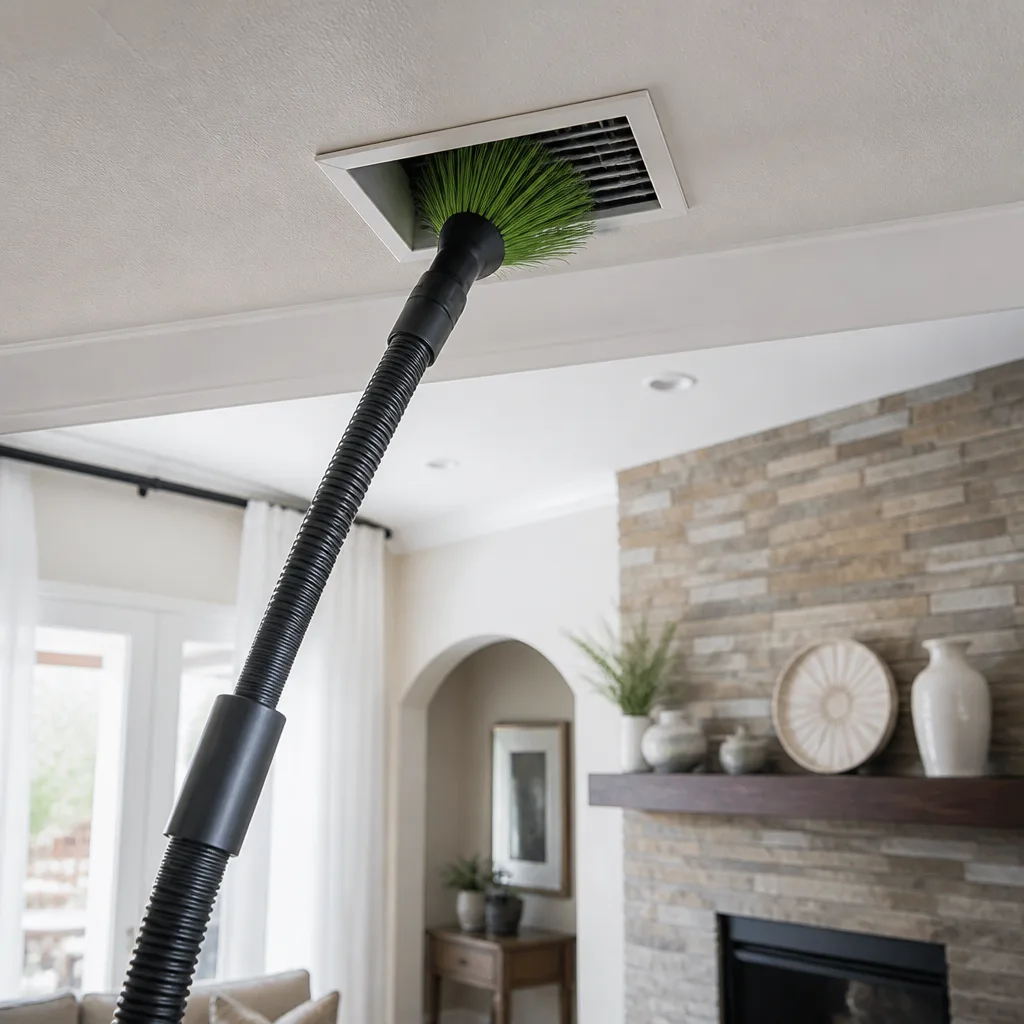
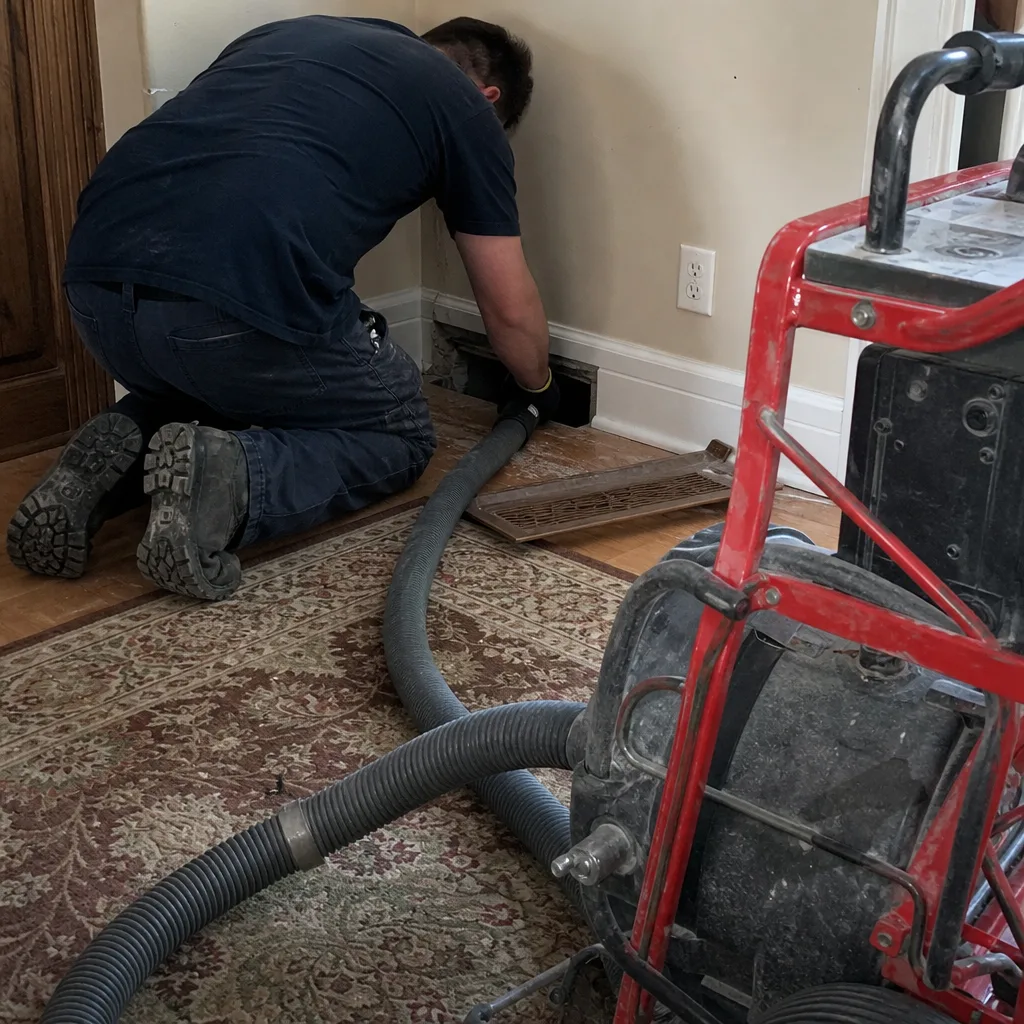 Before
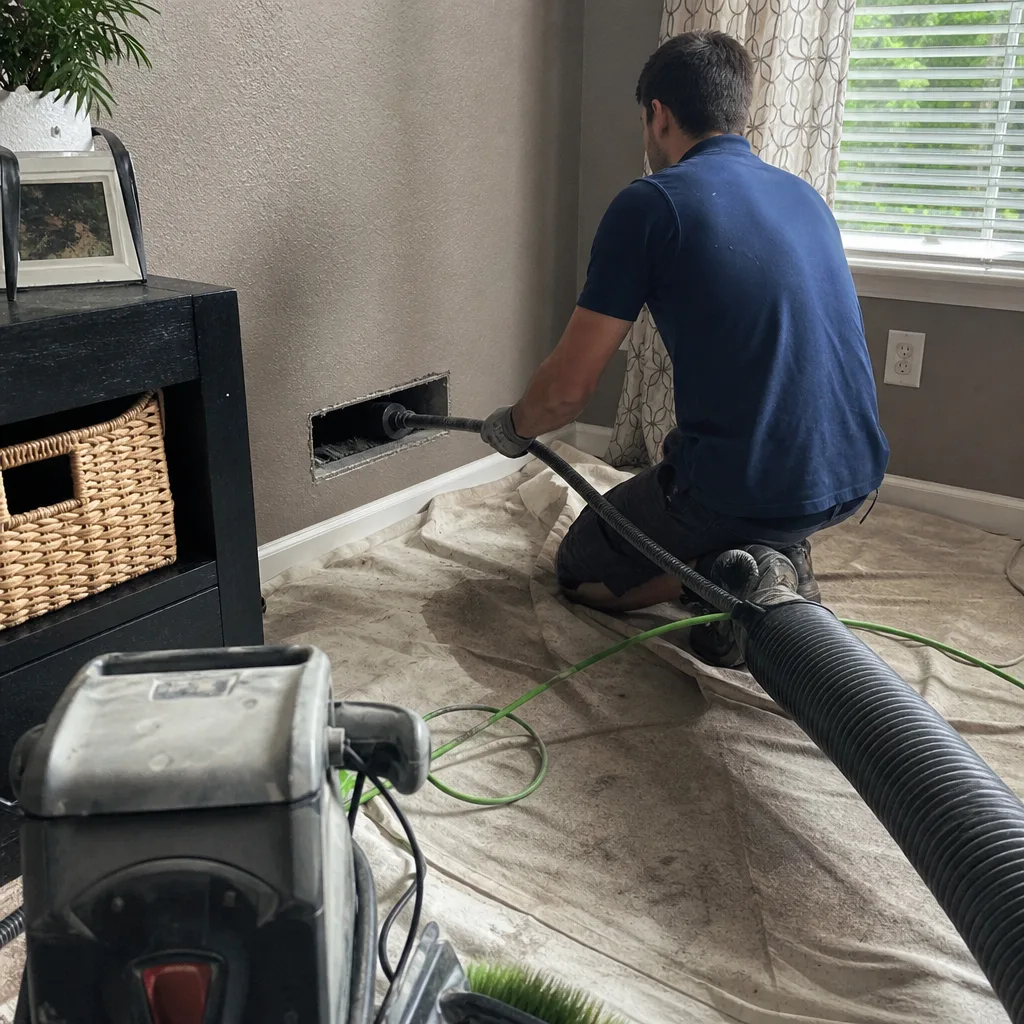 After
After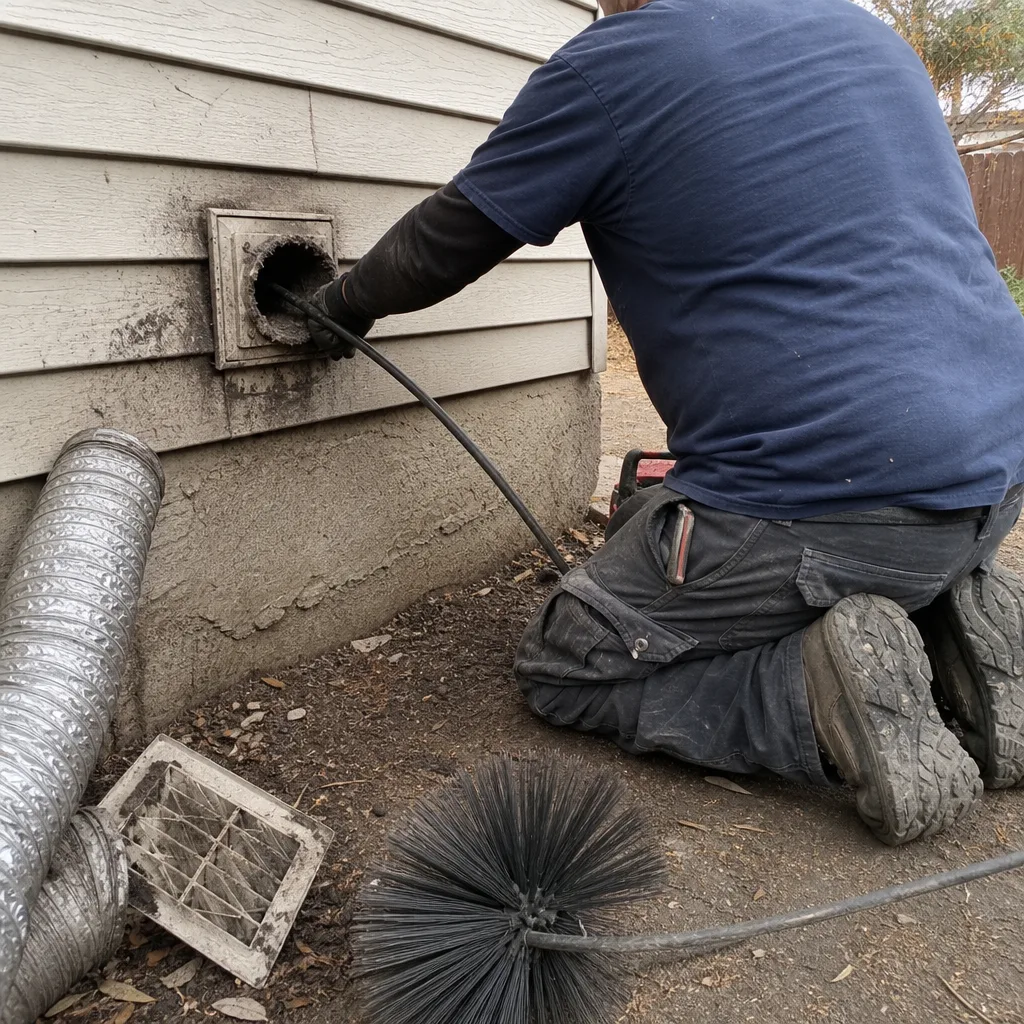 Before
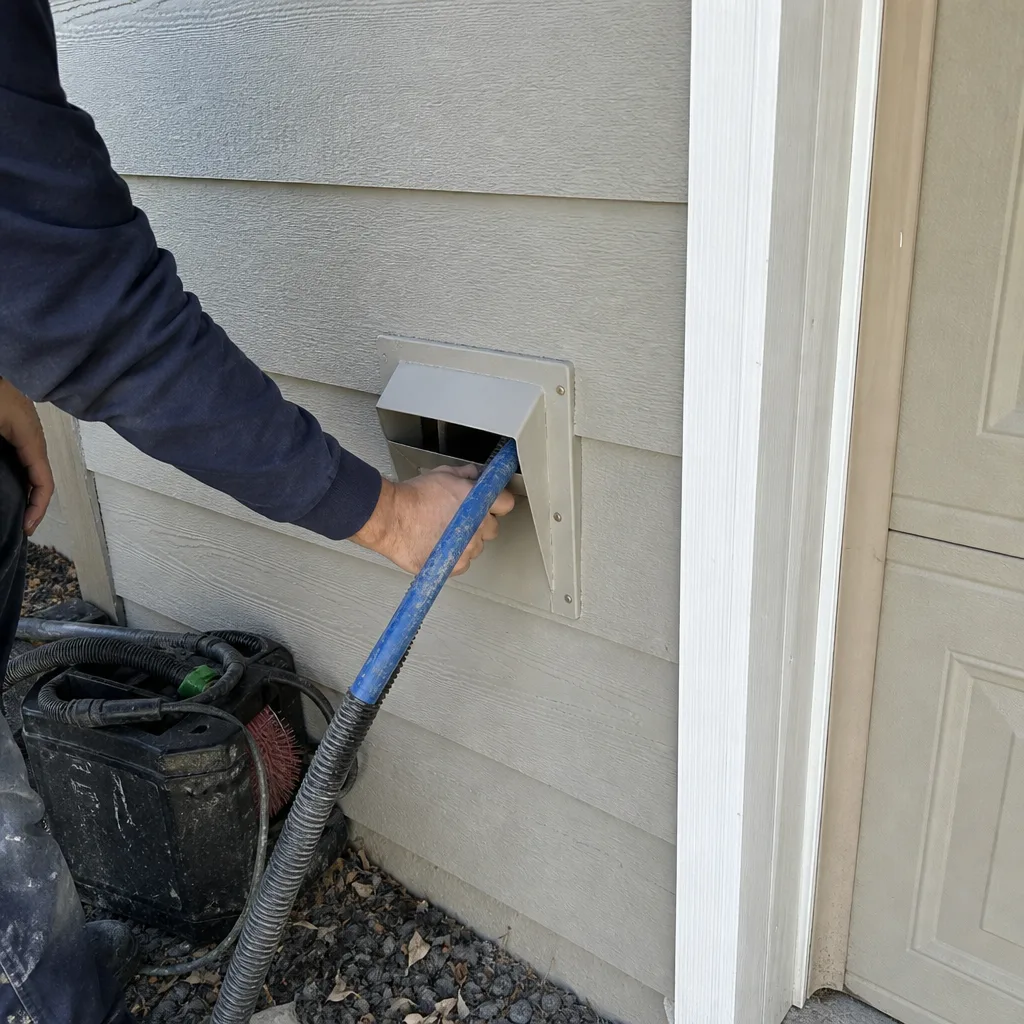 After
After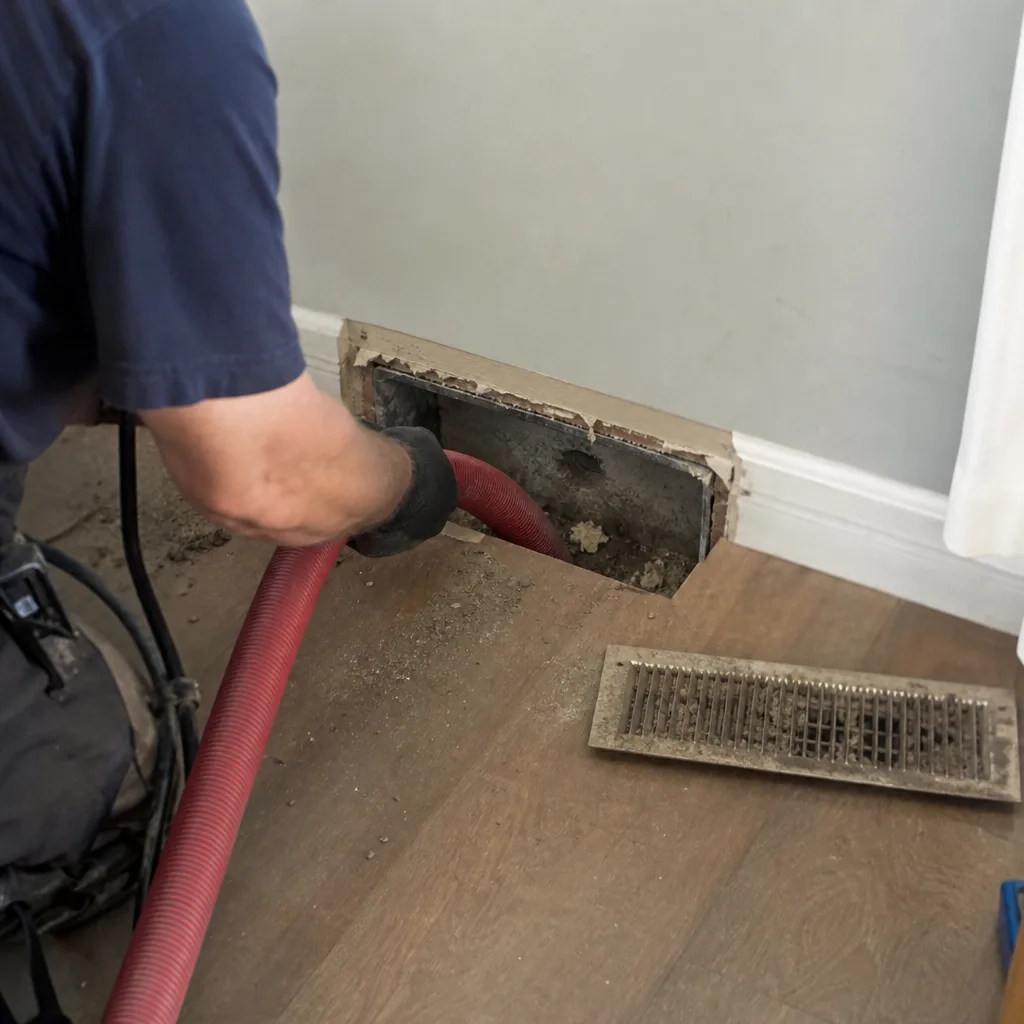 Before
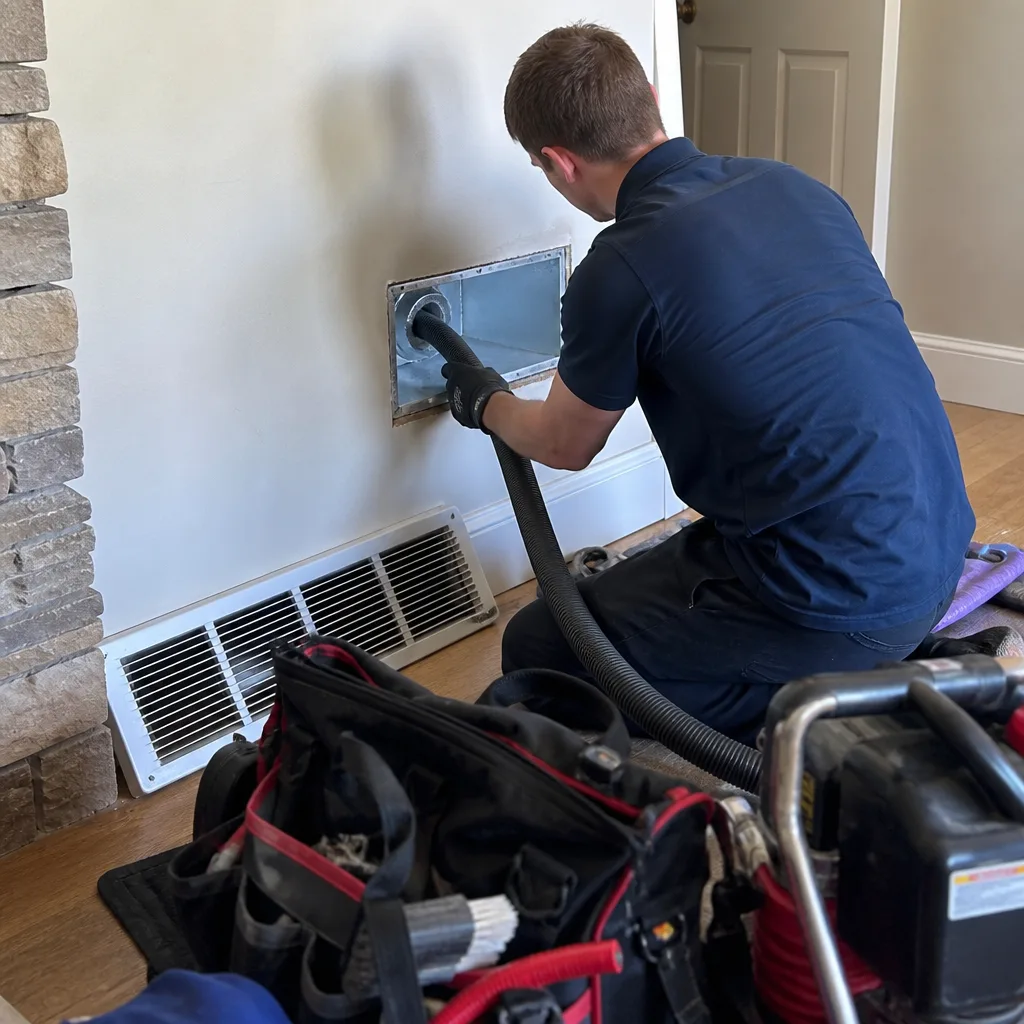 After
AfterSeasonal Air Duct Cleaning Care for Littleton: Year-Round Homeowner’s Guide
Littleton’s HVAC systems run heating mode as late as May and as early as September. The same system pulling outside air during cottonwood bloom runs heat all winter without a break. That usage pattern alone invalidates most generic seasonal duct advice written for temperate climates with gentle shoulder seasons. In this guide, we’ll map actual Littleton conditions, wildfire smoke events, high-desert particulate, and altitude-specific HVAC stress to specific duct care actions by season. You’ll learn when to inspect, what to photograph, how to read your filter as a diagnostic tool, and why a four-season photo log changes every conversation you have with a contractor.
Quick Answer
Homeowners in Littleton should inspect their ductwork in early September before the first heat cycle, monitor filter loading rates monthly through winter, check access-panel interiors after peak cottonwood season in June, and document register faces before and after any wildfire smoke event. Our Air Duct Cleaning Cost Breakdown: The Littleton Homeowner’s Reference for 2026 explains why a written price for whole-system cleaning in Littleton typically runs $450-$850 depending on home size and system accessibility, with documented photo records included as standard deliverables.
Table of Contents
- Fall (September-October): Littleton’s Highest-Priority Inspection Window
- Winter (November-February): Reading Filter Loading as a Duct Diagnostic
- Spring (March-May): Cottonwood, Juniper, and the Duct Side of Your Filter
- Summer (June-August): Wildfire Smoke Events and Duct Surface Contamination
- Building Your Four-Season Photo Log: A Documented Baseline
- What Seasonal Duct Maintenance Costs in Littleton
- Common Mistakes to Avoid
- When to Call a Professional
- Frequently Asked Questions
BeforeAfterFall (September-October): Littleton’s Highest-Priority Inspection Window
Most national duct cleaning guides suggest fall as a generic “before you seal up for winter” reminder. In Littleton, the timing is more specific and more urgent. The Front Range’s temperature swings force HVAC systems to transition from cooling to heating with little warning, often within a single week in late September. That transition is where problems get baked in.
Here’s what happens: your evaporator coil and drain pan have been collecting condensation all summer. The drain line may be partially occluded with biofilm or debris. When the first cold snap hits and the system switches to heat, any residual moisture in the plenum, the main distribution box connected to your furnace, becomes trapped in a now-warm, now-stagnant environment. Run that cycle for a week, and you’ve created the conditions for odor, microbial growth, and particulate adhesion that will circulate through every duct run all winter.
We see this pattern regularly in Littleton homes built between 2015 and 2020, particularly in neighborhoods like Roxborough and Sterling Ranch where tighter building envelopes trap humidity longer. The camera shows a thin film of residue at the first elbow of the trunk line, the main horizontal duct exiting the plenum, that wasn’t there in May. Left through winter, that film becomes a binding agent for everything the blower pushes through next.
What to do in September:
- Remove the filter and hold it to daylight. If light passes unevenly or the media has visible deformation, the blower has been working harder than spec all summer.
- Run the system in heat mode for ten minutes, then smell at the registers, the grated covers where air enters rooms. Musty or sharp odors indicate plenum or coil contamination that duct cleaning alone won’t address.
- Photograph the accessible interior of one duct run through a register opening with your phone’s flash on. Do this every September. The comparison year-over-year tells you more than any contractor’s verbal assessment.
- Schedule a full-system inspection if the filter loaded faster than eight weeks all summer, or if any register shows visible debris accumulation.
CleanRun’s September appointments in Littleton typically include a written scope for coil and plenum access if the camera shows moisture staining. We don’t start work without a written price under Haven Standard Clause 1, and every duct run is photographed before and after.
Winter (November-February): Reading Filter Loading as a Duct Diagnostic
Littleton winters run the blower at maximum frequency. From November through February, most homes circulate heated air 16-20 hours daily. At 5,300 feet elevation, winter air holds less moisture, and that dryness changes how particulate behaves inside ductwork.
Dry air keeps particles suspended longer. Fine desert dust, road sand from pre-treatment, and combustion particulate from nearby wood-burning don’t settle as quickly as they would in humid conditions. They recirculate. Your filter catches what it can, but the loading rate, how quickly a filter becomes obstructed, is a direct proxy for what’s making it past the filter and into the duct runs.
Track your filter loading rate through winter. A MERV 11 filter that loaded in six weeks last winter but loads in four this winter is telling you something changed. Possible causes in Littleton:
- New construction or road work nearby: Developments in Columbine Valley and Ken Caryl have increased ambient particulate in surrounding neighborhoods.
- Duct leakage pulling attic or crawl space air: Negative pressure in the return side draws unfiltered air through gaps. Winter temperature differentials make this worse, stack effect pulls warm air out and cold air in through lower leaks.
- Blower motor degradation: Reduced airflow means less air passes through the filter media per hour, but the same total particulate load concentrates in slower-moving duct air.
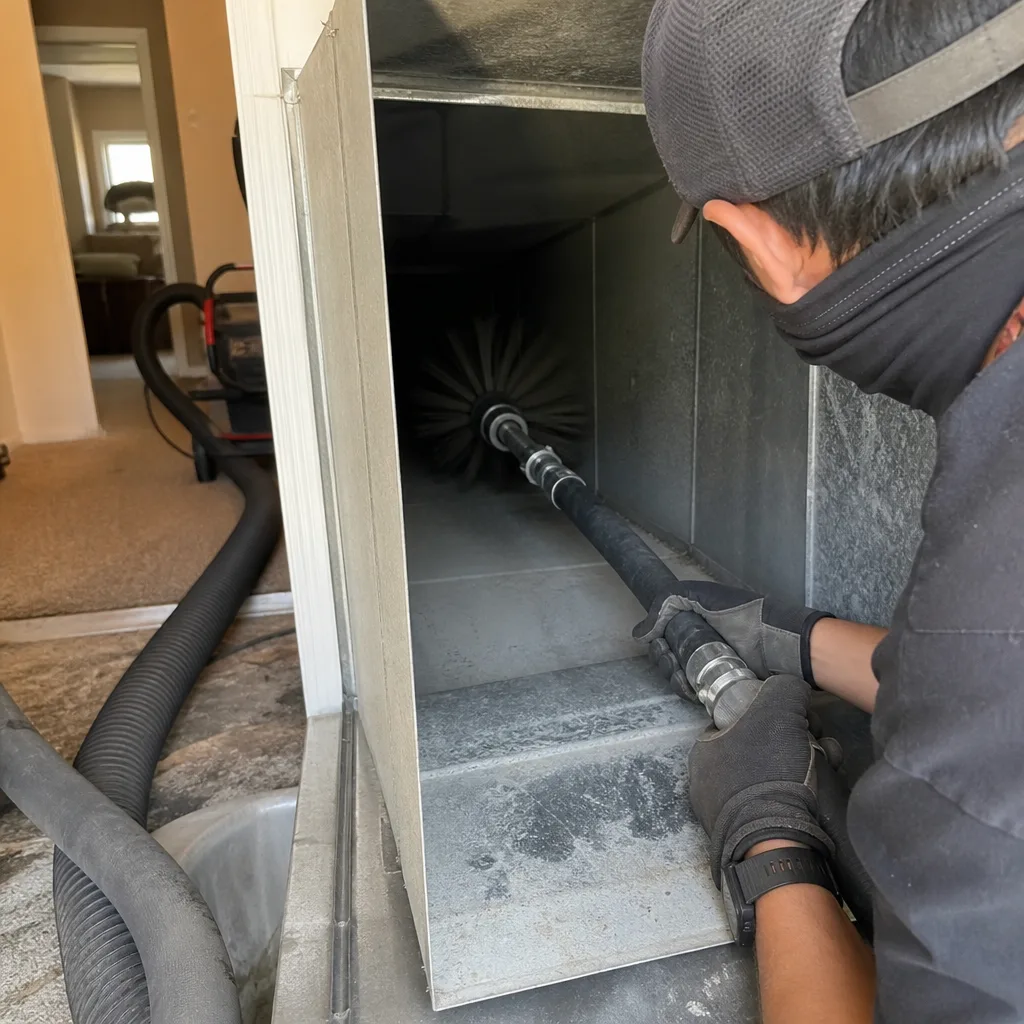
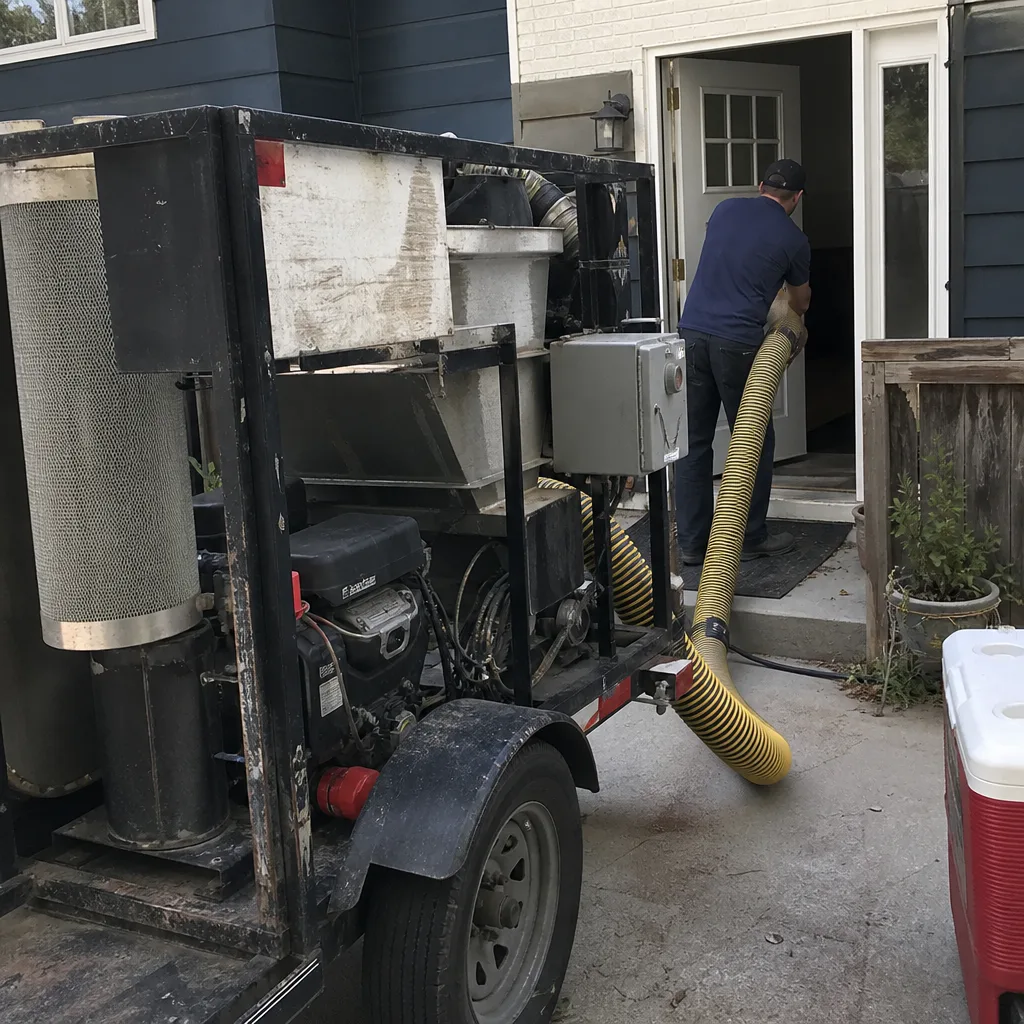
We use Rotobrush and Abatement Technologies negative-pressure extraction equipment on winter jobs in Littleton because the dry, fine particulate requires aggressive agitation plus contained removal. The photo record shows the difference: a trunk line that looked gray in September shows a measurable debris layer by February.
If you’re replacing filters faster than monthly in winter, consult our Air Duct Cleaning Maintenance Checklist for Littleton Homeowners, then pull one register and photograph the duct interior. Compare it to your September photo. The delta is your evidence for whether cleaning is warranted, not a calendar date.
Spring (March-May): Cottonwood, Juniper, and the Duct Side of Your Filter
Cottonwood season in the South Platte corridor peaks from late May through mid-June, with pre-season pollen loading from juniper and elm starting as early as March. Littleton’s cottonwood density, particularly along the High Line Canal and in older neighborhoods like Old Littleton and Kipling Hills, produces seed fluff that overwhelms standard filters.
Here’s the mechanism most homeowners miss. Your filter is designed to load from the upstream side, the room-air side. When cottonwood fluff mats on the filter surface, it creates a pressure differential that can deform the filter media or bypass the seal. Fluff and pollen then reach the duct side of the filter, the side facing the blower. Once there, they enter the return ductwork and distribute through the system.
An unusually fast filter-loading rate during bloom season is a signal to pull an access panel and photograph the trunk line. We see this every June in Littleton: filters that lasted six weeks in April need replacement in ten days by late May. The homeowner assumes the filter is doing its job. Often it is, until it isn’t.
Spring-specific actions:
- Switch to a filter with higher structural rigidity during peak cottonwood season. Honeywell and Aprilaire rigid-media filters maintain seal integrity under heavy loading better than pleated cardboard-frame filters.
- Check the filter seal weekly from May 15 through June 15. Any visible bypass, fluff at the filter frame edges, means unfiltered air is entering the return.
- After the first post-bloom filter change, run the system for 24 hours on a fresh filter, then remove and inspect the duct side. Any debris accumulation on that face indicates duct-side contamination occurred.
- Photograph the plenum access panel interior in early June. Compare to your September baseline. Cottonwood fluff that made it past the filter often accumulates at the first horizontal turn in the trunk line.
CleanRun’s spring appointments in Littleton include a documented assessment of whether the contamination is filter-surface only or has reached duct runs. We deliver a written scope and price before any panel comes off, per Haven Standard Clause 1.
Summer (June-August): Wildfire Smoke Events and Duct Surface Contamination
Wildfire smoke is the seasonal factor that most separates Littleton duct care from national generic advice. The 2020 Cameron Peak fire, the 2021 Marshall Fire, and repeated Canadian smoke events in 2023-2024 have established that Front Range summers now include periods of hazardous ambient air quality that standard HVAC systems are not designed to exclude.
Smoke particulate is categorically different from household dust. Wildfire smoke contains sub-micron carbon particles, polycyclic aromatic hydrocarbons, and partially combusted organic material. These particles are small enough to pass through MERV 8-10 filters in quantity. Once inside the ductwork, they don’t behave like inert dust. They adsorb onto metal duct surfaces, particularly in the presence of summer humidity, and they resist standard vacuum extraction because electrostatic forces bind them to sheet metal.
Critical distinction: What smoke does to your filter versus what it does to your ductwork requires different responses.
| Component | Smoke Effect | Required Response |
|---|---|---|
| Filter | Surface loading, reduced airflow, potential bypass | Replace immediately after event; upgrade to MERV 13+ during smoke season |
| Coil and plenum | Particulate adhesion to wet surfaces; biofilm substrate | Inspect and clean if camera shows staining |
| Duct runs | Sub-micron particulate adsorption to metal; electrostatic binding | Agitation-based cleaning with negative-pressure extraction; photo verification |
| Registers and boots | Visible soot accumulation at termination points | Remove and clean; check for backdraft from exterior-facing rooms |
After any smoke event where ambient AQI exceeded 150 for more than 24 hours, document your registers. Soot accumulation at register faces indicates the system was pulling contaminated air during the event, even with the system nominally off. Thermal cycling creates pressure differentials that move air through ducts passively.
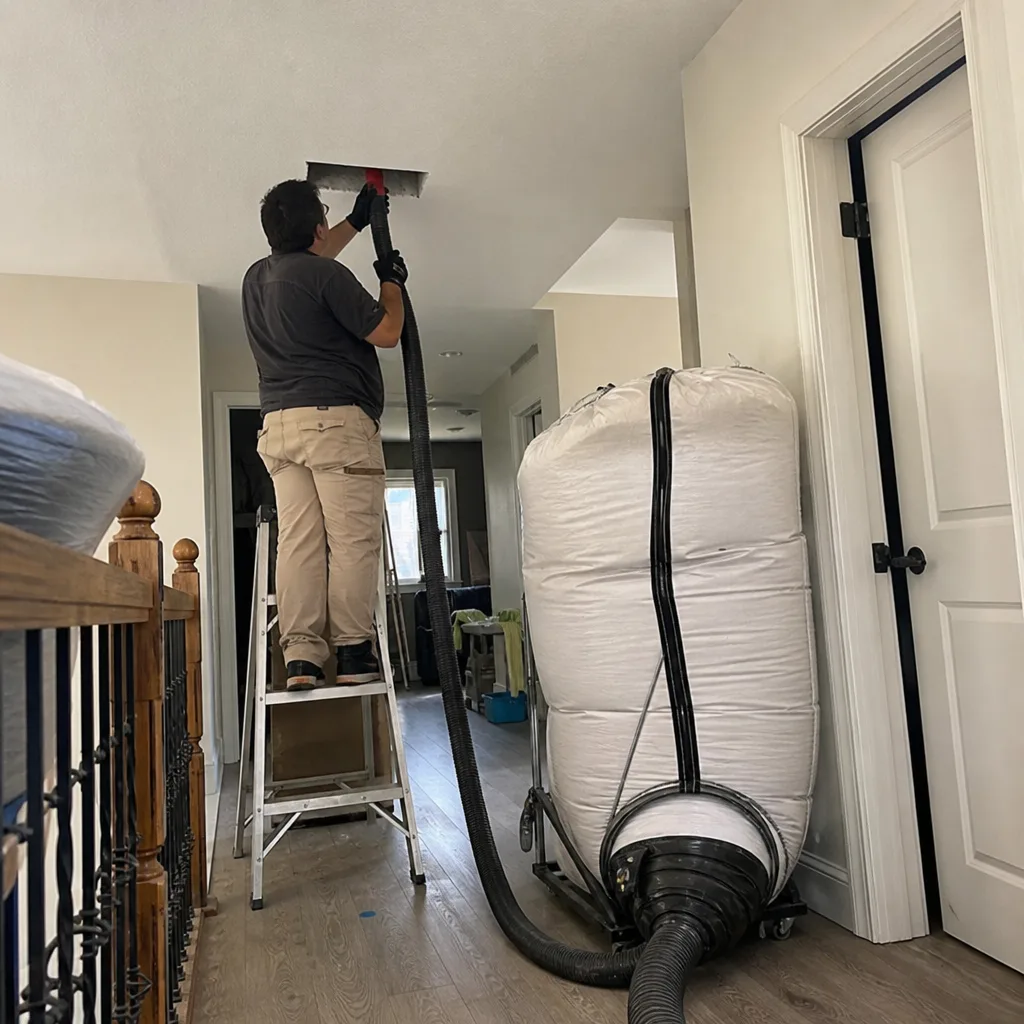
CleanRun uses Nikro and Abatement Technologies equipment for post-smoke cleaning in Littleton. The agitation brushes break electrostatic bonds, and the contained negative-pressure system captures particles that would otherwise redeposit. Every run is photographed before and after. The photo record is your proof that the work addressed smoke residue, not just household dust.
Building Your Four-Season Photo Log: A Documented Baseline
The most powerful tool in Air Duct Cleaning maintenance is not a tool at all. It’s a photo log that changes the power dynamic between homeowner and contractor. When you have dated, geotagged images of your own ductwork, no one can tell you what “needs” to be done. You can compare, verify, and hold any provider accountable to a documented baseline.
Here’s how to build it with minimal effort and maximum evidentiary value.
What to photograph:
- Register faces: One per system zone, same register every time, same lighting. We recommend the register in the room you use most, typically a living room or main bedroom. The register face shows accumulation rate at the termination point.
- Access panel interior: The plenum access panel, usually near the furnace, is the easiest interior shot. Remove the panel, flash on, photograph the first 12 inches of trunk line visible from the opening. This shows the condition at the distribution origin.
- Filter duct side: After each filter change, photograph the side facing the blower. Debris on this face means the filter was bypassing or overloaded.
When to photograph:
- September baseline: Before first heat cycle. This is your cleanest annual reference.
- Post-cottonwood: Early June, after the fluff season ends.
- Post-smoke event: Within 48 hours of any AQI 150+ event.
- Pre-winter deep inspection: November, before continuous heating begins.
Store images with dates in a dedicated album. When you call any contractor, including CleanRun Air Duct Cleaning Littleton home, reference your photo log. A technician who knows you’re documenting is a technician who works more carefully. The estimate you receive should reference specific conditions visible in your images, not generic system size pricing.
CleanRun’s documented photo record on every visit, a practice we’ve held since 2013, is designed to integrate with your own log. Our after photos extend your baseline forward. The 365-Day Done Right Promise means if our photo record doesn’t match your subsequent observations, we make it right in writing.
What Seasonal Duct Maintenance Costs in Littleton
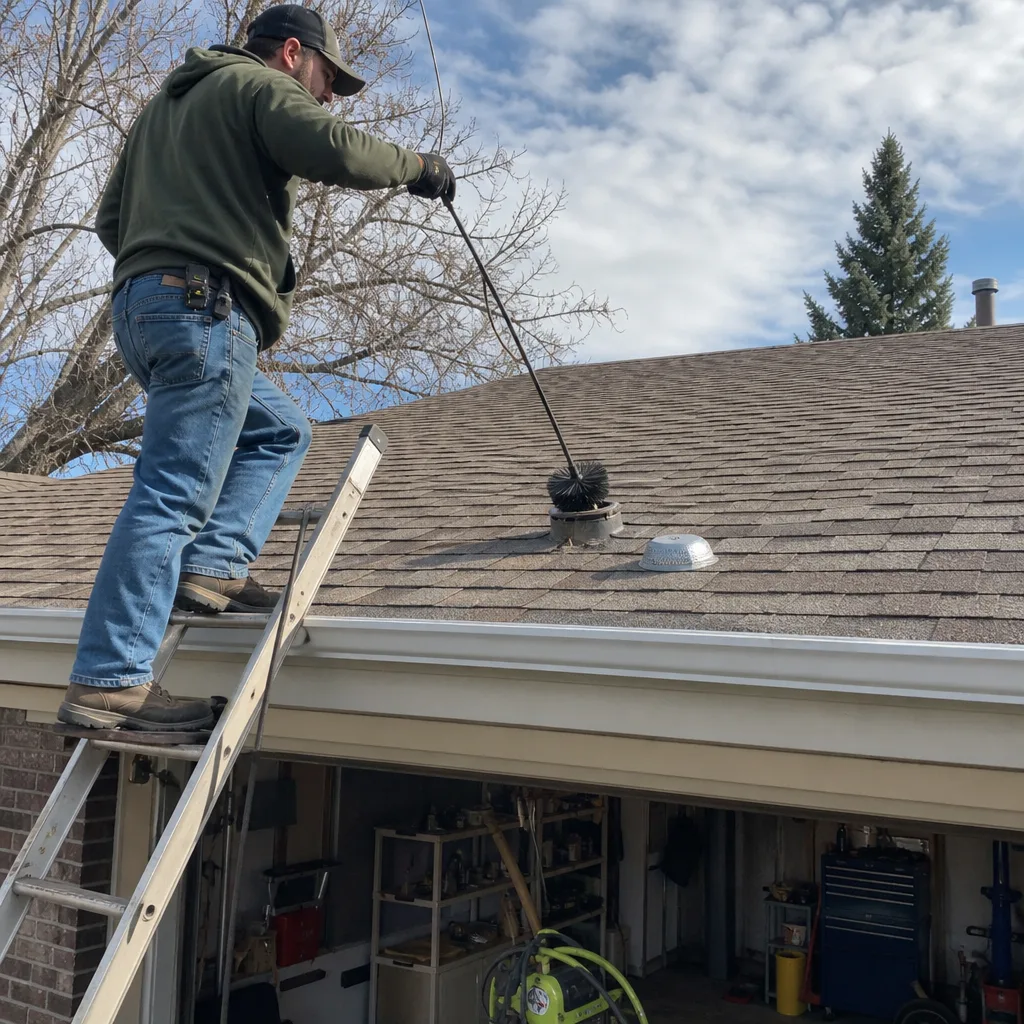
Littleton’s market for duct cleaning spans a wide range, and the spread between low and high quotes often reflects differences in scope that aren’t obvious from a phone call. Here’s what whole-system cleaning actually costs when the work includes full access, documented photography, and contained extraction equipment.
| Home Size / System Complexity | Typical Range in Littleton | What’s Included |
|---|---|---|
| Condo or townhome, single system, accessible basement | $350-$500 | All duct runs, registers, plenum access, before/after photo record |
| Single-family home, 1,500-2,500 sq ft, standard trunk-and-branch | $450-$650 | All runs, register removal and cleaning, trunk line inspection, photo record |
| Single-family home, 2,500-4,000 sq ft, multiple zones or attic ducts | $600-$850 | Extended access, zone-by-zone documentation, possible duct repair recommendations |
| Post-smoke event or heavy contamination | Add $150-$300 | Agitation-intensive cleaning, extended negative-pressure runtime, supplemental register cleaning |
These ranges reflect what CleanRun has quoted in writing on Littleton jobs since 2013. We do not quote per-vent pricing. Haven Standard Clause 1 requires one flat price per system, agreed before work starts, with no variance based on what the camera finds. The price we write is the price you pay.
Be wary of any quote below $250 for a whole-system cleaning in Littleton. At that price, the provider is either omitting access steps, using shop-vac equipment without contained extraction, or planning to upsell on arrival. The $79 coupon model relies on finding “problems” after the truck is in your driveway. Our Free Second Opinion on any written estimate lets you bring a competitor’s quote; we put our number next to it in writing, with line-item scope, so you can compare actual deliverables.
Common Mistakes to Avoid
- Cleaning on a calendar schedule without condition evidence. “Every three to five years” ignores that Littleton’s wildfire smoke, cottonwood loading, and altitude-specific particulate can accelerate accumulation dramatically. Clean when your photo log shows change, not when a reminder email arrives.
- Replacing filters without inspecting the duct side. A filter that looks dirty on the room side but clean on the duct side is working. A filter dirty on both sides, or clean on the room side and dirty on the duct side, is telling you about bypass or seal failure.
- Running the fan continuously during smoke events. Many homeowners believe constant circulation helps filtration. In reality, it increases total particulate loading on duct surfaces by orders of magnitude. Use recirculate mode with upgraded filtration, or shut the system entirely during peak smoke.
- Accepting verbal scope without written price. The duct cleaning industry’s bait-and-switch reputation exists because scope and price are often separated. Haven Standard Clause 1 exists specifically to prevent this. Any provider unwilling to put price and scope in writing before work starts is signaling that the final invoice will differ.
- Ignoring register face accumulation. Dark staining or debris at register faces is often dismissed as “normal dust.” In Littleton, it’s frequently the visible indicator of duct-side contamination that started at the filter bypass. Photograph it, date it, compare it seasonally.
- Hiring based on equipment claims without verification. Ask what equipment will be used. Professional-grade tools from Rotobrush, Nikro, Abatement Technologies, Honeywell, Aprilaire, and Guardsman are independently verifiable. A provider using unbranded or consumer-grade equipment cannot achieve contained negative-pressure extraction no matter what they claim.
When to Call a Professional
Call for a professional inspection when your photo log shows visible change between seasons, when filter loading rate shifts by more than 25% year-over-year, or after any wildfire smoke event where you operated the HVAC system during peak contamination. Persistent odors from registers, visible debris at register faces, or uneven heating and cooling across zones all indicate duct conditions that DIY methods cannot assess or address.
CleanRun Air Duct Cleaning Littleton offers free estimates in Littleton. Every estimate includes a written scope and price before any work begins, documented photo records of every duct run, and the 365-Day Done Right Promise backed in writing. Call (720) 315-7291 to schedule. All calls are answered by a live person, and technicians are background-checked, uniformed, and identified by name before arrival under Haven Standard Clause 3: Verified Crews.
Frequently Asked Questions
Whole-system duct cleaning in Littleton typically costs $450-$850 for single-family homes, depending on system size and accessibility. Condos and townhomes with basement access often fall in the $350-$500 range. CleanRun provides a written price before any work starts under Haven Standard Clause 1, with no per-vent add-ons. Call (720) 315-7291 for an exact quote on your system.
Low quotes usually omit scope that becomes upsell on arrival, or use shop-vac equipment without contained negative-pressure extraction. A $79 coupon price cannot cover professional-grade equipment, access-panel removal, register cleaning, and documented photography. The final invoice after bait-and-switch tactics typically exceeds honest upfront pricing. Always compare written scopes, not headline prices.
Demand a documented photo record of every duct run, before and after, delivered as part of the job record. CleanRun has photographed every run on every job since 2013. If a provider cannot or will not show you the inside of your ducts, you have no evidence that cleaning occurred. Your own seasonal photo log provides an independent verification baseline.
Frequency depends on conditions, not calendars. Homes in cottonwood-dense neighborhoods, homes affected by wildfire smoke, and homes with filter bypass issues may need attention every 18-24 months. Well-maintained systems in newer construction with no smoke exposure may go 4-5 years. Track filter loading rates and photograph duct interiors seasonally; clean when evidence shows accumulation, not on a schedule.
Yes. Thermal cycling creates pressure differentials that move air through ducts even with the blower off. Smoke particulate is small enough to pass through standard building envelope gaps and register openings. After any extended AQI 150+ event, inspect register faces and photograph any accumulation. The sub-micron carbon particles require agitation-based cleaning with contained extraction, not standard vacuum methods.
Duct cleaning addresses the distribution network: trunk lines, branches, and registers. HVAC Cleaning in Littleton includes the air handler, evaporator coil, blower assembly, and plenum. In Littleton’s climate, where systems transition rapidly between heating and cooling, coil and plenum contamination is common and requires separate scope. A complete assessment may recommend both. CleanRun evaluates both and delivers separate written scopes and prices if needed.
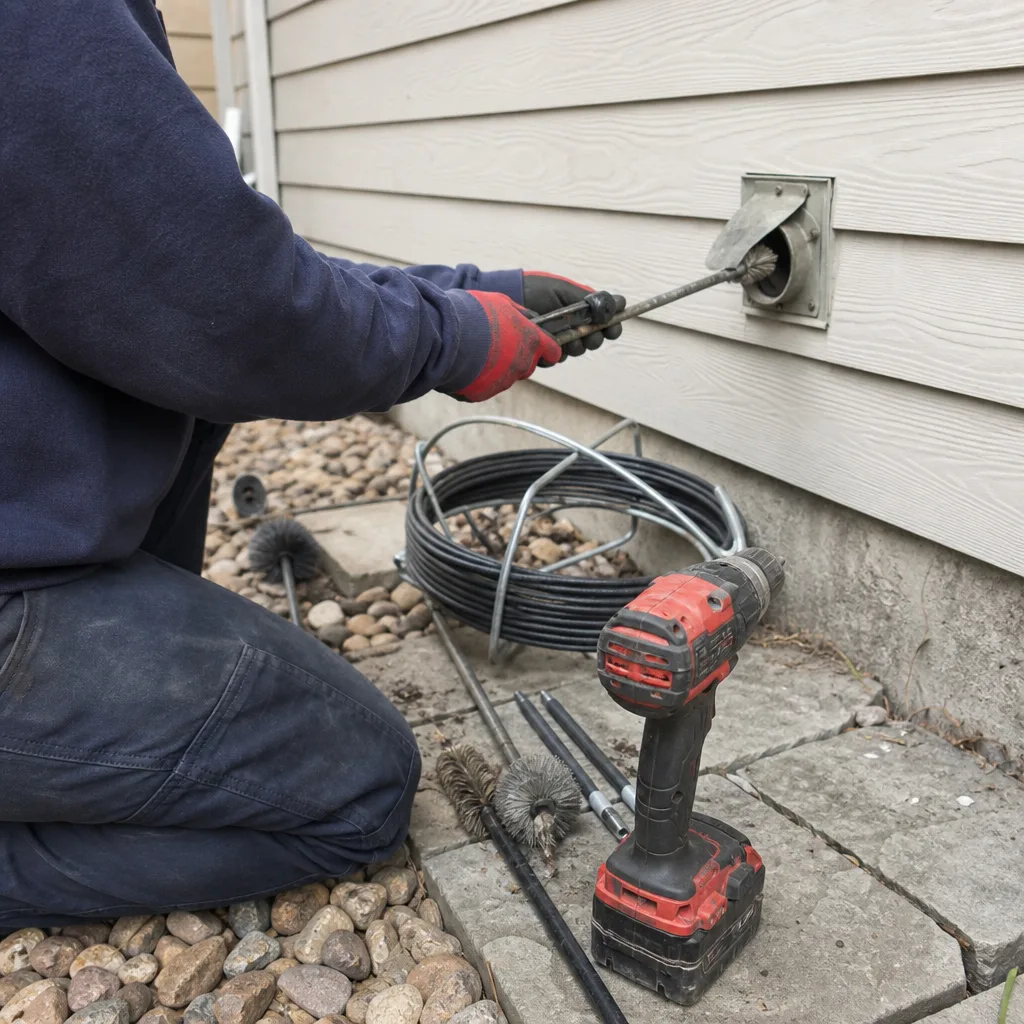
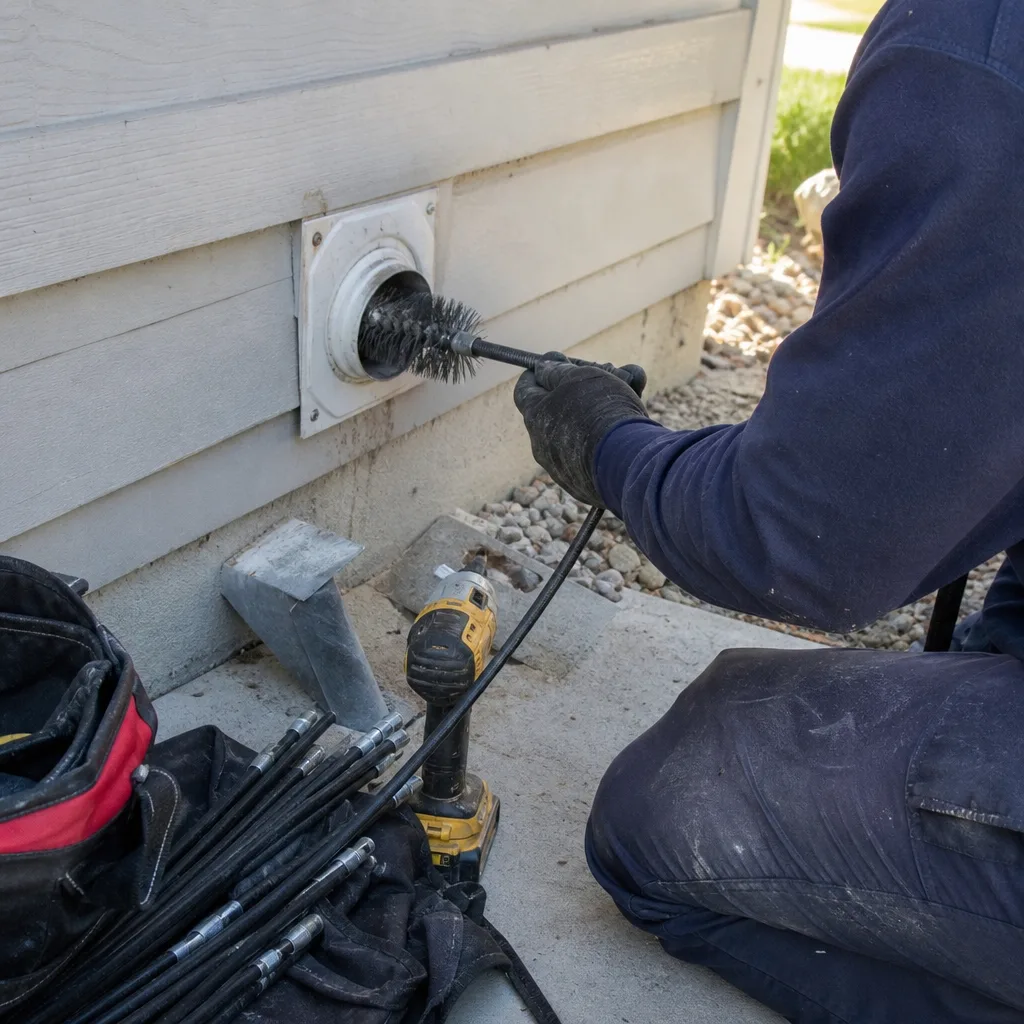
Dryer vent cleaning addresses a different system with different fire safety implications, but the same principle of documented evidence applies. Lint accumulation at the exterior termination, extended drying times, or a hot dryer exterior indicate blockage. Dryer Vent Cleaning in Littleton is often scheduled alongside duct cleaning for efficiency, but it requires separate equipment and scope. CleanRun provides written pricing for either or both.
The Bottom Line
Littleton’s climate, altitude, and seasonal particulate load create duct maintenance needs that generic national advice cannot address. The system that heats your home from September through May is the same one that pulled cottonwood fluff and wildfire smoke all summer. Track your filter loading rate, photograph your register faces and access panel interior seasonally, and clean when your documented evidence shows change, not when a calendar says so. For more guides & resources, see our blog. Every contractor you consider should provide a written price before work starts, a documented photo record when finished, and a written guarantee that survives the truck’s departure. Anything less leaves you paying for promises instead of proof.
Written by Tomas Reyes, Owner at CleanRun Air Duct Cleaning Littleton, serving Littleton since 2013.