

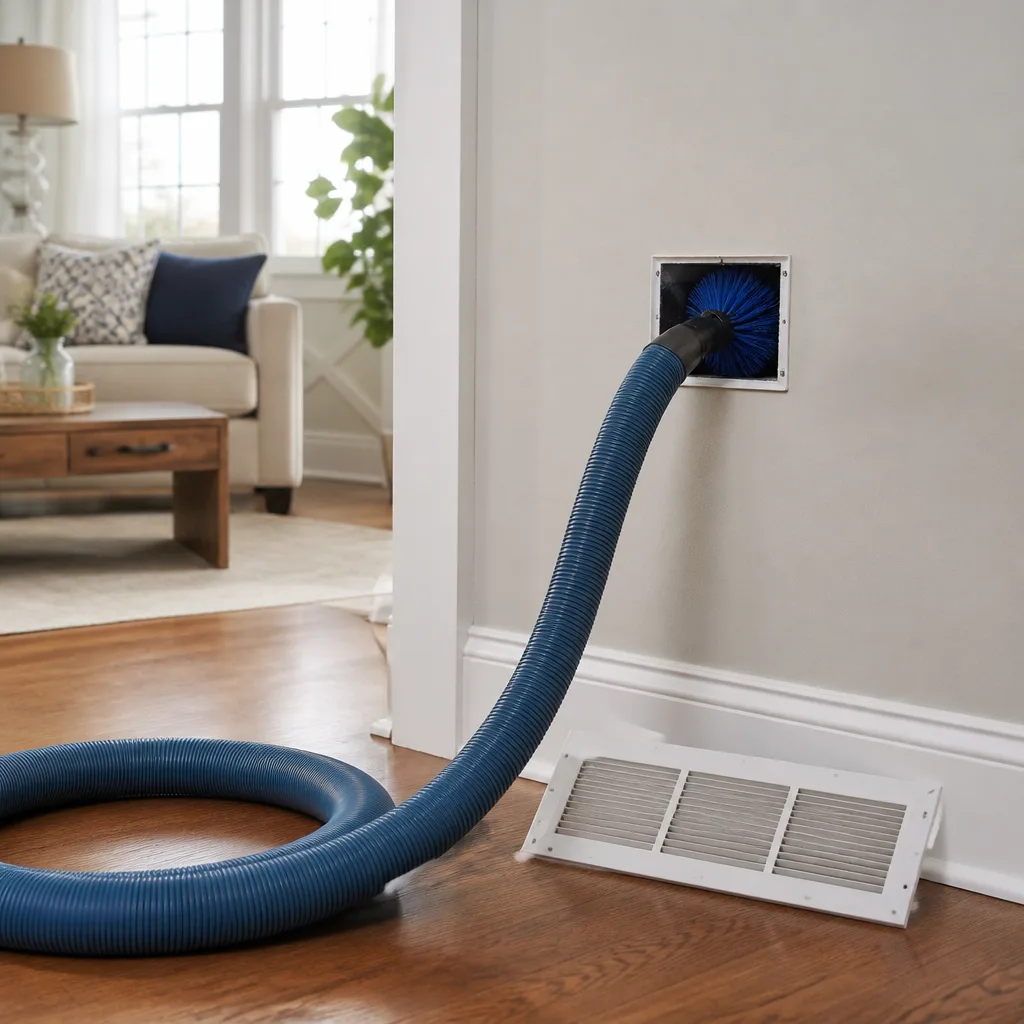
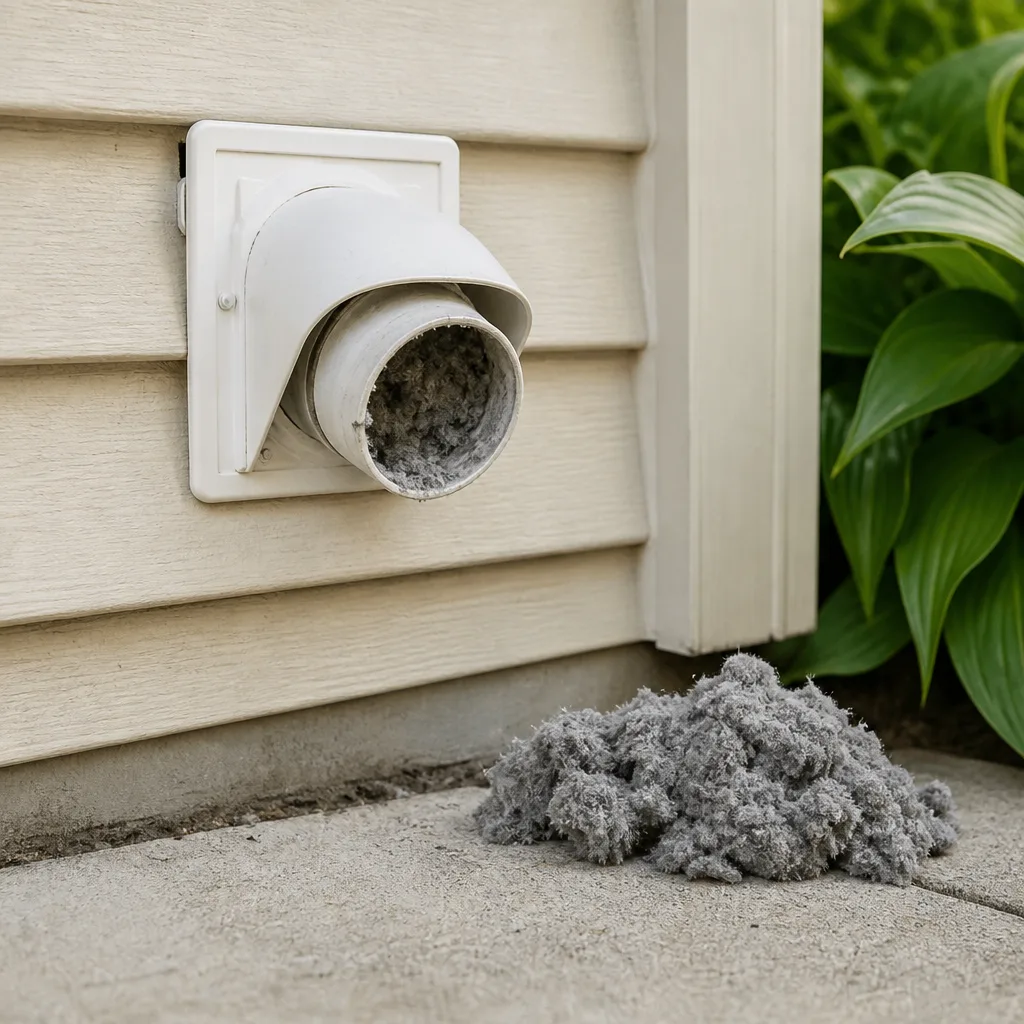
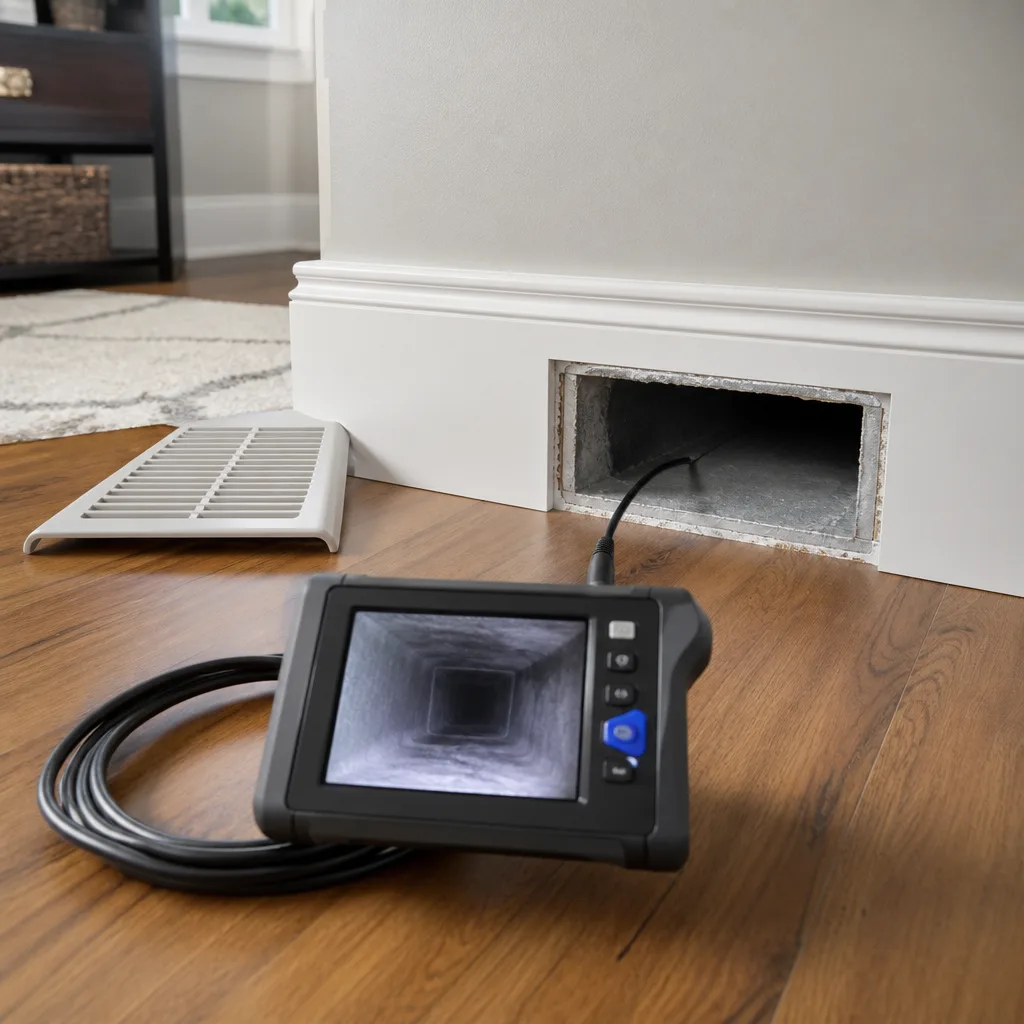
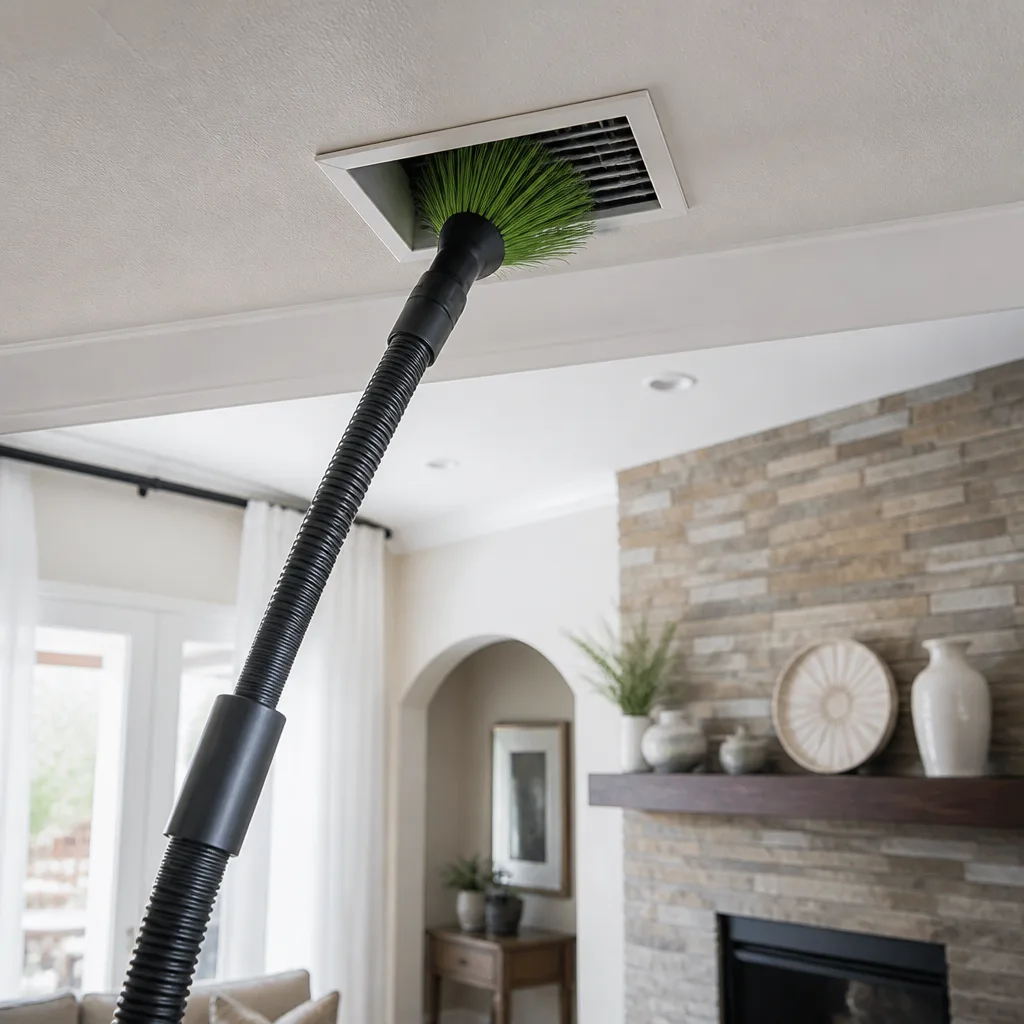
Whole-system duct and dryer vent check with before-and-after photos - you see exactly what came out of your vents
That "$99 whole-house special" is a bait ad - the real number appears once they are in your hallway, or the "clean" is a shop-vac at the register. We photograph the inside of your ducts before and after instead.
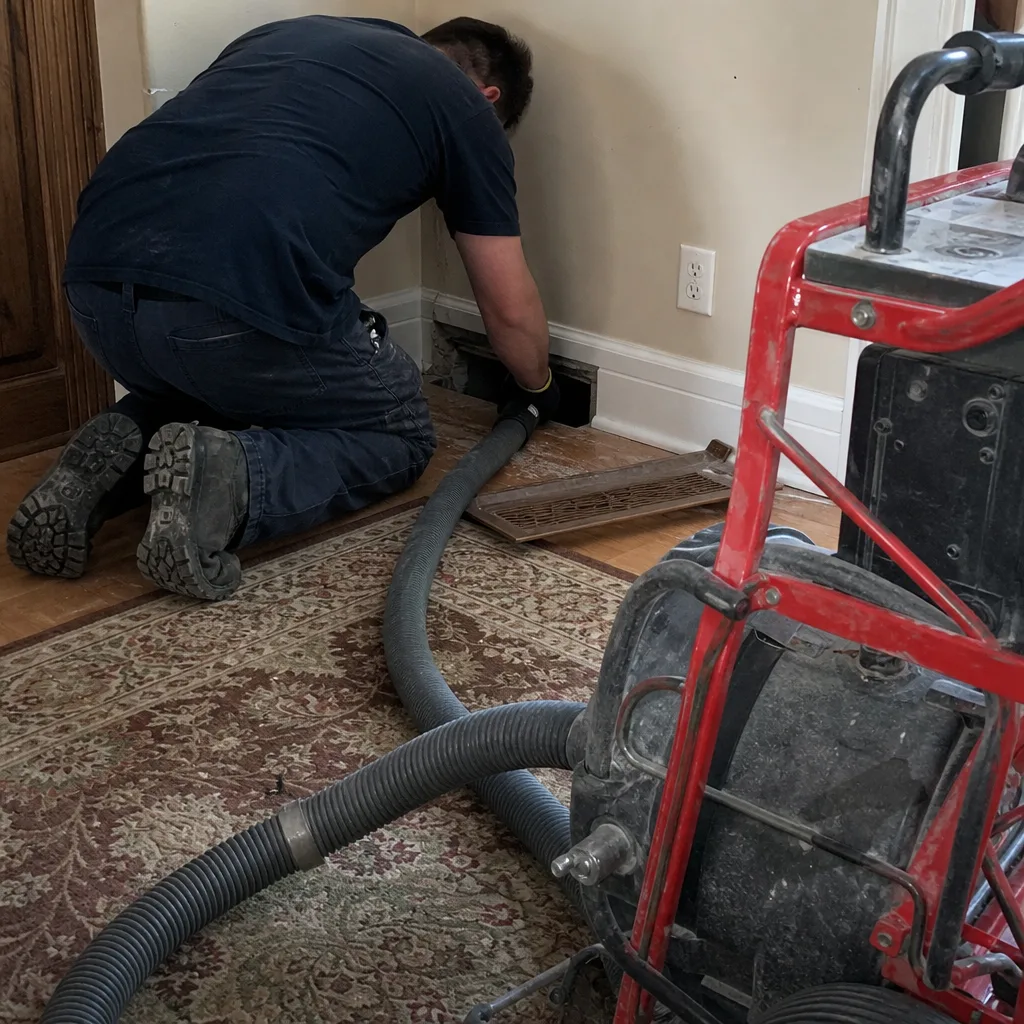 Before
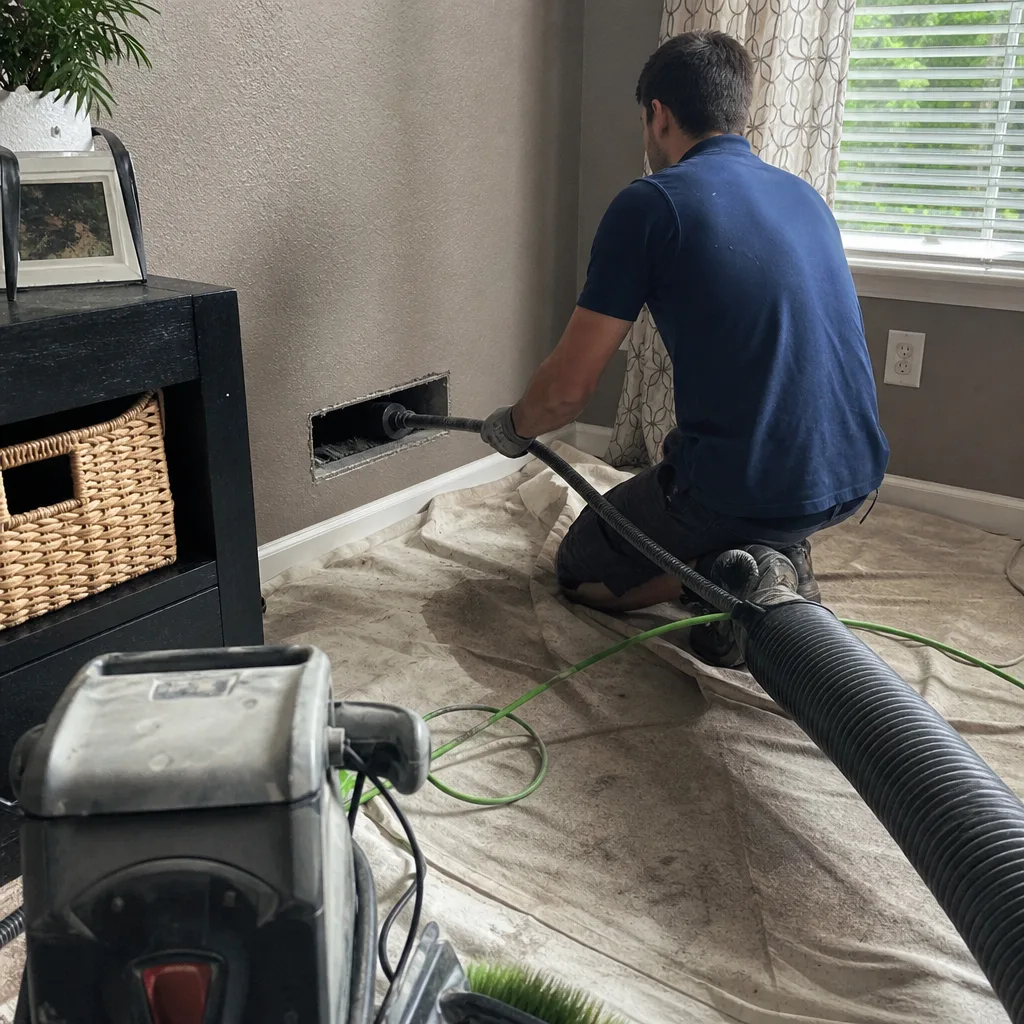 After
After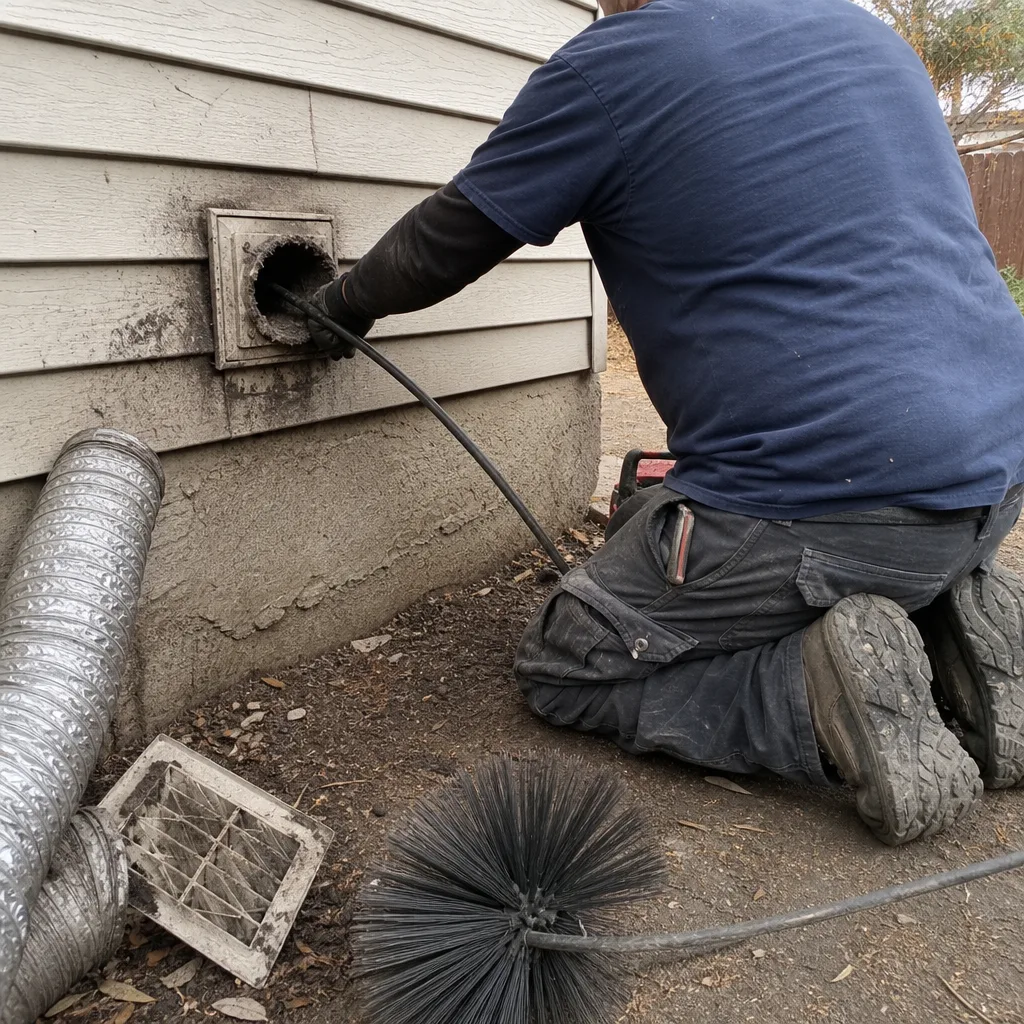 Before
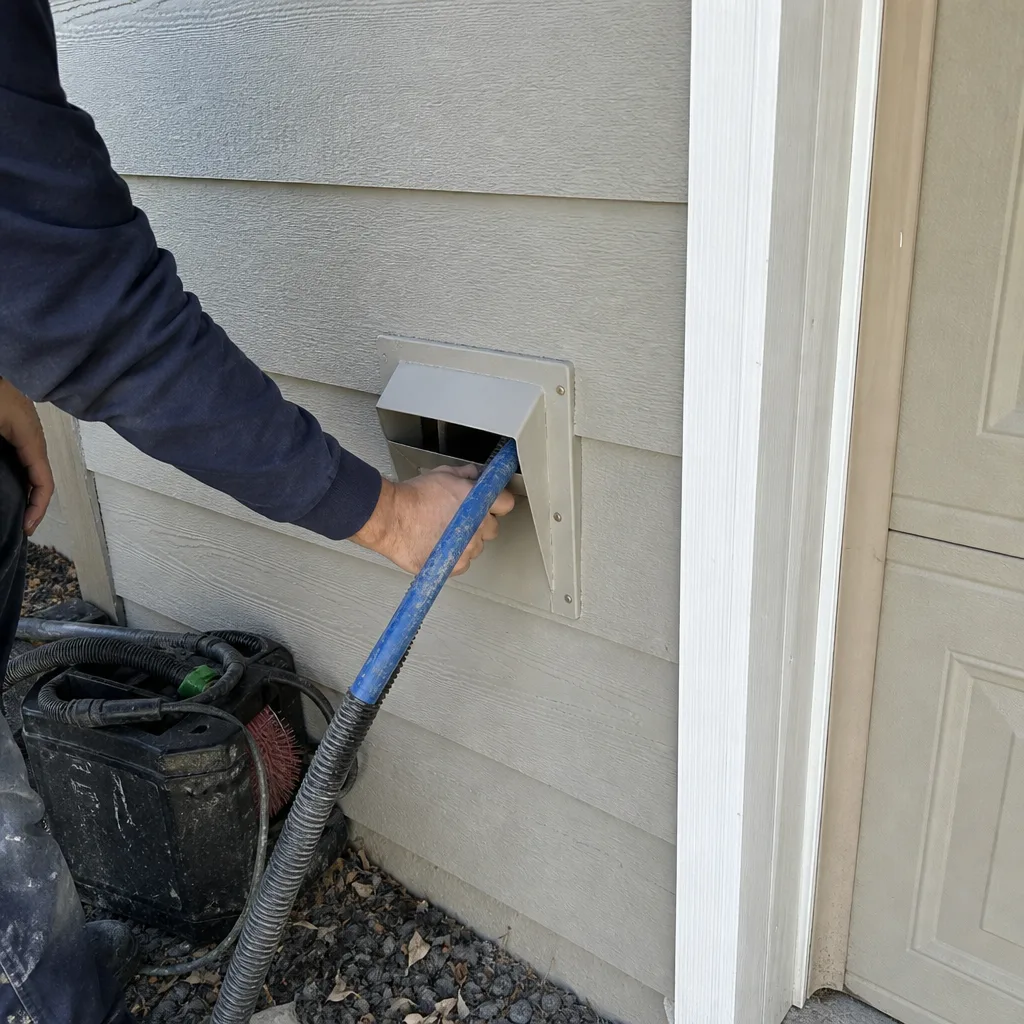 After
After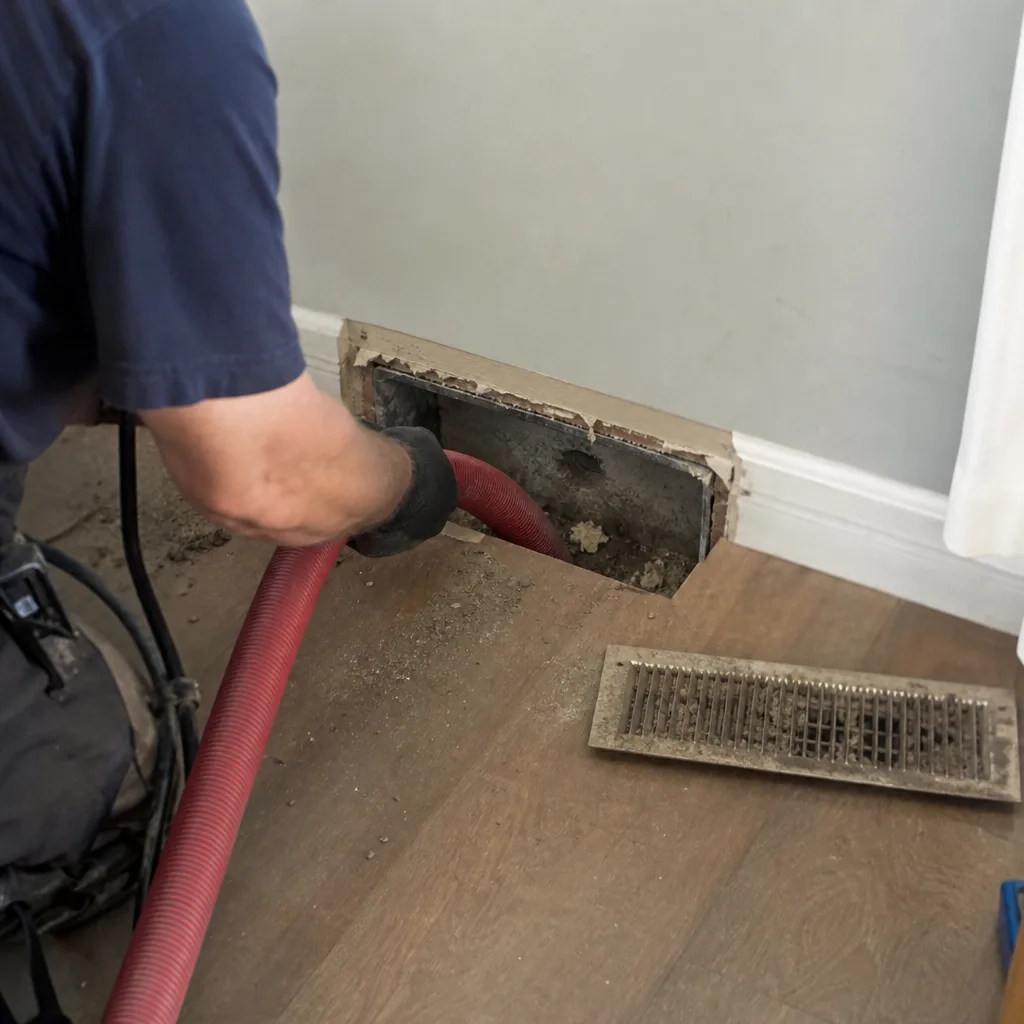 Before
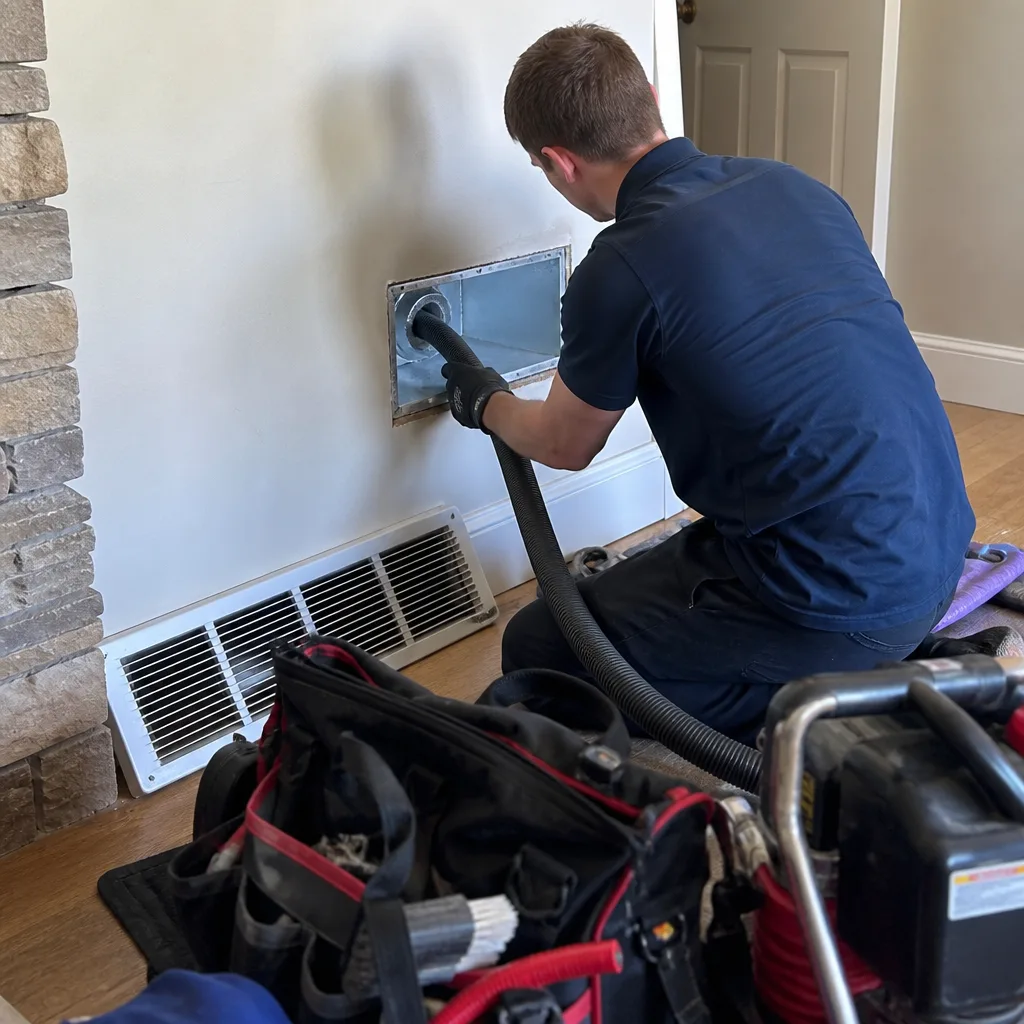 After
AfterHow Much Does Duct Repair & Sealing Cost in Littleton?
Our Duct Repair & Sealing services in Littleton, CO typically cost between $300 and $1,200 for a standard single-family home, with most jobs landing in the $450-$850 range depending on the number of leaks, duct access, and whether the system needs mechanical repair or aerosol sealing. Homes in Littleton’s older subdivisions – Columbine Valley, Bow Mar, and the neighborhoods around West Bowles Avenue that were built before 1990 – often run toward the higher end because flex duct degradation and disconnected collars are common findings in those systems. CleanRun puts a written price in front of you before any panel comes off, so the number you see here is the number you’ll see on your quote.
Duct Repair & Sealing Cost Breakdown (2026)
The table below reflects current Littleton market pricing as CleanRun documents it on actual jobs – not averages pulled from national databases. Every line item below is what appears on a written scope before work starts, under Haven Standard Clause 1.
| Service | Typical Price Range (Littleton, 2026) | Notes |
|---|---|---|
| Mastic sealant application (per duct run) | $45 – $95 per run | Applied at joints, collars, and seams by hand |
| Foil-backed tape sealing (per run) | $30 – $65 per run | UL-181-rated tape; not the silver tape sold at hardware stores |
| Aerosol duct sealing (Aeroseal-method) | $900 – $1,800 whole-home | Pressurized sealant finds and closes leaks from inside the duct; best for inaccessible runs |
| Flex duct section replacement (per run) | $120 – $280 per section | Common in Littleton homes built 1978-1998; collapsed inner liners and crushed bends are typical findings |
| Disconnected duct collar repair | $85 – $175 per collar | Reconnection and sealing at the plenum or trunk line junction |
| Sheet metal duct repair (patch or section) | $150 – $350 per section | Galvanized or spiral round duct; older Littleton ranch homes frequently need this at return-air boots |
| Plenum repair or sealing | $200 – $450 | The plenum is the central distribution box attached to your air handler; gaps here lose the most conditioned air |
| Access panel cut and re-seal | $75 – $150 per panel | Required when duct runs through finished ceilings or walls with no existing access |
| Full duct system inspection with camera | $95 – $175 | Camera photographs every run before and after; Documented Photo Record delivered to customer |
| Whole-home duct repair package (moderate leakage, 2,000-2,800 sq ft) | $450 – $850 | Most common scenario in Littleton single-family homes |
| Whole-home duct repair package (severe leakage or significant flex replacement) | $900 – $1,400 | Typical in Littleton homes with original ductwork from 1985 or earlier |
Two things move a Littleton duct repair job up or down the price scale more than anything else: how many leak points the camera finds, and whether those leak points are in accessible crawlspaces or buried inside finished walls and drop ceilings. A 2,200 sq ft split-level in Littleton’s Governor’s Ranch neighborhood might have six reachable collar connections and a mastic job that takes a crew three hours. The same square footage in a fully finished basement with duct runs hidden behind drywall can double labor time and material cuts. The written scope you receive from CleanRun will break both variables out separately so you can see exactly what drives your number.
What Affects Duct Repair & Sealing Pricing in Littleton
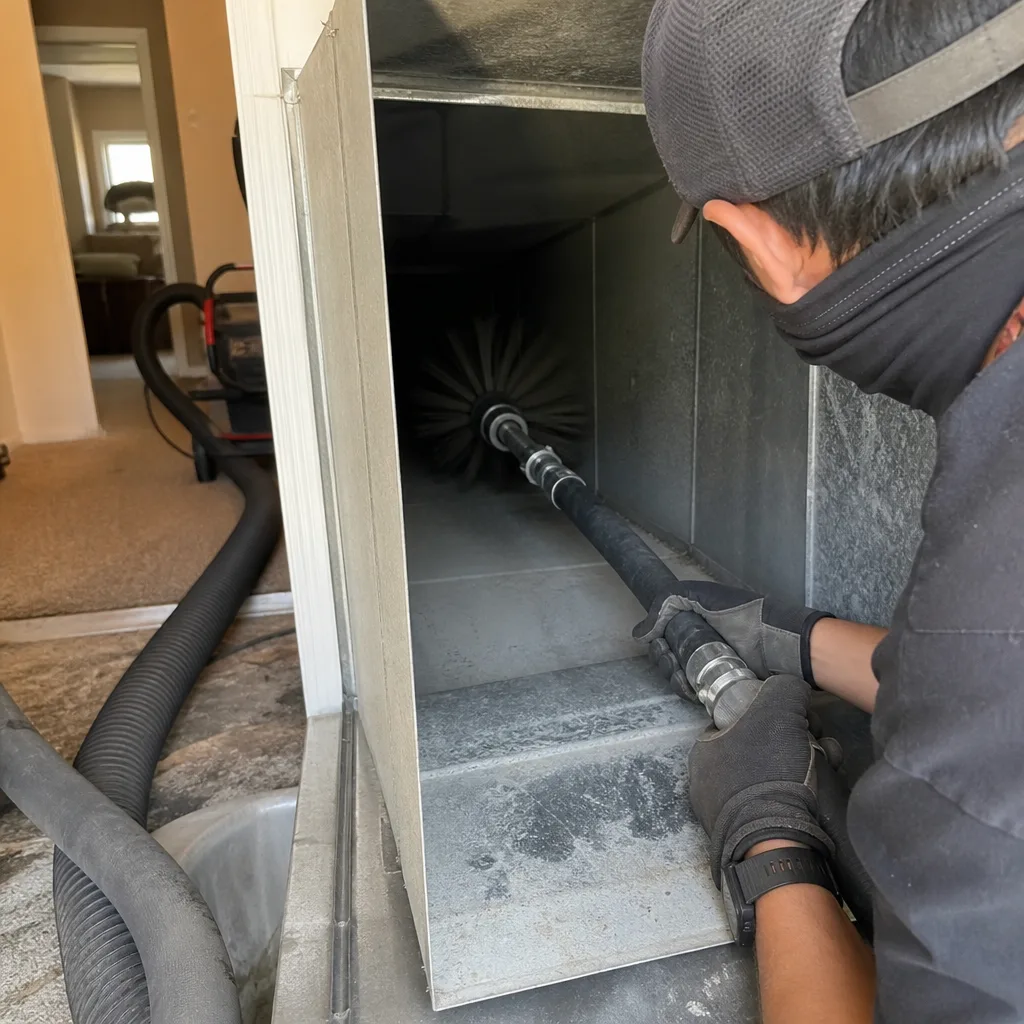
- Home age and original duct material: Littleton has a significant inventory of homes built between 1968 and 1995 – many in Columbine Knolls, Normandy Estates, and the streets south of Clement Park. These homes were frequently built with flex duct that has now aged past its 25-year service life. Collapsed inner liners and separated accordion sections show up on camera constantly in this housing stock, and flex replacement costs more than simple mastic sealing because it involves cutting, fitting, and reconnecting duct sections.
- Duct accessibility: Unfinished basements and crawlspaces give a technician direct sight lines to every run. Finished lower levels – common in the newer sections of Ken Caryl and Highlands Ranch, which borders Littleton – mean cutting access panels and working through limited openings, which adds both labor time and material cost to the scope.
- Leakage severity: A blower-door or duct-pressure test quantifies what the camera already suggests. Systems losing 25% or more of conditioned air through duct leaks – not unusual in 1980s Littleton construction – require more sealant volume and more collar connections than a system with minor seam gaps. CleanRun photographs every run before starting so the scope reflects what’s actually there, not an estimate built on averages.
- Altitude and seasonal conditions: Littleton sits at approximately 5,400 feet. The Front Range temperature swing between a July afternoon and a January night can exceed 90 degrees Fahrenheit. That thermal cycling stresses duct joints and adhesive sealants more aggressively than lower-elevation climates do, which is why some sealant jobs that would hold for 15 years in a mild climate need revisiting sooner here. Mastic holds up better than tape-only repairs under these conditions, and we document that recommendation in the written scope.
- Number of supply and return runs: A three-bedroom ranch has fewer runs to seal than a five-bedroom two-story. Per-run pricing scales linearly; whole-home package pricing offers some efficiency because setup and mobilization costs are absorbed across more runs at once.
- Repair method required: Mechanical repairs – replacing a collapsed flex section or re-hanging a disconnected collar – take more time than sealing intact joints. Aerosol sealing is the most expensive method per job but frequently the only practical option when leak points are inside walls or in inaccessible ceiling cavities. The written scope will explain which method applies to which run and why, before any work begins.
BeforeAfterSigns Your Littleton Home Needs Duct Repair
Duct leakage rarely announces itself. What it does is show up in your Xcel Energy bill and in the way certain rooms behave. Here are the findings that consistently appear on CleanRun camera inspections in the Littleton market, translated into what they look like from the homeowner’s side.
Rooms That Never Reach Temperature
If the master bedroom at the end of the longest supply run is always 4-6 degrees cooler in winter than the thermostat setting, a disconnected collar or collapsed flex section between the trunk line and that register is the most common explanation. The conditioned air is simply depositing itself inside the wall cavity instead of the room. On camera, this shows up as a visibly open gap at the duct collar or a flex inner liner folded flat on itself.
Utility Bills That Don’t Match Your Square Footage
Littleton’s Xcel Energy territory gives CleanRun enough reference data to say this clearly: a 2,400 sq ft home with 25% duct leakage regularly shows heating costs 30-40% higher than a comparable home with a sealed system. If your bills track significantly above neighbors with similar homes, the ductwork is a reasonable place to start looking before replacing equipment.
Visible Dust Accumulation Around Registers
Negative-pressure leakage – where a gap in the return duct pulls unconditioned air from a crawlspace or wall cavity into the air stream – carries particulate matter with it. When you see a gray dust halo around a floor register or return grille, that’s often a sign the system is pulling from outside the conditioned envelope. The fix is sealing the breach; the camera confirms exactly where it is.
HVAC Equipment That Runs Continuously
A leaky duct system forces the air handler to run longer to compensate for conditioned air it never delivered. In Littleton’s summer peak months (July and August), that translates directly to compressor runtime and energy spend. Sealing the duct system reduces the load on the equipment and typically extends service intervals.
How to Save on Duct Repair & Sealing in Littleton
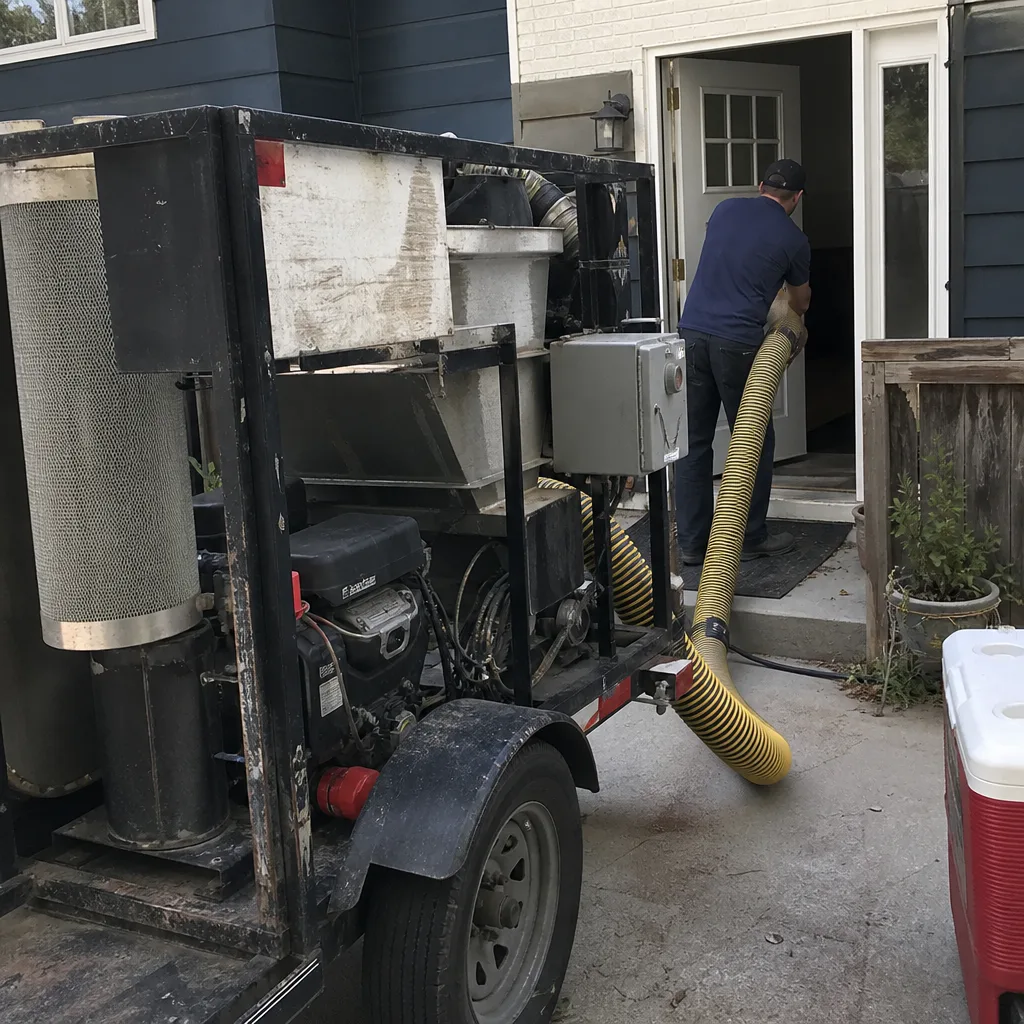
A few practical approaches that actually reduce cost – not vague suggestions about getting multiple quotes and hoping for the best.
Get a Written Scope Before You Agree to Anything
The single most effective cost-control tool is a written itemized price before work starts. Under Haven Standard Clause 1, CleanRun delivers this on every job – no exceptions. If a contractor cannot hand you a written price before a panel comes off, walk away. Scope creep on duct work is real, and it always moves in one direction.
Combine Services Where the Labor Overlaps
If CleanRun is already inside your duct system for a Duct Repair & Sealing in Littleton job, scheduling duct cleaning at the same visit eliminates a second mobilization cost. The camera is already in place; the access points are already open. Combining the two typically saves $75-$150 compared to scheduling them separately, and you receive a single Documented Photo Record covering both scopes.
Use the Free Second Opinion
If you have a written estimate from another Littleton contractor, bring it to CleanRun. The free second opinion – available at no cost on any written estimate – puts CleanRun’s number next to the competitor’s number in writing. This is not a promise to beat any price; it’s a commitment to show you both numbers with full line-item detail so you can compare what’s actually being proposed.
Prioritize the Highest-Leakage Points First
Not every leak point delivers equal return on sealing it. Plenum gaps and disconnected trunk-line collars lose dramatically more conditioned air than a small seam gap at a far-end register. If budget is a constraint, ask CleanRun to rank the repair scope by leakage volume – we do this as part of the written scope anyway. Sealing the highest-loss points first gives you the fastest reduction in utility cost, even if the full scope takes two visits.
Call Before the Peak HVAC Season
In Littleton, the spring window (March through May) and fall window (September through October) see the highest demand for duct work because homeowners are prepping for summer cooling and winter heating loads. Scheduling outside those peaks – January through February or late November – typically results in faster scheduling and occasionally better availability for multi-day jobs. Pricing itself doesn’t fluctuate seasonally at CleanRun, but technician availability does.
For a written estimate on your Littleton home, call (720) 315-7291. A live person picks up – not a voicemail system – and the estimate is free.
What You Get When CleanRun Does the Job
This section exists because “duct repair” is a category where the work is invisible once it’s done, and that creates an obvious problem: how do you know whether anything actually happened? CleanRun’s answer to that problem has been consistent since Tomas Reyes established the company in 2013.
Every job produces a Documented Photo Record – camera images of every duct run, captured before work begins and after it’s complete. You receive this record as a standard deliverable, not as an optional add-on. The before photos show what the camera found; the after photos show what was done. If a contractor can’t show you a before photo, there’s no way to verify the after photo means anything.
The written price you receive before work starts is binding. It doesn’t change because the crew found something unexpected mid-job; if scope changes are warranted, CleanRun presents a revised written price and waits for approval before proceeding. That’s Haven Standard Clause 1 in practice, not in marketing language.
The 365-Day Done Right Promise covers every job CleanRun completes. If the repair doesn’t hold, or if a sealed joint opens up within 365 days of the job date, CleanRun makes it right – in writing, backed by the job record, not subject to manager-discretion approval. Tomas Reyes built the company on the premise that documented work should be accountable work, and the Done Right Promise is the mechanism that makes that accountability real after the truck leaves.
Equipment used on duct repair jobs includes professional-grade tools from Rotobrush and Nikro for camera inspection and extraction, and Abatement Technologies for air quality verification. Sealant materials and components meet NADCA and ASHRAE standards applicable to residential forced-air systems. You can look up every brand name independently; CleanRun names them precisely because customers who research before deciding deserve to know what’s going in their home.
If you want to understand the full scope of what CleanRun does and how the H.A.V.E.N. Standard governs every job, the home page lays it out in detail.
Littleton Duct Systems: What the Camera Finds Most Often
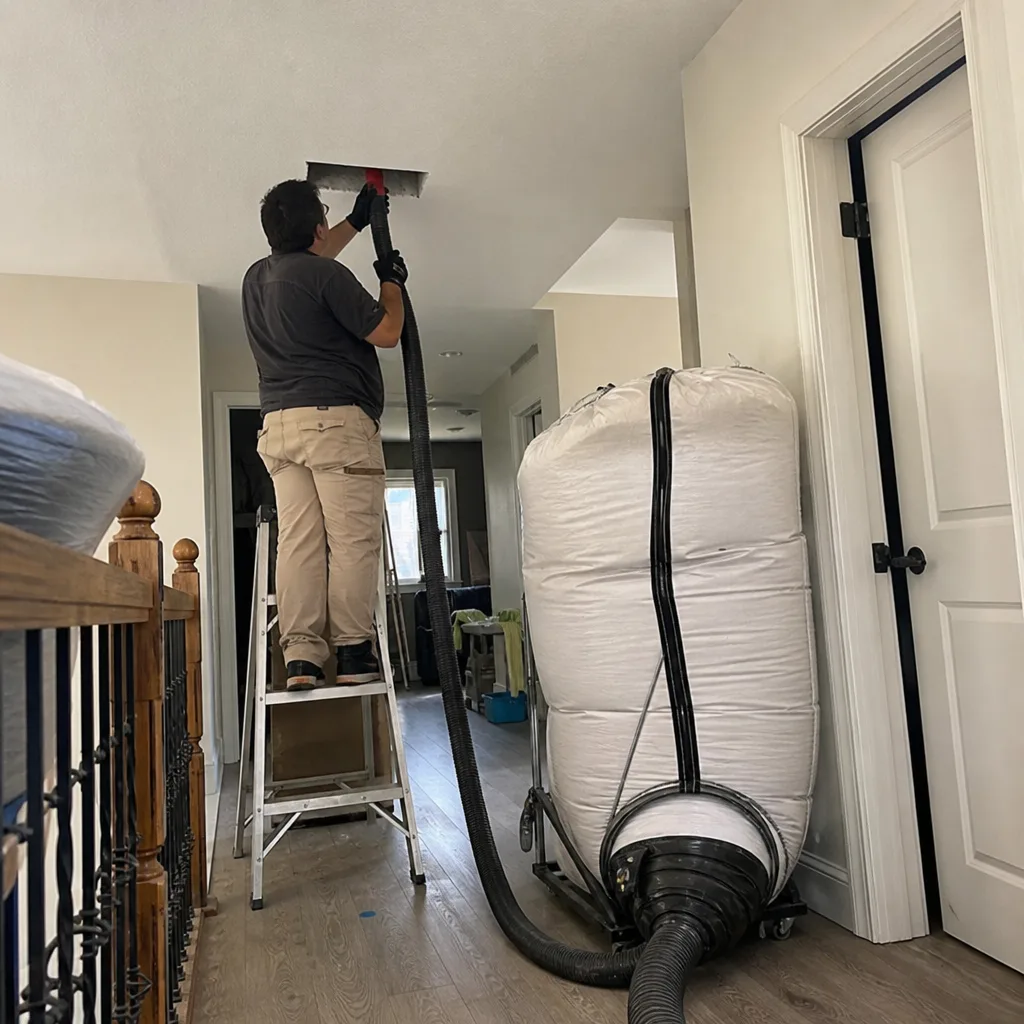
After serving homes across Littleton since 2013, CleanRun sees patterns in duct failure that are specific enough to be worth documenting here. This isn’t general industry data – it’s what the camera actually shows in this market.
Flex Duct Delamination in Pre-1995 Homes
Flex duct from this era used an inner mylar liner that separates from the insulation jacket as it ages. When the liner delaminates, it collapses inward under negative pressure, dramatically reducing airflow to the registers it serves. In Littleton neighborhoods like Sunset Ridge and the streets surrounding Littleton Public Schools campuses, this is the single most common finding on homes built before 1995. Replacement of the affected sections is the correct repair; sealing over a collapsed liner doesn’t restore airflow.
Disconnected Returns in Finished Basements
Many Littleton homeowners finished their basements in the 2000s and 2010s, and some of those renovation projects disturbed or left disconnected return-air connections behind the new drywall. A disconnected return pulls unconditioned basement air – often carrying crawlspace humidity and particulates – directly into the air stream. The camera confirms the gap; the repair involves cutting access, reconnecting the collar, and sealing with mastic. This specific scenario shows up frequently in the Littleton zip codes 80123 and 80127.
Plenum Gaps at the Air Handler
The supply and return plenums – the large sheet-metal boxes that connect directly to the air handler and distribute air to the trunk lines – are common leak sites in Littleton homes because they’re typically sealed only with duct tape at original installation. Standard duct tape fails within 5-10 years under thermal cycling. By the time a Littleton home is 20 years old, the plenum seams are almost always open. Regapping and sealing with mastic at the plenum alone can recover a significant percentage of lost conditioned air.
Register Boot Separation at Subfloor
In Littleton homes with duct runs below a wood subfloor, the register boots – the metal fittings that connect the duct to the floor register – frequently separate from the duct as the subfloor moves seasonally. The air intended for that room deposits into the joist cavity instead. This is a straightforward mechanical reconnection and mastic seal, but it requires access from below, which is why finished basements complicate the repair cost.
FAQs: Duct Repair & Sealing Cost in Littleton
How much does duct sealing cost in Littleton, CO?
Duct sealing in Littleton costs $300 to $850 for most single-family homes, with the middle of that range – around $450 to $650 – being the most common outcome for a 2,000-2,600 sq ft home with moderate leakage at collar connections and seams. Homes with inaccessible runs or severe leakage can reach $900 to $1,200 for mechanical sealing, or $900 to $1,800 for aerosol-method sealing of enclosed cavities. CleanRun’s written price reflects the specific findings from the camera inspection, not a flat rate. Call (720) 315-7291 for a free estimate and a written scope.
Is duct sealing worth the cost for a Littleton home?
For most Littleton homes built before 2000, yes – typically with a 3-to-5-year payback period on energy savings alone. At Littleton’s altitude and with Colorado’s Front Range temperature swings, a duct system losing 20-30% of conditioned air is paying to heat or cool the crawlspace or wall cavities rather than the living space. Sealing those leaks reduces runtime on the air handler, lowers utility spend, and reduces the particulate load circulating through the system. The camera record CleanRun provides before and after the job gives you a documented baseline so the change is measurable, not theoretical.
How long does duct repair take in a typical Littleton home?
A standard mastic-sealing job on a 2,000-2,500 sq ft Littleton home with accessible ductwork typically takes 3 to 5 hours from camera inspection through final seal and documentation. Flex duct replacement adds time per section – budget an additional 45 to 90 minutes per run being replaced. Jobs involving access panel cuts in finished spaces take longer still and will be reflected in the written scope before work begins. CleanRun schedules single-family jobs as half-day or full-day blocks depending on scope; the booking team will give you a specific time window when you call.
Can I seal my own ducts to save money?
You can apply mastic or UL-181-rated foil tape to exposed, accessible duct seams yourself – the materials are available at trade supply stores and the application is straightforward on visible joints. Where DIY duct sealing falls short is in finding the actual leak points; without a camera inspection, you’re sealing what you can see rather than what’s losing air. Significant leakage is almost always at collar connections, plenum seams, and boot separations that require getting into tight spaces and working around the air handler. The labor cost CleanRun charges covers both the inspection (which locates what’s actually leaking) and the repair (which seals it with documented results). For surface-level maintenance on visible joints, DIY is reasonable. For meaningful leakage reduction, the camera inspection is the starting point.
Does CleanRun offer a warranty on duct repair work in Littleton?
Yes – every duct repair job CleanRun completes in Littleton is covered by the 365-Day Done Right Promise. If a repaired joint opens or a sealed seam fails within 365 days of the job date, CleanRun returns and makes it right at no additional charge. This warranty is written on the job record, not stated verbally and forgotten. You receive the Documented Photo Record of the completed work along with the written warranty at the close of every job – so there’s a clear baseline for any future claim. Call (720) 315-7291 to ask about specific warranty terms before booking.
How do I know if duct repair was actually done correctly?
The Documented Photo Record is CleanRun’s direct answer to this question. Every duct run is photographed before work begins and after it’s complete – both sets of images are delivered to you as a standard part of the job record. Before photos show what the camera found: open collar gaps, separated joints, collapsed flex sections. After photos show the mastic application, the reconnected collars, the sealed seams. If a contractor cannot show you both sets of photos, you have no way to verify that anything actually changed. CleanRun has photographed every run on every job since Tomas Reyes ran the first one in 2013. That’s not a marketing claim – it’s the job record, and you receive a copy of it.
Key Takeaways
- Duct repair and sealing in Littleton, CO costs $300 to $1,200 for most homes, with the typical range being $450 to $850 for a standard single-family job.
- Littleton homes built before 1995 – especially in Columbine Knolls, Normandy Estates, and neighborhoods around Clement Park – frequently need flex duct replacement in addition to sealing, which moves the job toward the higher end of the range.
- The biggest cost variables are duct accessibility (finished vs. unfinished basement), number of leak points found on camera, and repair method required (mastic, mechanical, or aerosol).
- Every CleanRun job in Littleton comes with a written price before work starts (Haven Standard Clause 1), a Documented Photo Record of every run, and the 365-Day Done Right Promise in writing.
- Combining duct repair and duct cleaning in a single visit saves mobilization cost and produces a single comprehensive photo record for both scopes.
- A free second opinion is available on any written estimate from another Littleton contractor – CleanRun puts its own number next to theirs in writing, with full line-item detail.
If your Littleton home is showing the signs described above – rooms that won’t reach temperature, utility bills that don’t match your square footage, dust accumulation around registers – call (720) 315-7291 to schedule a free estimate. A live person answers every call, and the written price comes before any work starts, every time.
Pricing reflects the Littleton market as of 2026. CleanRun Air Duct Cleaning Littleton offers free estimates – call (720) 315-7291.
Written by Tomas Reyes, Owner at CleanRun Air Duct Cleaning Littleton, serving Littleton, CO since 2013.
What Our Customers Say
"The before and after photographs of each run are the reason I used them. You cannot argue with what came out of the return."
- Marguerite O."The dryer vent was almost completely blocked with lint. They showed me the photograph and I understood immediately why the dryer had been running twice."
- Lucia M."My allergies genuinely improved. They also told me the ducts did not need sealing, which I had been quoted for elsewhere."
- Petra K.